Peshawar High Court rejects pleas against senior lawyer’s degree, election to PBC
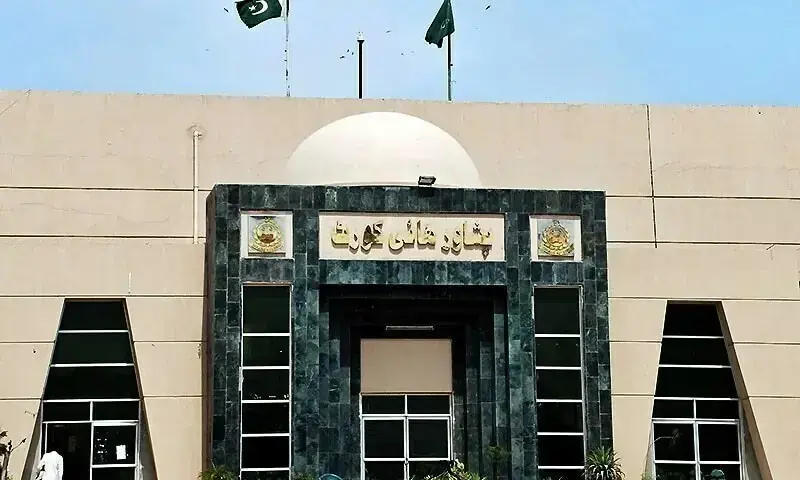
PESHAWAR: The Peshawar High Court has rejected petitions challenging the LLB degree of a senior lawyer and his election as a member to the Pakistan Bar Council (PBC) in 2020.
A bench consisting of Justice Syed Arshad Ali and Justice Farah Jamshed rejected two petitions declaring it non-maintainable due to “autonomous status of the Pakistan Bar Council, its non-amenability to the constitutional jurisdiction under Article 199, and the existence of disputed factual controversies requiring a forensic probe by an appropriate statutory or legal forum.”
It observed that with the expiration of the 2020-2025 term of the PBC, any further inquiry into the initial verification process for that specific term had become an exercise in futility.
The said former member, Syed Amjad Ali Shah, is also a presidential candidate in the forthcoming polls of Supreme Court Bar Association to be held in Oct this year.
Declares petitions non-maintainable
The petitions were filed separately by advocates Tahir Faraz Abbasi, who was also a candidate in the PBC polls, and Hafiz Mohammad Naseem.
Petitioner Hafiz Naseem had sought declaration of the court that the PBC member Syed Amjad Ali Shah was not an advocate, therefore he couldn’t be a member of the council. He alleged that Mr Shah was not holding a valid LLB degree from any university and the degree which he had presented for his registration was a fake one.
The other petitioner, Mr Abbasi, said that the members of the PBC who had not submitted degrees for verification should be de-notified and he, having secured next highest votes from Khyber Pakhtunkhwa, should be declared a member of the PBC.
He contended that pursuant to the directions of the Lahore High Court in a case ‘Syed Amir Ali Shah versus Attorney General for Pakistan’, the returning officer issued a mandatory directive on Dec 29, 2020, requiring all candidates to furnish certified copies of their degrees for verification by the Higher Education Commission and the respective universities.
The petitioner said despite that, the PBC had convened its inaugural meeting on Jan 21, 2021, without completing the verification of several elected members.
He alleged that Mr Shah had failed in two papers in the examination conducted by University of Punjab, and there existed no further record to establish as to whether he had reappeared in the examination o otherwise.
The PBC and Mr Shah had disputed the contentions of the two petitioners and requested for dismissal of their pleas.
The PBC submitted a confidential report of Dec 12,, 2021, addressed to the registrar of the LHC in compliance with the judgement of that high court wherein it was explained that the degrees of the members were verified from different universities.
Regarding verification of degree of Mr Shah, it was mentioned that the Punjab University had verified the said degree through a letter on April 26, 2021.
Also, the verification report of the University of Punjab from the Controller of Examination to the office of the PBC returning officer had separately been placed on record, according to which Mr Shah, who appeared in the University examination under Roll No 2282 had secured 315/700 marks.
In light of the report submitted by the PBC, the bench ruled: “Nothing has been left for the decision of the court to further proceed with the matter of verification of the degree of the candidates or returned candidates for the membership of the Bar Council.
“For the obvious reason that the process for verification of degrees was initiated pursuant to the directions of the Apex Court as well as the Lahore High Court, and the required reports have already been submitted before the Lahore High Court, it follows that if the petitioners are aggrieved by the said process, they could approach the Lahore High Court.”
It added that even otherwise, the respective contentions of the parties relating to the genuineness of the degree couldn’t be settled by it, as the matter would obviously require the recording of evidence.
“It is a settled principle that constitutional jurisdiction is not intended for the adjudication of disputed questions of fact that require the recording of evidence or a forensic probe.”
The bench, in its 16-page detailed judgement, also discussed the question whether PBC and its elected members are amenable to the constitutional jurisdiction of the High Court under Article 199 of the Constitution in respect for determination of the qualification of an advocate or his eligibility as a member of the PBC.
Referring to different judgements of the superior courts, the bench observed that the PBC operated as a self-regulating professional body governed by the Legal Practitioners and Bar Councils Act, 1973, and the Pakistan Legal Practitioners and Bar Councils Rules, 1976, which provided their own exhaustive mechanisms for addressing internal grievances.
It observed that under the Rules of 1976, specific Election Tribunals were mandated to hear objections regarding the validity of a member’s election based on prescribed grounds.
“To bypass these statutory forums and invite the High Court to conduct a trial into allegations of forgery would undermine the legislative intent of the Act of 1973. The internal regulatory affairs of the Bar community, including credential verification, are to be resolved through the forums provided by the law that created them,” it ruled.
Published in Dawn, July 12th, 2026