0
0

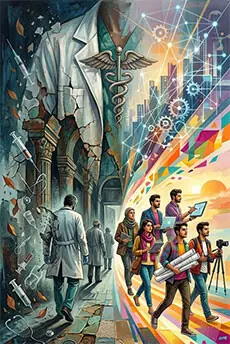
OVER the decades, studying medicine was considered one of the most prestigious academic achievements in Pakistan. Thousands of students competed every year for limited seats, families invested heavily in preparation, and admission to a medical college was viewed as the gateway to a stable and respected career. Today, however, the situation is changing.
According to data released by the Pakistan Medical and Dental Council (PMDC), hundreds of medical and dental seats remained vacant during the 2025-26 admission cycle. Experts argue that the issue is indicative of a growing mismatch between educational costs and expected career outcomes.
One of the most significant challenges is affordability. Over the last several years, tuition fee at many private medical colleges has increased substantially. When tuition, accommodation, transportation, books and living expenses are combined, the total cost of earning a medical degree can reach levels that are difficult for many middle-income families to sustain; even imagine. As a result, qualified students increasingly choose alternative academic paths or seek opportunities abroad.
But their financial concerns are further intensified by uncertainty in the job market. Fresh medical graduates often face limited employment opportunities, lengthy waits for training placements, and salaries that struggle to keep pace with inflation. Many students now question whether the financial and personal sacrifices required for a medical degree will provide adequate professional rewards in the future.
Another issue that has been affecting the sector is the imbalance between educational expansion and workforce planning. While the number of medical colleges and the available seats has significantly increased, growth in hospital infrastructure, postgraduate training positions, and public-sector employment has not always kept pace. Besides, concerns regarding educational quality have also emerged.
Healthcare educators have repeatedly emphasised the importance of qualified faculty, adequate clinical exposure and strong teaching hospitals. Reports highlighting faculty shortages and uneven training standards have contributed to the growing public concern about the consistency of medical education across institutions.
At the same time, an increasing number of Pakistani students are pursuing medical degrees overseas. Countries such as China and several Central Asian states have become popular destinations because they often offer comparatively lower tuition costs and more accessible admission pathways. For many families, studying abroad appears to be a more financially viable option than enrolling in a private medical college at home.
The long-term implications could be significant. If fewer students choose medicine, if experienced professionals continue to leave, and if training standards are not strengthened, Pakistan may face increasing pressure on its healthcare system. As such, rural and underserved communities would be affected the most because they already experience difficulties accessing qualified healthcare professionals.
Addressing these challenges requires a comprehensive policy response. Experts have suggested stricter regulation of tuition fee, expansion of merit-based public-sector seats, improvements in financial compensation, investment in teaching hospitals, and stronger workforce planning. Such reforms would help align medical education with the country’s healthcare needs while restoring the confidence of both students and families.
Prof (Dr) Azhar Iqbal
Tando Muhammad Khan
Published in Dawn, July 10th, 2026