FCC bars conversion of industrial land into housing schemes


 0
0

• Verdict says land acquired for public purpose must retain ‘original use’
• Upholds PHC ruling against housing scheme on mill land
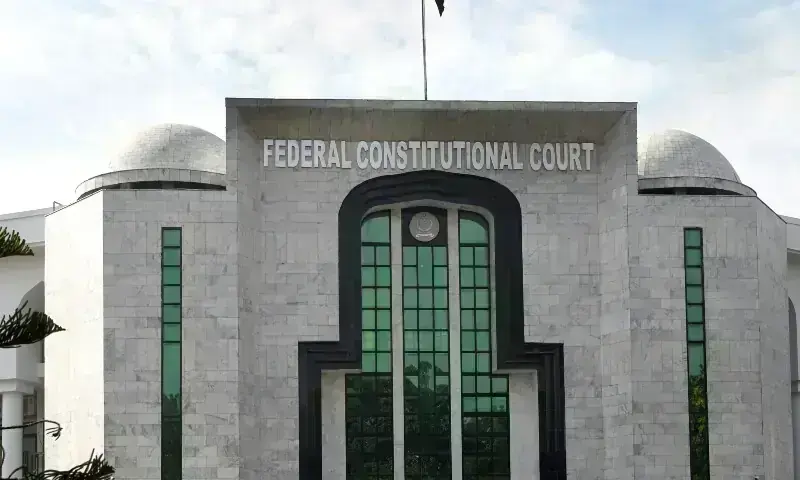
ISLAMABAD: In what has been billed as a verdict that may set a precedent for land use policy nationwide, the Federal Constitutional Court (FCC) on Wednesday ruled that land acquired for a specific public purpose — such as industrial development — cannot subsequently be converted into residential housing schemes.
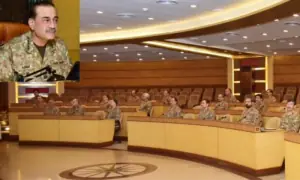
“We… hold that since the land in question was acquired specifically for the establishment of Paper and Board Mills, the petitioner company cannot claim, as a vested, absolute or indefeasible right, its conversion into a housing scheme,” FCC Chief Justice Aminuddin Khan observed in a judgement he authored.
A two-judge FCC bench, headed by Justice Aminuddin and comprising Justice Ali Baqar Najafi, took up an appeal filed by M/s Adil International (Pvt) Ltd against the Sept 11, 2024, judgement of the Peshawar High Court, which had rejected the petitioner company’s plea.
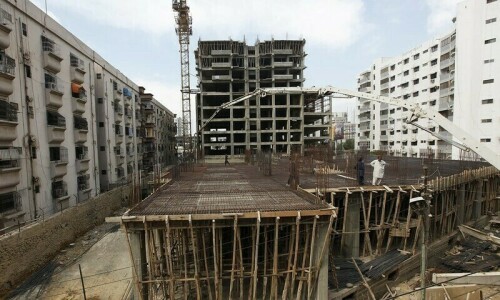
“The ruling will have significant implications since a number of lands initially acquired for industrial purposes have been converted into housing schemes in Punjab, Khyber Pakhtunkhwa and Sindh,” commented a senior lawyer on condition of anonymity.
In 1954, land measuring 1,020 kanals and 19 marlas, situated in Mohal Amangarh, Nowshera Khurd, tehsil Nowshera in KP, was acquired under the provisions of the Land Acquisition Act, 1894, for the establishment of Board/Paper Mills.
The dispute stems from the purchase of the assets of Adamjee Papers and Board Mills by Adil International through a court-supervised auction in 2000 for Rs220 million, free from all encumbrances.
Since the factory had become unusable, the company dismantled the structure after obtaining the necessary approvals and sought conversion of the land into a housing scheme. When the authorities refused to grant the required no-objection certificate (NOC), the petitioner company successfully obtained orders from both the PHC and the Supreme Court directing the authorities to consider issuing the NOC.
Eventually, the NOC was granted, following which the company developed the housing scheme, sold plots and commenced construction.
Subsequently, certain government authorities issued directives restricting the use and transfer of the land, leading to the refusal of registration and attestation of sale deeds. Consequently, the petitioner company sought directives for the registration of sale transactions. However, the PHC, on Sept 11, 2024, rejected the plea, prompting the company to seek leave to appeal.
In its 17-page judgement, the FCC held that the KP government would be at liberty to exercise its powers in accordance with the law and the terms and conditions of the Oct 16, 1954, agreement executed under Section 41 of the Land Acquisition Act, 1894, if it forms the opinion that the whole or any part of the land has become surplus to the requirements of the original purpose or is being utilised in a manner inconsistent with the object of acquisition.
The land acquired for a specified public purpose continues to remain impressed with, and subservient to, the very purpose for which its acquisition was sanctioned, Justice Aminuddin emphasised, adding that such land does not lose its public character merely because of a subsequent transfer, assignment or judicial sale.
Consequently, the verdict said, neither the beneficiary company nor any subsequent transferee, assignee or auction purchaser acquires an unfettered, absolute or indefeasible right to alter, divert or change the use of the acquired land except with the prior sanction of the provincial government and strictly in accordance with the terms and conditions embodied in the agreement executed under Section 41 of the Land Acquisition Act, 1894.
The FCC held that the PHC judgement was free from any illegality, irregularity or jurisdictional infirmity warranting interference and, while upholding the high court’s order, dismissed the petition as being bereft of merit.
Published in Dawn, July 9th, 2026