Ustad Khayal Mohammad — a culture’s enduring soul
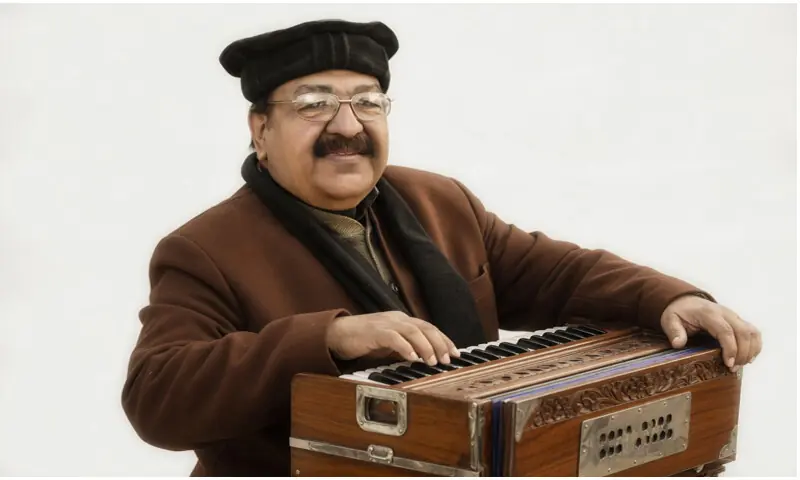


PESHAWAR: In the rugged mountains of Khyber Pakhtunkhwa, Ustad Khayal Mohammad’s voice has echoed like a timeless Rabab for over six decades.
A maestro who rose from humble village roots to become the undisputed king of Pashto ghazal, he blends classical depth with folk fire. As technology reshapes melodies, the legend opens his heart on a journey from radio waves to digital streams. His story is not just of music, but of a culture’s enduring soul.
This scribe caught up with the living legend’s excerpts during an interview.
Q: Ustad Sahib, your voice has enchanted generations. Tell us about your early career and how music chose you?
Khayal Mohammad: (chuckles warmly) Music didn’t choose me; it was my destiny, woven into my blood. Born in 1946 in Chora village of the then Khyber Agency to a deeply musical Afridi family, I grew up surrounded by the soul-stirring tunes of my father, Spin Gul, and my elder brother, Saif-ul-Maluk, who was already shining on Radio Pakistan Peshawar in the 1960s. At just thirteen, I stepped into the Radio Pakistan studio in Peshawar. My first performance was both nerve-wracking and liberating — like a young bird taking its maiden flight over our rugged mountains. Those early days were pure and magical.
Q: Radio played a pivotal role in your rise. How did it shape your artistry compared to later platforms?
KM: Radio was my first love and greatest teacher. In those golden black-and-white days, a single live broadcast could make or break an artist. The Peshawar studio felt like a sacred space. I learned unmatched discipline — perfecting every note, every taan, and every emotional pause to truly convey gham (sorrow) and ishq (love). Radio connected me intimately with Pathans across borders and remote villages.
Q: You also ventured into films. How was the transition from radio to the silver screen?
KM: In the early 1970s, I made my film debut with Dara-i-Khyber, one of the pioneering works in Pashto cinema, often called Pollywood. Singing playback for charismatic heroes and bringing the romance of our valleys to the big screen was incredibly thrilling. Films brought bright lights, large orchestras, and massive crowds, but they also brought challenges. I had to blend our rich folk essence with cinematic drama. I sang for many hit films and was honoured with the National Film Award for playback singing in 1991.
Q: Pashto folk traditions run deep in your work. How have they influenced your ghazals?
KM: Pashto folk is the mighty river from which we all draw life. Forms like Tappay, Badala, and Rubayi carry the timeless wisdom of great poets such as Khushal Khan Khattak, Rehman Baba, and Abdul Ghani Khan. I infused their poetic fire and mountain spirit into my ghazals, making them resonate with the common man’s joys, heartbreaks, and deep love for watan (homeland). Folk singing taught me the power of simplicity — the strum of the Rabab.
Q: The music landscape has transformed dramatically — from traditional to the digital era. What major changes have you witnessed?
KM: The shifts have been enormous and profound. In my youth, music was a sacred ustad-shagird (teacher-student) tradition, mastered through years of riyaaz (to learn music) under open skies. Poetry reigned supreme; every ghazal demanded complete mastery of language, emotion, and melody. Folk singing was deeply communal — weddings, jirgas, and festivals would come alive with live instruments and heartfelt voices. Then came cassettes and television, followed by the digital revolution. Technology has democratised music, giving wings to new talent and noise.
Q: How do you view the evolution of ghazal and folk singing specifically?
KM: Ghazal remains the glittering crown of our music — a graceful bridge between Persian-Urdu elegance and Pashto’s rugged beauty. Folk has moved from grand Badala ballads of heroism and romance to exciting fusion experiments. Modern singers are bold and experimental, which is wonderful, but some tend to forget the importance of madam and emotional authenticity. I always advise young artists: respect the raga, feel every word deeply before you sing it. Digital tools help us reach global audiences, yet nothing replaces the jadoo (magic) of a live performance under the open sky.
Q: Eid festivals have always brought special joy. Do you release albums around this time? What memories do they hold?
KM: Eid has always been incredibly special — a time of celebration, reflection, and new beginnings. Many of my albums were strategically released around Eid, filling homes with melodies of love, longing, and festive reunion. Those soulful ghazals captured the spirit of families gathering after separation. In the cassette era, people would queue up eagerly to buy new releases. Today, digital drops are instant, but the joy of waking up on Eid morning and hearing a fresh song remains beautifully timeless.
Q: Your sons Anwar Khayal, Wisal Khayal, and Shehzad Khayal are carrying the family legacy forward. How does that make you feel?
KM: It fills my heart with immense pride and deep peace. Born into this musical family, they inherited talent naturally, though I always let them choose their own paths. Anwar, Wisal, and Shehzad have beautifully carved their spaces with their own voices and styles. Watching them perform my old ghazals or create new ones feels like seeing my own journey continue through time. They understand the responsibility — to keep Pashto music alive, pure, and relevant. My grandsons are also showing early sparks of promise. The torch burns brighter with every generation.
Q: Finally, Ustad Sahib, what is your vision for the future of Pashto music?
KM: The future is bright, Insha’Allah, if we nurture it with love and respect. Pashto music is as resilient as our people. The digital era offers incredible platforms to reach our diaspora and the youth worldwide. Fusion with global sounds can enrich our tradition, but we must never lose its essence: poetry that heals the soul, melodies that stir the zama (heart). I urge young talents to master classical foundations, value live instruments, and always sing from the heart. As long as Pashto music echoes the noble spirit of Pakhtunwali — honour, hospitality, and heartfelt expression — it will continue enchanting the world for centuries to come.
Published in Dawn, June 1st, 2026