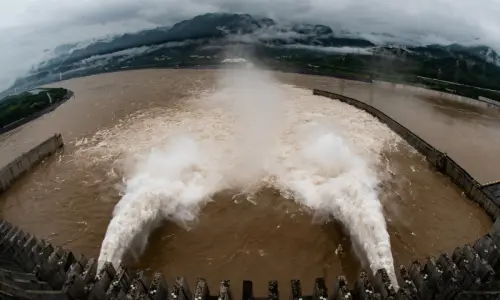
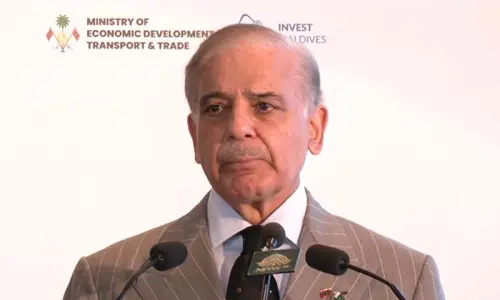
CLIMATE Minister Musadik Malik’s warning against what he described as “water aggression” indicates Pakistan’s anxiety regarding a possible repeat of India’s actions that had exacerbated flooding in parts of Punjab during last year’s monsoon. New Delhi’s illegal and unilateral suspension of the Indus Waters Treaty — long described as a successful transboundary water-sharing arrangement — has already opened a dangerous new front in bilateral tensions. Not just that. The issue has grown beyond a bilateral dispute into a test of international norms governing shared water resources. The dispute is no longer just about the illegality of India’s action; it is also about the ‘weaponisation of water’ by an upper riparian for political or other reasons. That the minister used an international water forum in Dushanbe to emphasise that the unilateral manipulation of shared rivers by India would create a dangerous precedent for downstream countries everywhere underscores this fact.
Mr Malik’s concern is not misplaced. Indian officials and media commentary increasingly portray water leverage as part of a broader coercive tool available to New Delhi against Pakistan. Reports suggest India is working to maximise upstream utilisation through dams and hydropower projects on the western rivers allocated to Pakistan under the IWT to choke downstream river flows in future. For Pakistan, the stakes are existential. The Indus basin underpins nearly its entire farm economy, sustains food production, supports hydropower generation and provides livelihoods to millions. Any prolonged uncertainty over water flows carries implications for inflation, food security, exports, rural incomes and economic stability. In a country facing climate stress, glacial melt and severe water scarcity, the mere perception of upstream vulnerability fuels insecurity. No wonder, even temporary disruptions in flows or aggressive upstream interventions can magnify economic pressures and heighten fears about both long-term agricultural sustainability and energy security. The IWT’s erosion could therefore remove one of the few institutional shock absorbers left in Pakistan-India ties. India should understand that its actions have damaged its image as a responsible state, and potentially exposed it to similarly coercive pressures from upstream countries such as China. It must also recognise that attempts to weaponise water will further destabilise the region. If water becomes part of the wider political conflict, restoring cooperation would be much harder than restoring the river flows themselves.
Published in Dawn, May 30th, 2026