Pilgrims pray on Mount Arafat as Haj reaches peak


 0
0

• Over 1.5m people, including 30,000 Iranians, participate in pilgrimage this year
• Authorities urged the faithful to drink plenty of water as temperatures hit 45 degrees Celsius
• Govt turns to drones to shield people from extreme heat
MOUNT ARAFAT: Huge numbers of Muslims prayed on Mount Arafat on Tuesday at the climax of the Haj pilgrimage, defying searing temperatures under the desert sun as they fulfilled a lifelong dream.
From daybreak, thousands of white-robed worshippers recited Quranic verses on the 70-metre (230 feet) rocky hill near Makkah, where the Holy Prophet (peace be upon him) delivered his last sermon.
Volunteers handed out bottles of water, parasols and food packages to the tens of thousands of pilgrims as they made their way towards Mount Arafat, as helicopters buzzed overhead regularly.
“It is an indescribable feeling,” said Ahmed Abu al-Ezz, a 35-year-old Egyptian engineer, as he approached Mount Arafat for the first time. More than 1.5 million people have joined the Haj this year under the shadow of the Middle East war.
During the fighting, Tehran retaliated with waves of drone and ballistic missile strikes, hitting major infrastructure and energy installations across the Gulf, including in Saudi Arabia.
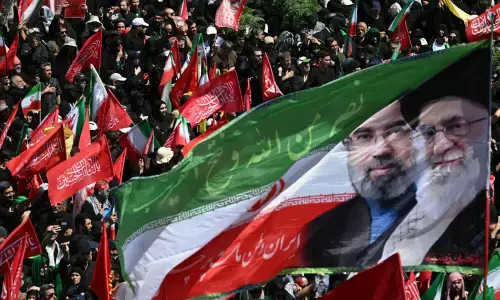
More than 30,000 Iranians have made the journey, about a third of the 86,000 originally expected. Iran’s IRNA state news agency said the “wartime situation” explained the drop.
Despite the war, Saudi officials said over the weekend that more pilgrims had travelled from abroad this year than in 2025.
Blistering sun
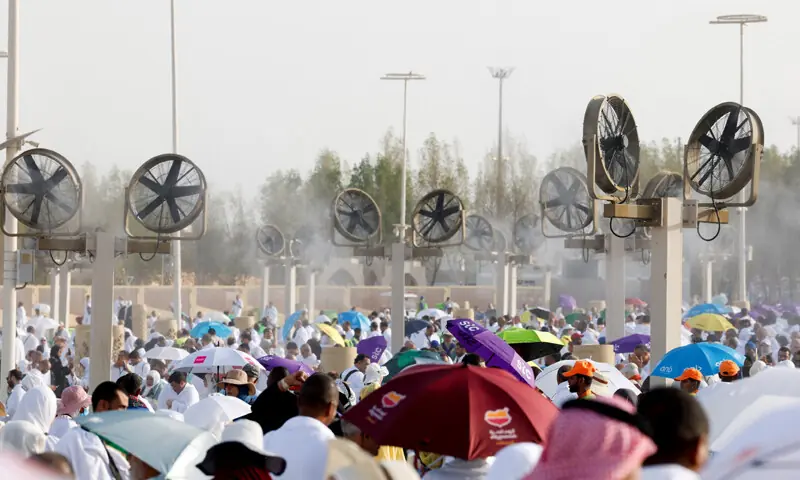
With temperatures hitting 45 degrees in Makkah in recent days, Saudi authorities have urged pilgrims to drink plenty of water and protect themselves from the sun during the mostly outdoor rituals, which can take five days or more to complete.
Scientists say human-driven climate change is amplifying extreme weather events, including intense summer heatwaves in many parts of the globe. Since men are prohibited from wearing hats during Haj, many carry umbrellas to try to keep the blistering sun at bay.
After more than 1,300 people died in 2024, when temperatures soared above 50 degrees Celsius, Saudi authorities introduced a range of heat-mitigation measures including more shaded areas and thousands of extra health workers.
More than 50,000 healthcare staff and 3,000 ambulances were deployed to help pilgrims in need, the Saudi health ministry said. After Mount Arafat, pilgrims will spend the night in Muzdalifah, where they will collect pebbles for the symbolic “stoning of the devil” ritual in Mina, starting on Wednesday.
Drones to shield pilgrims
With temperatures hitting 45C in Makkah this week, Saudi health workers have increasingly relied on drones to supply a vast array of medical clinics treating heat-stressed pilgrims during the Haj. But technology is rapidly changing the experience for pilgrims and officials alike — with AI, UAVs and mobile apps providing crucial services, logistical support and helping manage the mammoth crowds.
Rather than relying on congested roads filled with over 1.5 million pilgrims, drones in particular have proven to be a technological remedy for helping keep the 127 clinics spread across Makkah, Mina and Arafat adequately provisioned.
“The main goal is to provide fast service to the guests of God during the season,” Fahd Al-Bathi, the chief operating officer at the National Unified Procurement Company (NUPCO), said.
Preparations for the medical needs of the Haj season began nine months ago. Standing before a colour-coded map of medical centres dotting the area, the NUPCO operations officer Turki Al-Obaidi said his teams work around the clock during the Haj.
“Our teams must ensure we reach patients as quickly as possible. This is a crucial factor with these extremely large crowds,” he added. Before the adoption of drones, drivers could spend over an hour en route to clinics running low on supplies.
Now, authorities have centralised operations around a sprawling centre that supplies drones with medications and other necessities. “We are seeking to integrate new innovations through which we can ensure that medical supplies arrive safely, as quickly as possible, and with the highest quality,” said Bathi.
In the operations room — equipped with a giant data screen — staff carefully track drone deliveries, while other employees use electric scooters to get around faster.
Drones are part of a growing arsenal of technology-led solutions aiming to better manage the Haj and the challenges presented by the searing desert climate. Artificial intelligence has been deployed to help monitor the footage from thousands of cameras in and around the holy city of Makkah.
The new solutions help supplement more traditional methods to manage the heat, which include giant fans, trucks distributing free water and mist systems that help cool crowds. “Heat exhaustion is one of the main issues” during the Haj, said Saudi health official Jamil Abu Al-Aynayn. “We maintain a high and rapid level of readiness.”
Published in Dawn, May 27th, 2026