1
1

PULITZER Prize-winning author Viet Thanh Nguyen was looking back. So, it turned out, was I.
His post appeared in my feed alongside a Facebook memory: a photograph from the edges of my own graduation, 10 years ago, when I was finishing one kind of learning and ready to begin another. Viet was reflecting on an essay he had written in 2017 in the Los Angeles Times, noting that some portion of it had appeared on an AP literature exam this year. He wrote how his meditation on self-doubt, slow work and the long road to becoming a writer had found its way into an American syllabus, into the category of things worth knowing.
I remembered reading that essay when I was a new journalism instructor in Karachi. It had meant something to me then. Reading it again now, teaching a different kind of writing to a different kind of student, it means something else.
Viet writes about ignorance, not as failure, but as condition. He argues that not knowing can be as useful as knowing, provided you are aware of it. He spent 17 years finishing a short story collection, 14 years on a scholarly book. He sat in a chair for thousands of hours with no guarantee that anything transformative was taking place, sustained by something that looked, from the outside, a lot like uselessness.
There is a value to uselessness, even boredom. But we have forgotten that. Left alone for a second, we reach for our phones. We wear headphones that signal to the world: do not disturb. Idleness is failure. Our brains must always be occupied.
Whose histories, whose plurality, do we consider worth addressing?
We do not value uselessness here.
We want results, legible and soon.
Over these past 10 years, I have watched my students reach for the shortcut before they have sat long enough with the problem to understand what the problem actually is. I am saying this as someone who has used an AI assistant so I will not throw stones. But there is a difference between a shortcut that serves the work and a shortcut that replaces the work entirely. What worries me is that we are losing the ability to tell them apart.
Boredom has a function. Not knowing has a function. The discomfort of sitting with a half-formed idea, of writing badly for long enough that you begin, slowly, to write less badly. That is not wasted time. That is the time. Viet calls it an act of faith. I think he is right. And faith, as he notes, would not be faith if it were not hard.
But here is where I stop being able to stay comfortable. Viet’s article about slow work, self-doubt and the unglamorous formation of a writer ended up on an American syllabus. It was considered worth teaching, worth examining. The question it leaves me with — sitting here in Karachi, 10 years on from a classroom I once stood in — is simple.
Could any of my columns make their way to our syllabus?
How would students feel reading what I’ve written about how the state suppresses marginalised voices, the way it treats its women, its journalists who attempt to hold the powerful to account, the minorities who can’t practise their faith freely?
What kind of syllabus would allow this?
That is not a rhetorical question.
Not just in the formal sense, though that question alone could occupy several columns. I mean the broader syllabus. What do we think is worth the slow work? Whose formation are we investing in? Whose histories, whose plurality, whose ignorance do we consider worth addressing in a classroom, or anywhere else? Ignorance about who we are — about our own complexity, our own contradictions — is not of the productive kind. It is not Viet’s ignorance, the kind you are aware of and moving through. It is the kind that gets handed down and called certainty.
We are producing a generation of aspiring writers in a country that has not yet decided what stories are worth telling slowly. That is the gap I keep returning to. Not the shortcuts. Not even the AI. The syllabus.
Viet spent 20 years in a chair, uncertain, unrecognised, doing work that could not be measured. What came out of it ended up in an exam hall in America, read by students who had perhaps not heard of him, being asked to think carefully about what it means not to know.
That is the syllabus I want. Not the one that tells you what to think, but the one that teaches you to sit with not knowing long enough for something true to form.
We are not there yet. But the chair is available. The question is whether anyone is willing to sit in it.
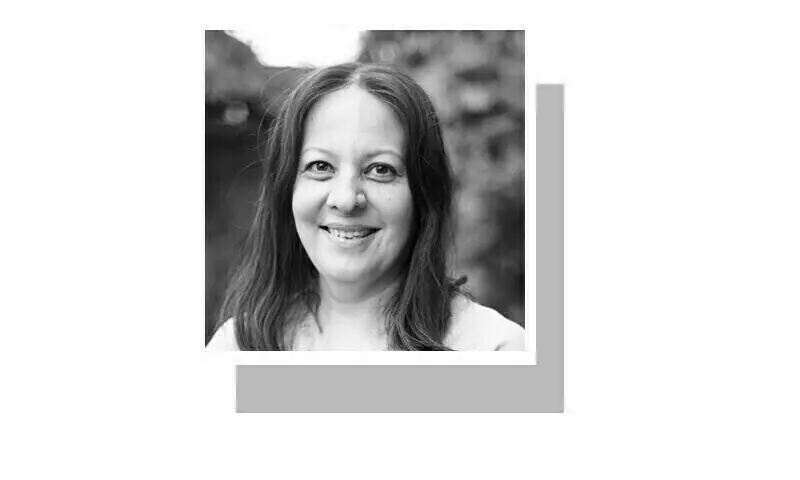
The writer is a former journalism instructor
Published in Dawn, May 24th, 2026