Can Brazil become a major rare earths supplier?
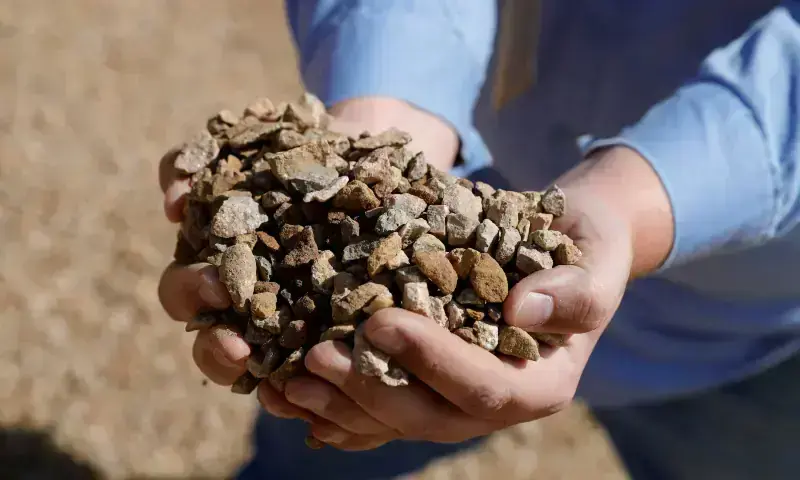

Brazil sits atop a potential bonanza of rare earths that has sparked global interest, led by Washington, as demand surges for the increasingly vital minerals.
But any windfall still appears a distant prospect as Latin America’s biggest economy currently mines only a marginal amount.
Only China has greater reserves of the critical minerals which are essential to make everything from smartphones to electric vehicles and missiles.
Despite their name, the 17 elements are not actually rare, but rather extremely complex to extract and the requisite capital and technology are in short supply in Brazil.
So can the Latin American giant become a major supplier?
How large are the reserves?
Brazil has more than 20 million tons of rare earths, according to estimates by the US Geological Survey (USGS).
It holds the second-largest reserves after China and ranks far ahead of India, the third-placed nation which has an estimated 6.9 million tons of the critical minerals.
But Brazil exported only 20 tons in 2024, a tiny share of global production, which the USGS estimated at 390,000 tons that year.
China accounts for around two-thirds of the total global production.
Why is production so low?
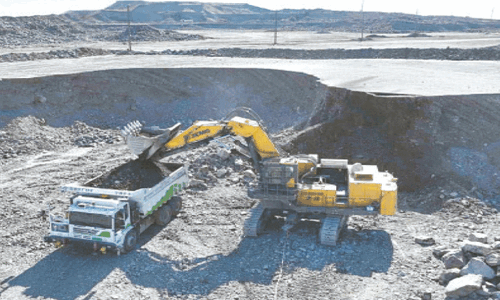
Rare earth elements are found in sands, clays or rocks alongside dozens of other compounds and must be separated through a costly process.
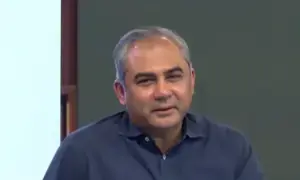
“Between what we extract from the ground and the oxide (of rare earths), which would be 99.9 per cent pure, there are at least 400 industrial processes,” explained Pablo Cesario, president of the Brazilian Mining Institute (IBRAM), which represents the sector’s main companies.
“We can do this at laboratory scale. What we do not have — and almost nobody in the world has — is this processing technology at industrial scale,” he added during a virtual press conference.
Julio Nery, director of mining affairs at IBRAM, said the country needs infrastructure, technological research and a cheaper, more abundant energy supply to ramp up production.
Brazil is already one of the world’s leading mining countries, producing large quantities of iron ore, gold, bauxite and graphite. It dominates the global supply of niobium — used to strengthen steel.
Who is leading the scramble for rare earths?
In a bid to challenge China’s dominance over the rare earth market, Washington is actively encouraging exploration in Brazil.
“We see Brazil as a place with the potential for billions in investment. We are already on that path, with over $600 million invested,” an American embassy spokesperson, speaking on condition of anonymity, told reporters at an event with investors in March.
During the meeting, Washington signed a memorandum of understanding with the state of Goias in central Brazil to encourage rare earth mining.
And in April, the American company USA Rare Earth bought Serra Verde — the company operating Brazil’s only producing rare earth mine in Goias — for around $2.8 billion.
Australia has also emerged on Brazil’s rare earths scene through the company Foxfire Metals, while China has a stake in a project in the Brazilian Amazon, according to IBRAM.
What does the government say?
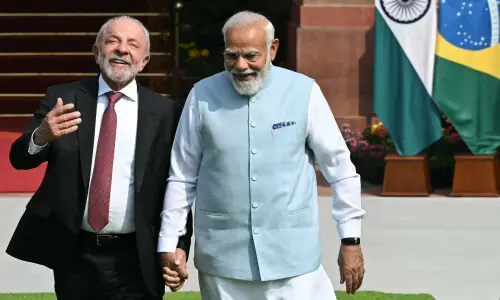
President Luiz Inacio Lula da Silva has said he is willing to “make agreements with all countries.”
“But no one … will ever lay claim to our wealth,” he said.
This week, the leftist leader invited the United States to “partner” with Brazil in rare earth exploration, days after meeting US President Donald Trump at the White House, with whom he has had an up-and-down relationship.
This month, the lower house of Congress in Brazil approved a bill offering tax incentives to the private sector to develop the industry, while also increasing state control over it.
The text gives the executive branch veto power over agreements with foreign companies for reasons of “economic or geopolitical security,” something the private sector dislikes.
“What is written there is that the government has the final say in everything. And that is a concern,” IBRAM president Pablo Cesario told journalists.
“The expectation is that it will change in the Senate,” where it will be debated on a date yet to be determined, the industry leader added.