Victory in Marka-i-Haq ‘elevated Pakistan’s global standing’


• Dar thanks Trump, Saudi and Turkish efforts towards ceasefire with India
• Asif claims country has emerged as symbol of stability, guarantor of peace in the region
• Pakistan’s ‘principled stance’ resonated, while world rejected Indian narrative for lack of credibility, Tarar maintains
ISLAMABAD: As Pakistan takes centre stage in global diplomatic efforts to end conflict in the Middle East, key leaders have highlighted how the country made significant diplomatic gains and earned recognition at the international level after defeating Indian aggression last year.
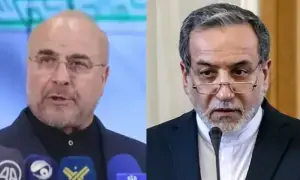
In separate engagements held to mark the first anniversary of Marka-i-Haq on Tuesday, Deputy Prime Minister Ishaq Dar, Defence Minister Khawaja Asif and Information Minister Atta Tarar acknowledged the role of the country’s armed forces, backed by the people, in defending Pakistan’s sovereignty and territorial integrity.
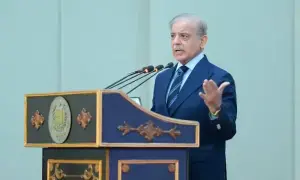
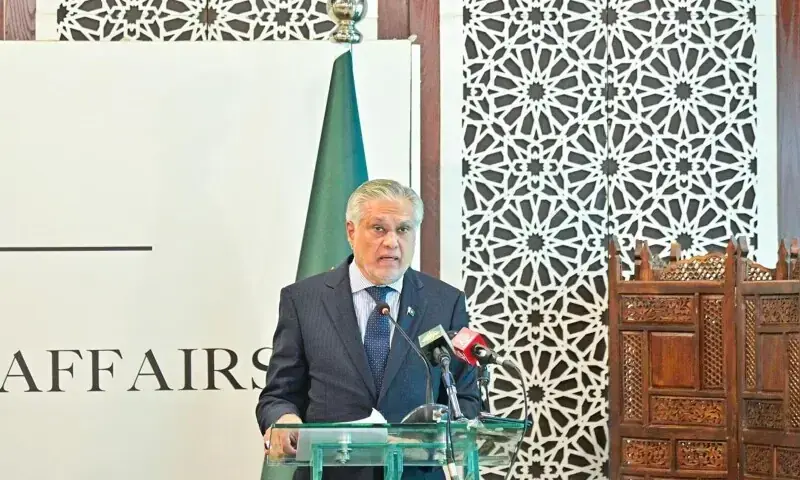
Addressing ambassadors and members of the diplomatic corps at the Ministry of Foreign Affairs, Dar stressed that Pakistan’s response to India’s unprovoked aggression had reaffirmed its commitment to the principles of sovereignty, territorial integrity and political independence as enshrined in the UN Charter, and that regional peace could not be held hostage by the politics of hatred and division.
The deputy prime minister said the events of last year had brought the region to the brink of disaster, alleging that India’s actions followed a pattern of escalation, including unsubstantiated allegations against Pakistan and inflammatory rhetoric.
He also expressed concern over India’s unilateral decision to hold the Indus Waters Treaty in abeyance, terming it a violation of established norms and a threat to regional stability.
He warned that any attempt to stop or divert Pakistan’s share of water would be considered an act of war, as underlined
by the National Security Committee last year, and pointed to “irregular fluctuations” in river flows, particularly in the Chenab River and Jhelum River, as evidence that New Delhi was not living up to its treaty obligations.
Dar appreciated the role played by US President Donald Trump in helping achieve a ceasefire and acknowledged the contributions of Saudi Arabia and Turkey, along with other friendly nations, saying that Islamabad’s current support for peace in the Middle East, including efforts aligned with UN resolutions on Gaza, showcased its commitment to multilateralism.
He said that Pakistan had actively maintained extensive diplomatic outreach, engaging with over 120 foreign ministers and global leaders to build consensus for de-escalation between the US and Iran, as well as facilitating dialogue between the key stakeholders.
He stressed that Pakistan’s efforts were aimed at achieving a win-win out-come for all parties, adding that global economic stability, energy prices and supply chains had been adversely affected by ongoing conflicts.
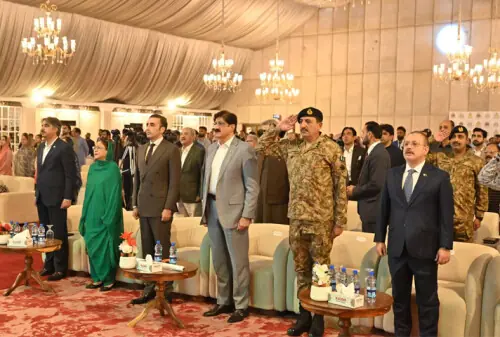
Meanwhile, speaking at the launch of The Battle of Truth, a book and accompanying documentary which recounts the events of May 2025, Defence Minister Khawaja Asif said that Pakistan had emerged as a more stable and powerful country, becoming a symbol of stability and a guarantor of peace in the region.
Lauding the prompt and decisive response delivered by Pakistan’s armed forces to unprovoked Indian aggression, the defence minister said that the country’s response to any future hostility would be even more forceful.
India’s hegemonic mindset poses a serious challenge to peace and development in South Asia, he said, adding: “We are ready for any kind of Indian proxy war”.
He also maintained that Pakistan had consistently played a constructive role in promoting global peace, being one of the leading contributors to United Nations peacekeeping missions.
Speaking at the same ceremony — organised by Inter-Services Public Relations and his ministry — Information Minister Atta Tarar said that Pakistan’s principled stance resonated more strongly at the global level, as the global community rejected the Indian narrative due to a lack of credibility and consistency.
Published in Dawn, May 6th, 2026