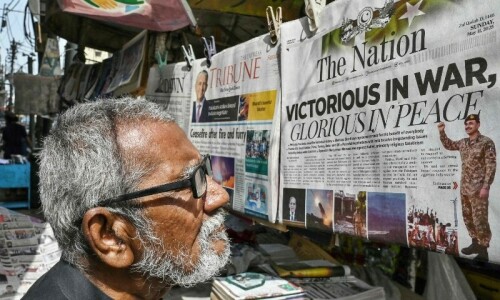
A YEAR since India launched unprovoked attacks against Pakistan using the Pahalgam tragedy as an excuse, and this country defended itself with full vigour, the stalemate in South Asia continues.
The principal reason for this remains India’s obduracy and its unwillingness for a peaceful settlement with Pakistan. As conflict engulfs the rest of the region, New Delhi should be thinking of ways to bring down the temperature bilaterally. But unfortunately, the Indian leadership remains wedded to bellicosity, with senior figures in the BJP-led government continuing to threaten Pakistan.
Last May’s brief Pakistan-India war brought several truths to the fore, and offered lessons for those willing to learn. For one, Pakistan retained the moral high ground by only hitting military targets in India. New Delhi’s forces, on the other hand, had no compunctions about hitting mosques, madressahs and civilian water projects in Pakistan.
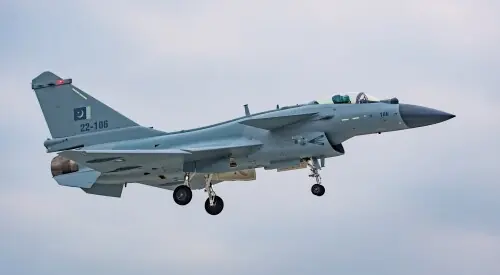
Moreover, Pakistan’s armed forces, particularly the PAF, replied to the call of duty ably, repelling the aggression with skill. In fact, the PAF’s combat performance was lauded by military experts globally. The Pakistan military used technology adeptly, and capabilities in the cyber realm were deployed with precision. Political differences were largely put aside when it came to the country’s defence, while the people showed exemplary solidarity.
And though war is a serious business, there were indeed ‘light’ moments, as large sections of the Indian media outdid themselves in ‘breaking’ the most preposterous fake news stories. These ludicrous ‘scoops’ included the startling ‘news’ that India had ‘destroyed’ Karachi port, and that Lahore had ‘fallen’ to enemy troops. The tragicomic antics of a number of news outlets in India have provided meme material for generations to come.
While Pakistan has proved itself on the battlefield, a situation of constant tension in South Asia suits no one. Yet sadly, the war hawks in India are unwilling to turn the page and make peace. Pakistan still faces considerable challenges to its legitimate water rights with India’s unilateral ‘suspension’ of the Indus Waters Treaty, while continuous threats from New Delhi create a toxic atmosphere in the region.
It should be remembered that India’s narrative of alleged cross-border militancy originating from Pakistan has not found many takers in the international community. Even some of India’s close foreign allies, while expressing sympathy for the lives lost in Pahalgam, refused to blame Pakistan for the atrocity, without any solid proof. Rationality demands that both states come to the table and discuss their grievances, and their solutions in a mature manner.
But when Indian politicians and generals say that the so-called Operation Sindoor has only been ‘paused’, the chances of peace seem remote. It is hoped that saner minds in New Delhi reconsider these pugnacious stances, and take up Pakistan’s offer of dialogue.
Published in Dawn, May 6th, 2026