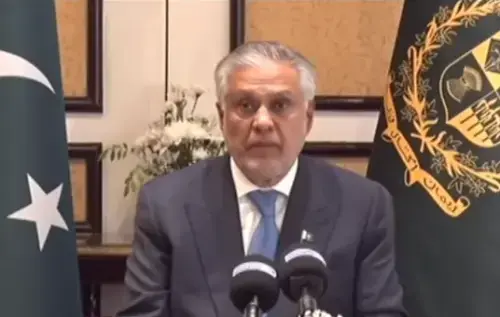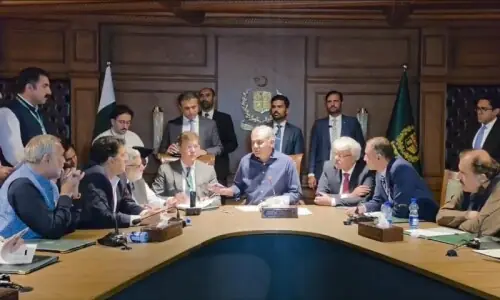


PAKISTAN’S role as a mediator in the US-Iran conflict has placed it at the forefront of diplomatic efforts, prompting many to recognise the country as a middle power. This delicate balancing act in conflict resolution has garnered international acclaim for Pakistan. However, concerns arise regarding the sustainability of this prominent position, given entrenched geopolitical fault lines.
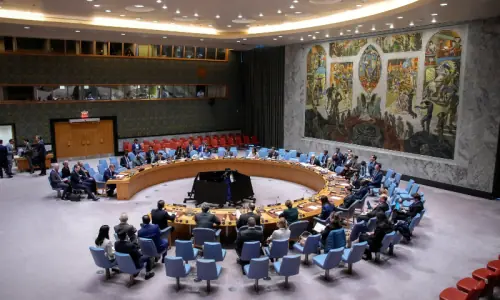
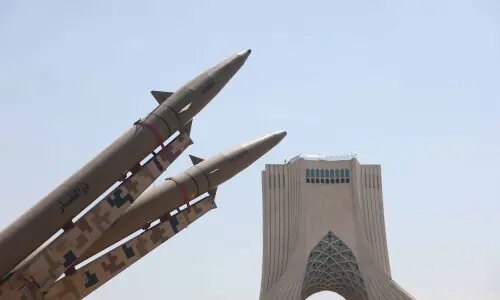
In an increasingly fractured world order and the emergence of multilateralism, the role of middle powers has become more significant in the resolution of conflicts. However, this task is complicated when powerful countries use military force without regard for international laws. The illegal US-Israel war on Iran serves as a pertinent example. Nevertheless, the warring parties still require some form of mediation or facilitation to end the conflict.
Pakistan is ideally positioned for that role. It has close relations with both the US and Iran and has not been directly or indirectly involved in the conflict. It has also enjoyed the confidence of regional countries in the situation. Bringing Iran and the US to the negotiating table was certainly a challenging task.
In recent years, several countries have acted as facilitators in peace talks during conflicts. However, Pakistan has been far more deeply involved as an interlocutor in its efforts to resolve a most complicated and volatile situation. There is, though, still the question of whether playing this intricate role qualifies Pakistan as a middle power as other criteria may be necessary to fit that definition.
No doubt, it’s a feel-good moment, but it should not divert our focus from critical national challenges.
There are differing views on what constitutes a middle power. The most common description defines it as a state that possesses enough influence and clout to play an important role in international affairs without being a dominant world power. The role of middle powers has become increasingly relevant in a multipolar world. These nations gain influence not only through their diplomatic standing but also their economic strength.
Pakistan’s geostrategic position and status as a nuclear power indeed make it a formidable military force in the region; however, its weak economy and internal security issues undermine its position. These vulnerabilities were overlooked while we revelled in our newfound diplomatic glory. Amid our efforts to resolve perhaps the most consequential conflict in recent history, we faced an economic emergency when the UAE withdrew its $3.5 billion deposit from the State Bank. The crisis was resolved only after Saudi Arabia came to our rescue.
Meanwhile, the military stand-off on our western border with Afghanistan and the resurgence of violent militancy in two strategically located provinces has highlighted serious challenges at a time when Pakistan was trying to mediate in a conflict of global significance. The paradox could not be more evident. It also raises questions about the recognition as a middle power.
It may be the first time that Pakistan is playing a high-profile role as a peacemaker. It should be remembered the country has taken international centre stage as a front-line state in major global conflicts primarily due to its geostrategic position. The Afghan war against the Soviet Union in the 1980s and America’s two-decade war in Afghanistan post 9/11 positioned Pakistan as an important Western ally and regional player. But being in the international limelight diverted our attention from critical domestic issues, leaving the country economically and politically more unstable each time.
The flow of financial and military aid has made us dependent on external support in the absence of economic and social reforms at home. Each war has resulted in the strengthening of authoritarian forces. We fail to learn any lessons from our own history as we revel in fleeting moments of international glory.
This is exactly what is happening now, as we congratulate ourselves over the global appreciation of our efforts. While we should not underestimate our diplomatic achievements, we must avoid exaggerating their success. It is, no doubt, a feel-good moment for the country, but it should not be overplayed as an example of Pakistan’s emergence in the big power league, nor should it divert our attention from the critical challenges we face.
Highlighting every comment made by US President Donald Trump, the man responsible for unleashing a brutal war, does not bode well for the country’s image, especially when he eulogises security and civilian leaders. The world hardly takes him seriously due to his ever-changing stance. In fact, his effusive comments risk undermining Pakistan’s position as a neutral peace broker.
There is now much talk about Pakistan’s potential role as a ‘net security provider’ in the region after the US-Iran conflict. This is a dangerous proposition, as it risks overstretching Pakistan’s defence capabilities and involving the country in regional conflicts. This is the last thing the state should aspire to, given that it faces serious internal and external security challenges. Pakistan needs to focus entirely on economic stability rather than becoming a regional security provider.
As a developing nation, it must brace itself for the spillover effects of the war. A net importer of energy, Pakistan is among the countries worst affected by the economic fallout of the conflict. Rising energy prices have already had inflationary effects, pushing more people below the poverty line.
The country will also be directly impacted by political upheaval and shifting regional power dynamics. It is certainly in Pakistan’s best interest to play a role in ending the war but to avoid becoming involved in any regional conflict as a net security provider. The conclusion of the war and the changing political and security landscape of the Middle East are likely to present some economic opportunities for Pakistan. Unfortunately, with weak fundamentals, the country may not be prepared to take advantage of these opportunities.
To truly become a middle power, Pakistan needs to fully concentrate on building its economy and achieving political stability, following Deng Xiaoping’s famous saying: “Hide your strength and bide your time.”
The writer is an author and journalist.
X: @hidhussain
Published in Dawn, April 29th, 2026