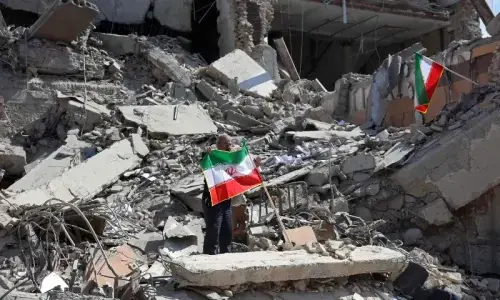


IT is becoming increasingly uncertain how long the Iran war, now in its third month, will last. Until recently, it seemed American and Iranian interests aligned in wanting to avoid a protracted conflict, although Israel’s didn’t. That impression gained strength when they held their first, and so far only, face-to-face talks in Islamabad last month.
After that the peace process faltered and a second round of negotiations proved elusive, despite intense efforts by Pakistan, supported by key regional states. Pakistan’s active mediation subsequently involved exchanging messages and negotiating proposals between Tehran and Washington. That process continues.
The ceasefire has held, which is positive. But it is a precarious truce in a volatile environment. The hardening public postures of both sides have impeded the search for an off-ramp from the crisis. President Donald Trump has oscillated between threatening to restart military operations and signalling openness to talks.
This has made it difficult to ascertain what he really wants. It is one thing to use threats to mount pressure, but quite another when actions such as aggressive US enforcement of the blockade heighten the risk of renewed military confrontation. It also doesn’t help when he makes disingenuous claims such as Iran telling him it is in a “state of collapse”. Trump turned down the Iranian offer of a three-step plan to end the war as it sets aside the nuclear issue at the start to be addressed later. He has also rejected Tehran’s revised proposal.
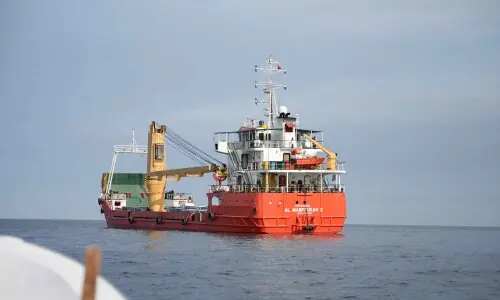
Meanwhile, Iran has used its leverage of control of the Strait of Hormuz to raise the costs of the war for the US, its Gulf allies and for the global economy. It has demonstrated it can wage an effective asymmetric war and absorb a high degree of pain from US-Israeli military strikes.
Both the US and Iran are reluctant to demonstrate flexibility lest the other side construes that as weakness and a ‘win’ for itself. This is a recipe for the diplomatic impasse to persist and presents an obstacle for a swift way out of the conflict. If both sides perceive they have more to lose in showing accommodation than by continuing with the present fraught situation this diminishes chances of an early end to the war.
Both sides should have a common interest in averting a protracted conflict but the impasse persists.
Washington and Tehran have given different time frames for ending the war. President Trump has often declared it would end in a few weeks, even days. But more recently, he ruled out an “early” end, saying four weeks of war is nothing compared to the long conflicts in Vietnam and Iraq. Iranian leaders have said they are prepared to end the conflict but want guarantees against future aggression. So, while both say they want the war to end, they have set terms the other side have so far found unacceptable.
It is hard to say which of the two has an incentive to prolong the war. Some analysts have argued that Iran does. Writing in the Financial Times, Edward Luce suggests that by keeping the strategic waterway closed for a long time, Iran can impose greater costs on the US, especially as Trump has made reopening the strait his principal war goal.
It can also be argued that Iran believes time is on its side and by holding out, roiling global energy markets and raising the political and economic costs for Trump, it can secure a better deal in negotiations down the road. A prolonged conflict will, however, compound Iran’s economic troubles. Inflation is already at a record level. While its threshold for pain may be high Iran’s declining capability to export oil will cost it dearly.
As for the US, Trump believes Iran can be forced to agree to a deal on his terms by prolonging the blockade. He has repeatedly said he intends to continue this for months as it will compel Iran to negotiate. This would rule out an early end to the conflict.
Washington’s assumption is that gunboat diplomacy would economically strangulate Iran, prevent it from exporting oil and create shortages of everyday commodities. Tehran will then have no choice but to capitulate to US demands. But dragging out the blockade will be contrary to Trump’s key goal of keeping fuel prices and inflation down at home.
So, while the nature of the conflict has changed to acts of economic coercion by both, neither side seems ready to back down yet although it should be in their economic interest to swiftly end the war. The danger is of prolonged confrontation, with no active hostilities, except when reignited periodically, but no resolution of conflict. This would make for a highly unstable situation, prone to miscalculation by either side and with the heightened risk of relapsing into full-scale war. Israel would, of course, welcome a return to hostilities.
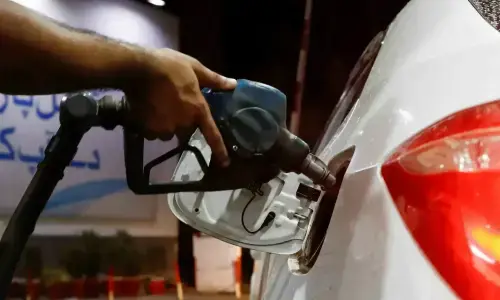
The economic consequences of a protracted conflict will be far-reaching for the global economy and countries across the world, especially in the Global South. Energy markets have been in turmoil from what is described as “the biggest oil supply shock in history”. Oil prices have surged amid concerns of prolonged supply disruption and dwindling of global stockpiles. Shortage of liquified natural gas has driven up prices.
The energy disruption is fuelling global inflation, will dampen economic growth and threatens a recession. Global supplies of other key commodities have also been disrupted, which include fertiliser, helium, aluminum and petrochemicals. This is having a damaging impact on global food production and will increase food prices particularly in poorer countries. Rise in fuel and food prices will drive millions into poverty, according to a UN report.
The US economy is not immune to the economic fallout of prolonged conflict. Fuel prices have already risen to create inflationary pressures while slower growth is forecast. This ahead of mid-term Congressional elections can exact a political price for Trump whose public approval ratings have plunged in the wake of cost-of-living anxieties. Only 30 per cent of voters approve his handling of the economy while the latest Washington Post-Ipsos poll found 61pc of people believe attacking Iran was a mistake.
One of the immutable lessons of history is that wars are easy to start but hard to end. The Iran crisis is the latest testimony to that.
The writer is a former ambassador to the US, UK and UN.
Published in Dawn, May 4th, 2026