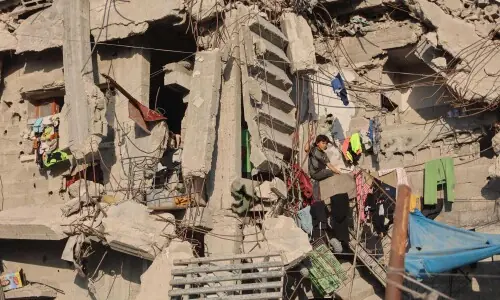
KYIV/LONDON: Russian attacks on Ukraine killed at least 22 people on Tuesday, including 12 in one of the worst strikes so far this year, as the deadline approached for a proposal from Kyiv for an open-ended ceasefire to begin at midnight.
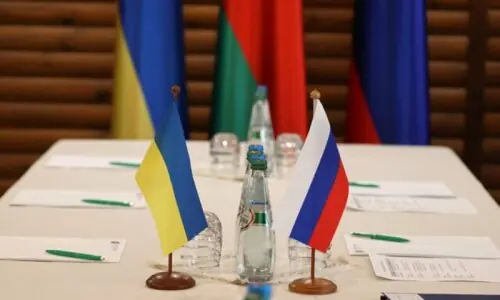
Russia announced a ceasefire for May 8-9, dates when it commemorates the Soviet Union victory over Nazi Germany in World War Two and holds a military parade.
Ukraine, in response, announced a proposal for an open-ended ceasefire starting at midnight on Wednesday, urging Russia to reciprocate. President Volodymyr Zelenskiy said it was not an option for Russia to halt strikes for one day for its military parade while having heavily pounded Ukraine.
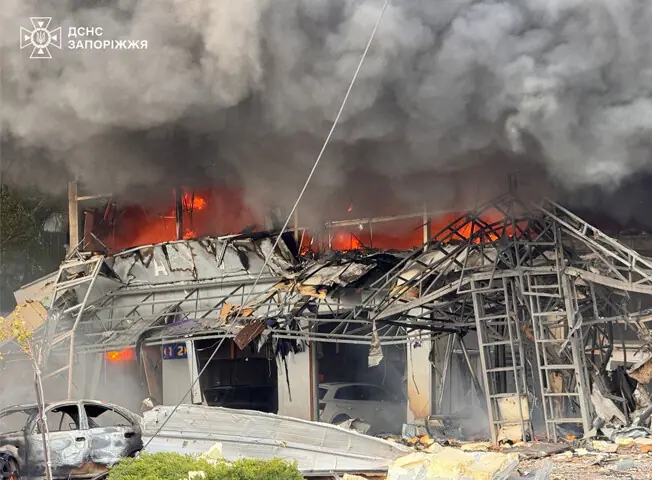
At least 12 people were killed in the city of Zaporizhzhia, emergency services said on the Telegram app. According to the regional governor Ivan Fedorov, at least 16 more were injured.
Two hypersonic scientists get long jail terms at closed-door treason trial
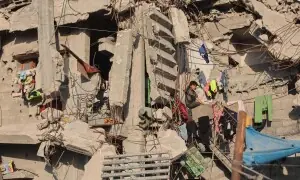
Residential buildings, a car repair service and a car wash were damaged in the attack, he said. The attack also sparked fires at a shop and an unidentified enterprise, he added. Images from the site that he shared showed a heavily damaged building with billowing flames and smoke. Cars are seen burning as first responders help bloodied people leave the site.
Three aerial bombs dropped on the eastern frontline city of Kramatorsk killed five other people, Zelenskiy said on Telegram. Five people were injured, he added, warning that the death toll might rise.
A Russian overnight strike on the gas production facilities in the Poltava region killed five, Ukrainian officials said. In Russia, a Ukrainian drone attack on the Chuvashia region killed two on Tuesday, the Russian state news agency reported.
Hypersonic scientists
Two Russian physicists involved in research underpinning the development of hypersonic missiles were convicted of treason on Tuesday and were both sentenced to 12-1/2 years in a penal colony, state media reported. The trial of Valery Zvegintsev and Vladislav Galkin, conducted behind closed doors for reasons of state secrecy, was the latest in a series of treason cases against scientists researching super-high flight speeds.
President Vladimir Putin has boasted that Russia is a world leader in the production of hypersonic missiles, which it has deployed in the war with Ukraine. The weapons are capable of travelling at up to 10 times the speed of sound to punch through air-defence systems. Supporters of the scientists said the prosecutions reflected the zeal of the FSB security service to root out imagined enemies of the state in a field of such importance and sensitivity.
Published in Dawn, May 6th, 2026