West Bengal CM refuses to resign after poll defeat
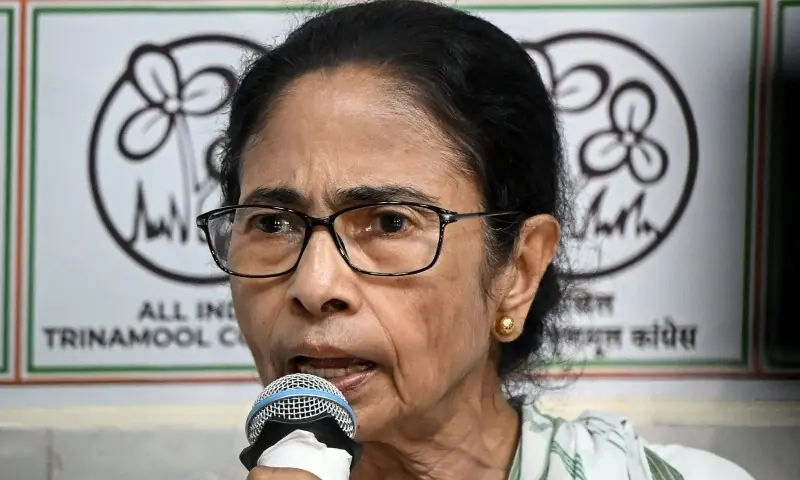


NEW DELHI: The chief minister of West Bengal, who was swept from power this week by Prime Minister Narendra Modi’s Bharatiya Janata Party (BJP) in state elections, said on Tuesday that she had “not been defeated” and would not resign, in an unprecedented political twist.
The BJP defeated Chief Minister Mamata Banerjee’s Trinamool Congress (TMC), which has been in power in West Bengal since 2011, securing more than two-thirds of the 294 seats when votes were counted on Monday.
The BJP has never ruled West Bengal, a populous eastern state that borders Bangladesh, and its victory is considered a political milestone as the party now controls almost all states in eastern India.
The TMC tally fell to 80 seats from its earlier 215, with Banerjee herself losing her seat.
Banerjee said about 100 seats were “forcibly taken” from her party, which also had to contend with a “biased” Election Commission. She did not back her accusation with evidence.
“I will not resign, I did not lose... officially, through the Election Commission, they (the BJP) can defeat us, but morally, we won the election,” she told a news briefing.
West Bengal’s Chief Electoral Officer Manoj Kumar Agarwal termed the allegations “baseless”. The BJP’s Suvendu Adhikari, who defeated Banerjee, said “everything is mentioned in the constitution”.
Appeal in court
According to the Indian constitution, the state’s governor can demand Banerjee’s resignation or wait for her term to expire, after which newly elected lawmakers would be sworn in and the process of forming a new government would begin.
Banerjee’s term is set to end on Thursday.
A defeated candidate in an Indian state election can challenge the result in court on grounds including corrupt practices, improper acceptance or rejection of nominations or votes, candidate disqualification, or non-compliance with election laws that affected the outcome.
Published in Dawn, May 6th, 2026