Russia, Ukraine agree on truce for Orthodox Easter
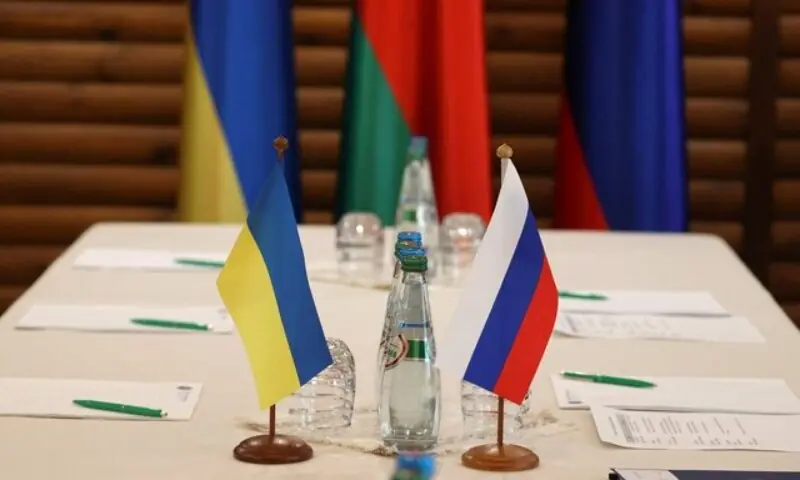
KYIV: Russia and Ukraine have agreed to a ceasefire over Orthodox Easter, a temporary truce that the Kremlin says will begin on Saturday afternoon and end on Sunday night.
Russian President Vladimir Putin ordered the ceasefire late on Thursday, more than a week after Ukrainian President Volodymyr Zelensky first called for a truce over Easter.
The announcement comes amid a lull in US-led diplomatic efforts to end the four-year war.
The ceasefire would be in effect from 4pm (1300 GMT) on Saturday until the end of the day on Sunday, a 32-hour period.
Russia’s Defence Minister Andrei Belousov and army chief Valery Gerasimov have been instructed to “cease hostilities in all directions during this period”, the Kremlin said.
“We assume that the Ukrainian side will follow the Russian Federation’s example,” the Kremlin added, calling it a “humanitarian” pause.
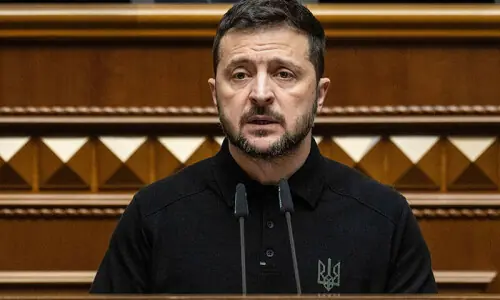
Zelensky said shortly after that Ukraine had “repeatedly stated” it was ready for a ceasefire over Easter, and was willing to reciprocate.
“We proposed a ceasefire for the Easter holidays this year and will act accordingly,” he said.
The Kremlin’s spokesman denied Russia had discussed the ceasefire with Ukraine or the United States in advance.
Previous truces
Russia announced a similar, 30-hour truce with Ukraine over Orthodox Easter last year.
Both sides accused each other of violating it hundreds of times, although the Ukrainian air force reported a lull in Russian air raids during the truce.
Several days later Putin declared another truce, this time over Russia’s May 9 holiday, when he was due to host world leaders including China’s Xi Jinping for a grand military parade on Red Square.
Zelensky described the proposal as “cynicism of the highest order”, saying Ukraine had no intention of creating a “pleasant atmosphere” for the occasion.
Estonia says detaining Russian ships is risky
Nato member Estonia will refrain from detaining Russia’s “shadow fleet” vessels in the Baltic Sea, worried that seizing oil tankers and other ships sanctioned by the West could lead Moscow to defend them militarily, a senior commander said on Friday.
Britain and other European nations, including France, Belgium and Sweden, have stepped up efforts to detain aging tankers used by Moscow to secure vital funding for its four-year war against Ukraine.
But Estonia, the northernmost Baltic state located close to Russia’s main oil and fuel export facilities in the Gulf of Finland, is practising restraint after an unsuccessful attempt to board a Russian vessel last year.
“The risk of military escalation is just too high,” Estonia’s navy commander Ivo Vark said.
In May last year, Estonia said Moscow sent a fighter jet into Nato airspace over the Baltic Sea during an attempt to stop an unflagged Russia-bound oil tanker it believed was defying Western sanctions.
Published in Dawn, April 11th, 2026