Punjab Assembly opens doors to public petitions in historic move
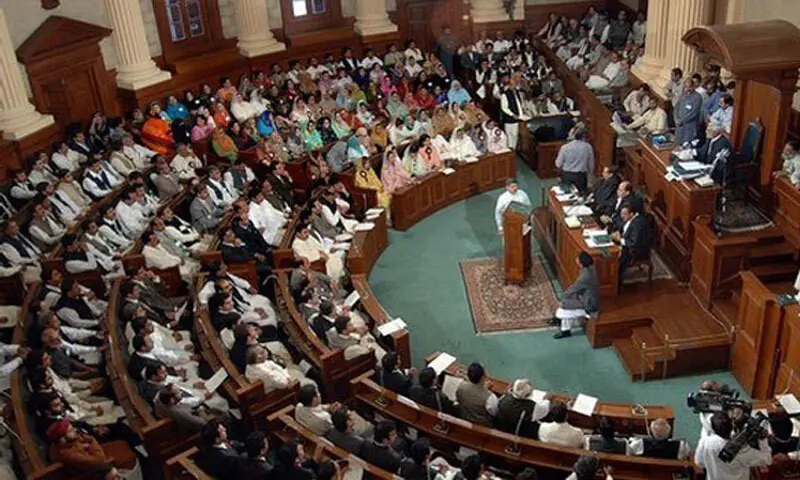
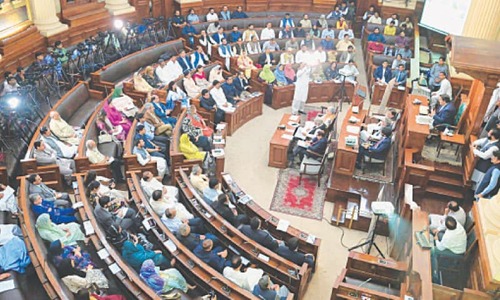
LAHORE: In a significant move aimed at public participation in lawmaking, the Punjab Assembly has introduced a new mechanism allowing the citizens to directly bring issues before the House – provided they get at least 200 signatures on a matter of urgent public importance.
The initiative has been notified through Standing Order 2 of 2026, issued by Speaker Malik Muhammad Ahmad Khan under the assembly’s rules of procedure. The notification lays down, for the first time, a comprehensive framework for the submission, scrutiny and disposal of public petitions, marking a notable shift toward participatory governance.
Under the newly prescribed procedure, the citizens can submit petitions either in hard copy via registered post or electronically through the assembly’s official platform. The petitioners are required to identify up to five “lead petitioners” from among themselves who will represent the case and pursue it through parliamentary channels.
The notification sets strict admissibility criteria to ensure that only serious and relevant matters reach the Assembly. The petitions must address a single, clearly defined issue of urgent public importance, directly linked to the government or its subordinate bodies. At the same time, safeguards have been built in to prevent misuse of the forum: petitions containing defamatory content, hypothetical scenarios, sub-judice matters, or personal grievances against individuals will not be entertained. Similarly, issues already decided by the assembly or its committees will be inadmissible.
Citizens can submit petitions on any issue after getting 200 signatures; five ‘lead petitioners’ or an MPA can represent the case
A key institutional feature of the new system is the establishment of a ‘scrutiny committee’, headed by the deputy speaker, to examine each petition and submit recommendations within 30 days. Based on these recommendations, the speaker will determine whether a petition is admissible and decide its course – including referral to a relevant standing committee or the administrative department concerned with a defined timeline for action.
The committee has also been mandated to meet at least once a month to ensure continuity in handling public submissions. In cases where a petition involves multiple government departments, the speaker has been empowered to constitute a special committee to conduct detailed proceedings.
The procedure also provides for a degree of public engagement during the legislative process. Lead petitioners may be allowed to attend committee meetings and can even nominate a member of the assembly to advocate their case within parliamentary forums.
Officials describe the move as an attempt to institutionalise citizen input in policy-making, enabling ordinary people to formally raise concerns ranging from governance failures to service delivery gaps. Analysts note that while parliamentary petition systems exist in many democracies and this move would bridge the gap between citizens and lawmakers in Punjab.
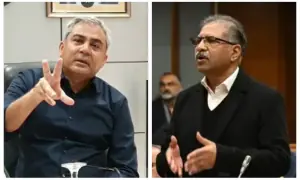
Treasury MPA Samiullah Khan, who headed the sub-committee tasked for framing the rules, tells Dawn that all the decisions were taken with consensus as three opposition members were also part of the body.
The standing committees had been empowered to accept public petitions in landmark reforms in September 2024. Framing the rules took about over one-and-a-half year, Khan said that first the approval of the Council of Chairpersons (of standing committees), which meets only biannually, had to be sought and after finalising the recommendations in five or six sittings of the sub-committee, its approval was sought from the Council in the next meeting.
PTI MPA Ahmer Bhatti, one of the opposition members of the sub-committee, tells Dawn that he did not agree to the number of signatories required for a public petition. “In my opinion, the number of signatories should be around 50 in order to encourage people to file public petitions. I think 200 signatures would be discouraging,” he added.
Published in Dawn, May 1st, 2026