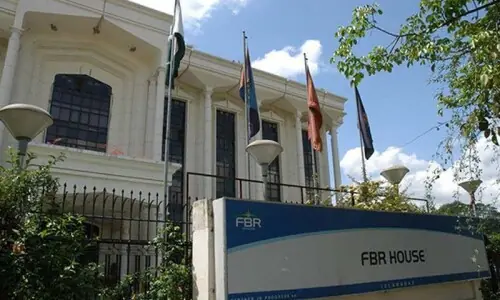
ISLAMABAD: The Pakistan Tax Bar Association (PTBA) has urged the Federal Board of Revenue (FBR) to urgently address gaps in its digital tax system, presenting a set of recommendations to align the infrastructure with existing laws and improve taxpayer facilitation.
The association, in a formal representation submitted to FBR Chairman Rashid Mahmood Langrial, warned that weaknesses in system design, governance, and statutory alignment could undermine the objectives of ongoing digitisation reforms.
The PTBA identified multiple operational issues, including inconsistencies between digital processes and legal provisions, incomplete integration of HS codes, and the absence of formal mechanisms for correcting digital records. To address these concerns, the association put forward 12 recommendations to the FBR.
As recommended, the association asked FBR to ensure that all laws, rules, and SROs are fully and accurately translated into the IRIS system, rather than partially implemented. Second, it called for a systematic audit of the digital system’s alignment with statutory provisions, beginning with SRO 297(I)/2023, followed by timely corrective action.
Demands legal alignment, 72-hour complaint fixes
It was recommended to establish a clear roadmap for the full integration of HS codes across return annexures and invoicing modules. It was proposed to review and rationalise the application of units of measurement in sales tax returns to ensure consistency with the Sales Tax Act 1990.
The association emphasised the need to develop and operationalise a formal mechanism for digital correction and rectification, including provision for structured amendments with audit trails. It recommends developing and integrating a framework to raise, track, and resolve technical and system-related issues.
The framework should be transparent, multi-tiered, fully auditable, and provide direct access to designated PRAL technical representatives, relevant FBR IT wing officers, and a clearly defined escalation path to senior governance levels.
The PTBA proposed a mandatory, time-bound grievance redressal framework, suggesting a 48- to 72-hour resolution window for system-related issues. It was recommended to restore an independent and empowered Member IT position within the FBR to strengthen governance of the digital tax infrastructure. The association urged the development of jointly agreed standard operating procedures between FBR and Pakistan Revenue Automation Limited for dispute resolution and system grievances.
The PTBA proposed periodic public disclosure of system performance indicators, including uptime, error rates, and complaint resolution timelines, to improve transparency.
It called for establishing a clear accountability framework defining the respective roles of FBR and PRAL in managing the digital tax system.
Published in Dawn, April 29th, 2026