Bringing babies into the world in Lebanon’s crammed shelters
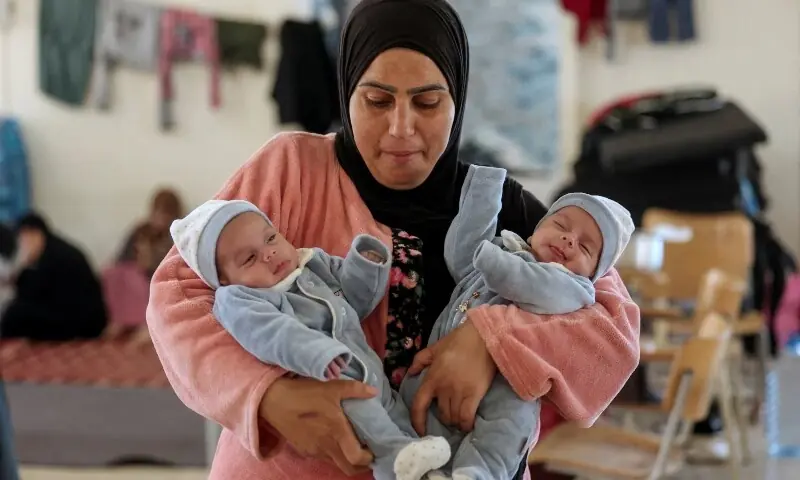


Mariam Zein cradled her 11-week-old son on a mattress on the floor where she and her family have sheltered near Beirut since the Israel-Hezbollah war upended her young family’s life.
“I was really excited when I was in my ninth month of pregnancy… I never thought he’d be born and there’d be war,” said Zein, 26, clutching baby Hussein.
“I haven’t been able to enjoy my son —my first child… to see him getting bigger in his own bed, in his own home.” “I was very sad, and I’m still sad,” she told AFP, nappies and baby formula wedged near a photocopier, clothes hanging on an improvised line in a training institute.
Zein fled with her husband, their baby and other relatives when war erupted between Israel and Hezbollah on March 2.
She does not know if her home in south Lebanon is still standing.
Lebanese authorities say more than 2,450 people have been killed in the war and more than one million displaced. A 10-day ceasefire came into effect on Friday.
Some 140,000 people had been squeezed into overcrowded shelters like the center in Beirut’s suburbs, housing Zein’s family and around 500 other people, among them five pregnant women and others with young babies.
Zein said she stopped breastfeeding because there was no privacy, and now struggles to buy baby formula, while Hussein is outgrowing his clothes.
“Whatever happens I just want my son near me,” she said.
Pregnancy
According to the United Nations Population Fund (UNFPA), an estimated 620,000 women and girls are displaced, including some 13,500 pregnant women, of whom “1,500 are expected to give birth within the next 30 days”.
The agency and other organisations have sought to support women as the authorities struggled to cope.
In a small tent containing a portable ultrasound, obstetrician and gynecologist Theresia Nassar has checked on women, including Zein, as part of a mobile health clinic run by charity Caritas Lebanon with support from UNFPA.
Displaced pregnant women risk missing important tests and scans, she said, and they are trying to fill the gaps.
“We’re not just worried about physical health but also their mental health,” she said.
“They don’t know if they can go home, they don’t have their medication, they’re not being properly followed.”
Elsewhere, at a school-turned-shelter in central Beirut, heavily pregnant Ghada Issa, 36, is due to deliver a baby girl in a few weeks.
But “this place, this environment, is not for pregnant women”, said Issa, who was displaced from south Lebanon with her husband, their daughter Siham, five, and son Ali, four.
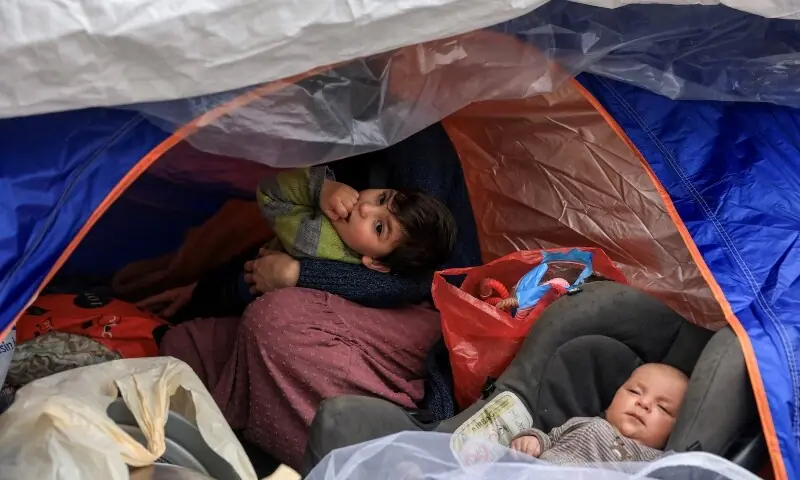
They live in a cramped tent, and she said even the basics are a problem, like having to make frequent trips to crowded, far-away communal toilets.
Twins
Her husband set up an improvised bed so she doesn’t have to sleep on the floor.
Underneath are precious donated items like tiny socks and little blankets.
A worker from charity Amel Association International brought them a “baby kit” including diapers and baby powder.
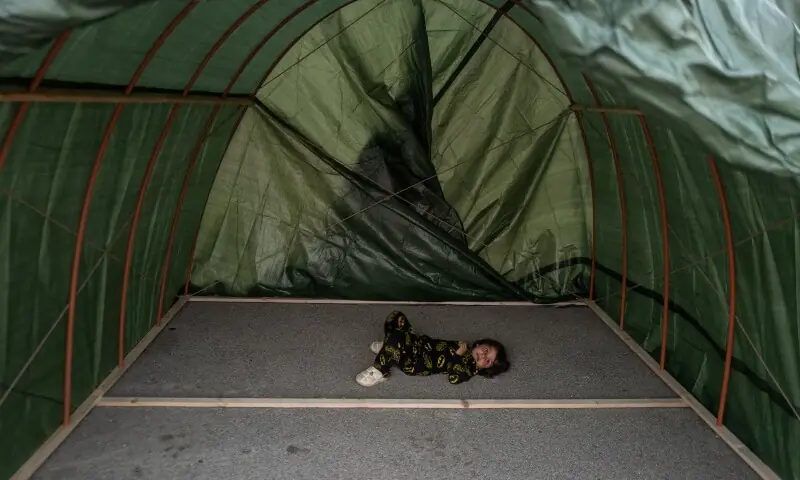
Without donations and other support, “there wouldn’t be anything” for the baby, Issa said, as people playing football yelled, children squealed and washing hung on improvised lines.
The shelter’s administration said some 20 pregnant women — two of whom had recently given birth — were among more than 2,600 people staying there.
“I haven’t got my head around the idea of having a baby here,” Issa said.
“I’m still hoping that one day they’ll tell me, let’s go to the village, and I’ll have the baby at home.”
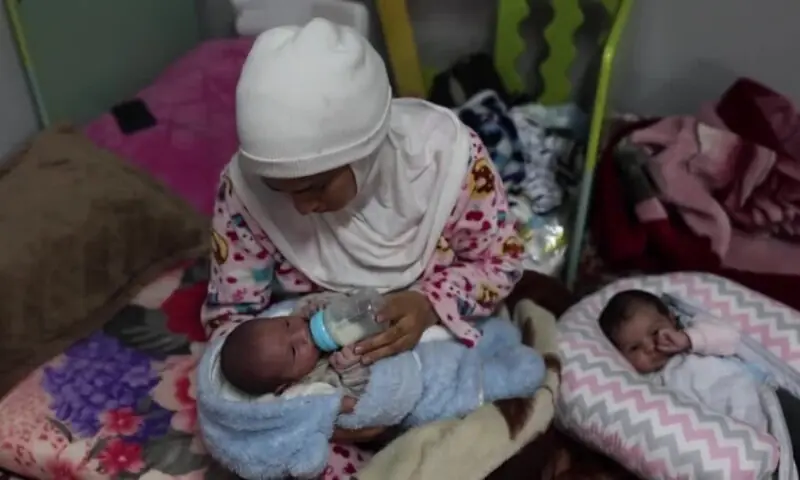
In a university classroom in south Lebanon’s city of Sidon, Ghada Fadel, 36, cares for her tiny twin sons. Mohammed and Mehdi are just over a month old, dressed in blue jumpsuits and matching beanies.
The family has been there since she was eight months’ pregnant, after fleeing their border village.
“After we left the house, they (Israel) bombed it. The house is gone” along with everything they had prepared for the twins, Fadel said.
“I was hoping to give birth and come home,” she said sadly.
“Every mum hopes to take her kids home… no matter the circumstances”.