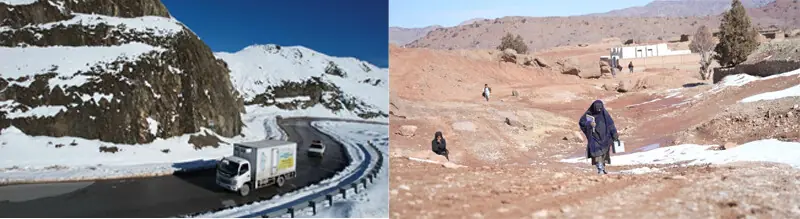
AS a polio vaccination campaign is set to kick off today, millions of doses are already on the move across Balochistan, travelling from tightly controlled cold rooms in Quetta to some of the province’s most remote and hard-to-reach communities.
Maintaining the cold chain is the backbone of this process. Each vial must remain within a specific temperature range at every stage to preserve its life-saving potency.
From here, nearly 3.1 million doses — around 156,000 vials — are dispatched across Balochistan through refrigerated vehicles, ensuring that every drop remains effective.
The journey is long. The terrain is unforgiving. Through snow-covered mountains, winding roads and extreme weather conditions, vaccine trucks move steadily, carrying not just doses but hope to districts such as Pishin, Chaman and Qila Abdullah.
“We send almost 3.1 million doses across the province. Our refrigerated vans ensure that the cold chain is maintained throughout the journey,” explains EPI Coordinator Balochistan Dr Aftab Kakar.
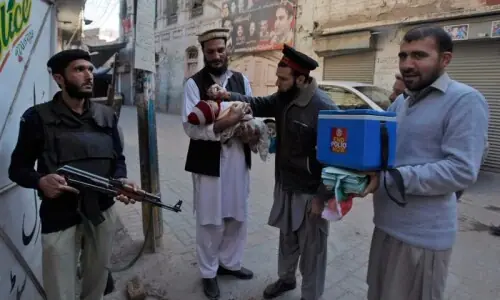
But the journey does not end with the trucks. From provincial stores to districts, from districts to union councils, the vaccine passes through multiple hands until it reaches the last mile: the frontline worker.
Polio, a highly infectious viral disease that mainly affects children under the age of five, can cause irreversible paralysis and, in some cases, death. While most of the world has eradicated the disease, Pakistan and Afghanistan remain the only countries where the virus continues to circulate, making each vaccination campaign critical.
In Rod Mullahzai union council of Pishin district, Bibi Safia has been part of this chain since 2016. By the time the vaccine reaches her, it has already travelled miles, but its most difficult journey still lies ahead.
“No matter what the weather is like, whether it’s snowfall or rain, I make every effort to deliver two drops to every child. My area is very large. There are places where vehicles cannot go. I walk for an hour just to reach one house. Sometimes there are dogs; they even attack us. But we still try our best,” she says. This is the final stretch of the cold chain, where systems end and human commitment begins.
For years, polio workers in Pakistan have also faced threats to their safety. Attacks on vaccination teams, often driven by misinformation and mistrust, have claimed dozens of lives, adding another layer of risk to an already difficult task. Despite this, campaigns continue, and the workers keep returning to the field each time to ensure children are protected.
Shahpur Suleman, a social and behavioural change specialist, says: “Reaching communities is only half the journey. Changing behaviour is the real milestone. When caregivers understand, trust and value vaccination, that’s when real impact happens.”
He adds, “Our frontline workers are not just vaccinators; they are change agents shaping attitudes and building confidence in every household.”
Mr Suleman stresses that even in harsh winters, when many stay indoors, these workers step out, crossing cultural barriers, walking through difficult terrain and knocking on every door.
In many remote areas, these frontline workers are the only ones reaching communities not just with the polio vaccine but also with other essential antigens that protect children from life-threatening diseases and help secure their future. As Inamul Haque, the Emergency Operations Centre Balochistan coordinator, notes: “Even in the harshest weather and faced with difficult terrain, our teams ensure that the vaccine reaches every child, everywhere in the province.”
This is more than a delivery system. It is a continuous chain — from cold rooms to communities, from vehicles to footsteps, from hands to homes.
And at the end of this long journey, a child waits inside a home. But for this chain to be complete, one final step is needed: the door must open.
Published in Dawn, April 13th, 2026