Easter truce between Russia, Ukraine begins
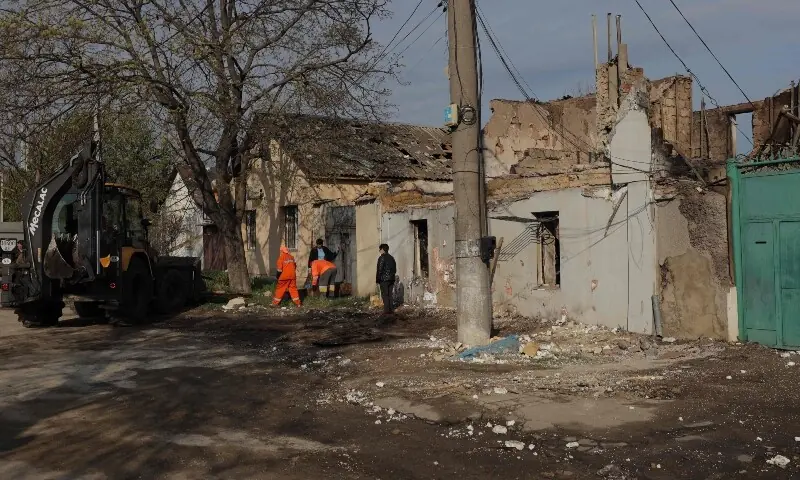
A temporary truce between Russia and Ukraine entered into force on Saturday, with Kyiv warning it would respond “immediately” if Russia violated it.
Russian President Vladimir Putin ordered the ceasefire on Thursday to coincide with Orthodox Easter, more than a week after Ukrainian President Volodymyr Zelensky first made the proposal.
Both sides have agreed to observe it.
The ceasefire is due to last for 32 hours, from 4pm (6pm PKT) on Saturday until the end of the day on Sunday, according to the Kremlin.
“Ukraine will adhere to the ceasefire and respond strictly in kind. The absence of Russian strikes in the air, on land, and at sea will mean no response from our side,” Ukrainian President Volodymyr Zelensky said in a post on X.
The Ukrainian army said it was ready to “immediately” respond if Russia violated it.
Hours before the truce was due to start, Russia launched at least 160 drones at Ukraine, killing four people in the country’s east and south and wounding dozens of others, Ukrainian authorities said.
The southern Odesa region was among the hardest hit, with authorities reporting two dead and damage to civilian infrastructure.
A wave of Ukrainian drones sparked a fire at an oil depot and damaged apartment buildings in Russia’s southern Krasnodar region, authorities said.
Four people died in Ukrainian drone strikes on Russian-occupied parts of Ukraine’s eastern Donetsk and Kherson regions, according to Russian-installed officials.
Ukrainians have expressed scepticism about whether the truce will hold.
The two sides held a ceasefire for Orthodox Easter last year, but both accused the other of hundreds of violations.
Despite tensions over the truce, the warring sides exchanged 175 prisoners of war each on Saturday, according to officials.
The United Arab Emirates helped mediate the exchange, the Russian defence ministry said.
Prisoner of war exchanges are one of the few areas of cooperation between the warring sides.
Stalled diplomacy
US-led talks aimed at ending the four-year conflict have stalled in recent weeks because of the war in the Middle East.
Even before the Iran war, progress towards a peace deal in Ukraine had been slow, due to differences over the issue of territory.
Ukraine has proposed freezing the conflict along the current front lines. But Russia has rejected this, saying it wants Ukraine to give up all the territory in the Donetsk region that it currently controls — a demand Kyiv says is unacceptable.
Several rounds of US-led talks have failed to bring the warring sides closer to an agreement.
Kremlin spokesman Dmitry Peskov denied Russia had discussed the ceasefire with Ukraine or the United States in advance and said it was not linked to negotiations to end the war.
The war has cost hundreds of thousands of lives and forced millions to flee their homes, making it Europe’s deadliest conflict since World War II.
After four years, fighting on the front has come to a near standstill.
Russia has made small territorial gains at a high cost. But Kyiv recently managed to push back in the southeast, and Russian advances have been slowing since late 2025, according to the US-based Institute for the Study of War (ISW).
Apart from Ukrainian counter-attacks, analysts attributed the slowdown to Russia being banned from using SpaceX’s Starlink satellites and Moscow’s own efforts to block the Telegram messaging app.
But the situation is unfavourable for Ukraine in the Donetsk region, near the cities of Kramatorsk and Sloviansk, according to the ISW.
Moscow occupies just over 19 per cent of Ukraine, most of which was seized during the first weeks of the conflict.