ISLAMABAD: The absence of a local government in Islamabad continues to hold hostage for about six years a valid law providing for establishment of a real state regulatory authority in the federal capital.
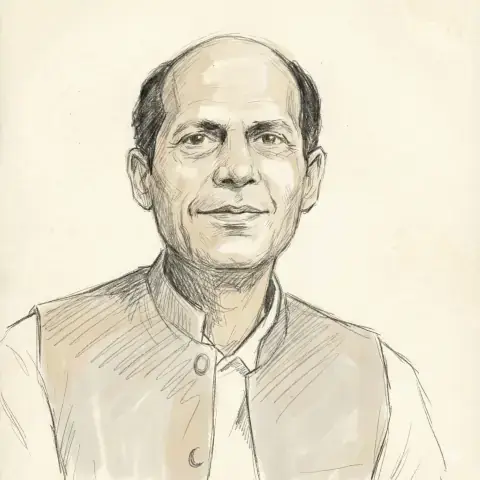
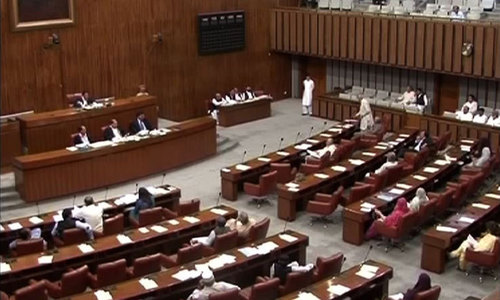
The real estate (regulation and development) bill moved by Senator Mohsin Aziz of PTI back in 2017 was deliberated upon by different committees before being passed by the House on February 10, 2020, incorporating various amendments suggested by different quarters. The bill was also passed by the National Assembly on October 20, 2020, and became an act of the parliament after an assent was accorded by the President on November 9,2020.
Under the law, the government was supposed to establish within one year a six-member Real Estate Regulatory Authority to address fluctuating trends in the real estate market by regulating and promoting the real estate sector for efficient and transparent operations, protecting consumer interests and ensuring smooth sales of plots and real estate projects.
The six members of the regulatory authority were to include one member each nominated by the chairperson of the Pakistan Engineering Council, the chairperson of the Pakistan Council of Architects, speaker of the National Assembly and chairman Senate while two members were to be picked by a three-member selection committee, comprising the mayor of Islamabad, the CDA chairman and the joint secretary interior.
CDA proposes repeal of “overlapping law”, updating its legal structure for transparency, fraud prevention
Under Section 21(1) of the Act, an incomplete authority was notified on October 20, 2021 - months after expiry of the mayor’s term. The four members included Senator Kauda Babar, Raja Khurram Nawaz, MNA, Fouzia Asad Khan (architect) and Engineer Ijaz Ahmed Cheema.
The term of the last local government in Islamabad expired in February 2021, and since then elections have been delayed under various pretexts, and the authority thus could not be completed due to absence of the mayor - a member of the statutory selection committee supposed to select two of its members.
Talking to Dawn, mover of the real estate regulation and development bill said the Act was a valid and existing law.
He said after the presidential assent, the bill became an act of parliament and acquired full legal force and remains in effect.
He said under settled constitutional principles delay or failure in implementation does not invalidate a law. He said the law has not been implemented due to administrative and procedural issues only and not due to any legislative deficiency or absence of legal framework.
About the vacancy of the office of Mayor Islamabad, Senator Mohsin Aziz said this was a temporary procedural issue, not a flaw in the law itself.
He said with a view to remove the procedural hurdle, he has already moved a targeted amendment meant to ensure continuity in the functioning of the selection committee even in the absence of a mayor.
The RERA Amendment bill 2026 was introduced in the house on Feb 23, 2026, and referred to the committee on interior and narcotics.
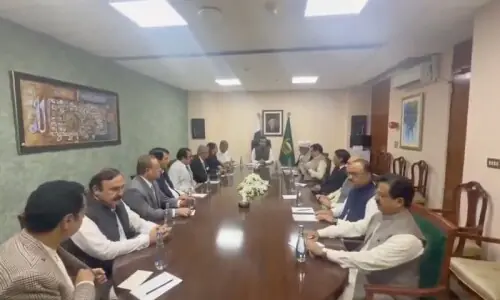
The committee took up the bill for consideration last week and where the Ministry of Law indicated its intention to repeal the real estate regulation and development bill, saying it has plans to bring its own bill.
The CDA also submitted a document to the Senate panel focusing on the “statutory conflict” between the 2020 Real Estate Regulatory Authority (RERA) Act and the existing CDA ordinance.
The document seen by Dawn said 2020 Act created RERA to regulate large scale projects and protect buyer interests, but its implementation overlaps with functions already performed by the CDA, causing redundancy.
It said CDA already handles project registration and agent oversight, duplicating RERA’s tasks.
“Dual authorities add administrative and financial costs due to extra registration and compliance requirements,” it said.
The CDA observed that the 2020 Act, modeled on Dubai’s RERA, may ignore local problems like “title trading” and lacks proper agent training.
It said overlapping agencies harm public interest by complicating judicial reviews and wasting resources. They recommend “overlap removal” - consolidating authority in a single agency for efficiency.
It recommended that to prevent a financial drain on the exchequer, RERA’s functions and the 2020 Act’s features be integrated into the CDA Ordinance and the 2020 Act be repealed.
It also called for updating the CDA legal structure for transparency, fraud prevention, agent training, and tech integration.
Published in Dawn, April 6th, 2026