5G to multiply streaming speeds


 0
0

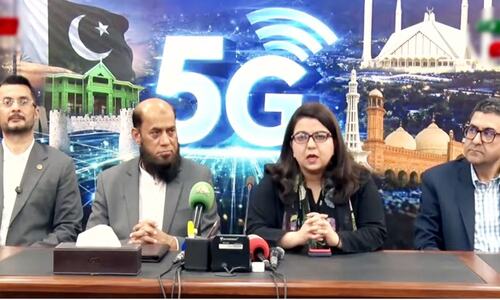
KARACHI: Streaming speeds could increase by three to five times with 5G, said Umar Siddique Raja, director marketing segments at Zong, at a media briefing.
However, actual performance will depend on how much bandwidth each telecom operator allocates.
Out of roughly 200 million mobile connections in Pakistan, only about 5m are on 5G-enabled handsets.
Yet the impact of 5G may not be confined to these users alone. Mr Raja argued that even existing customers will see an improved network experience, as added spectrum eases congestion.
At the same time, a broader rollout is expected to drive demand for 5G devices, eventually prompting manufacturers to bring more affordable handsets to market.
The implications extend beyond mobile usage. Currently, only around 5m households have fibre-to-the-home (FTTH) connections, with about half being routed through informal or undocumented operators, but 5G could partially bridge this gap. Through fixed wireless access (FWA), high-speed internet may be delivered via wireless routers, reducing the need for fibre infrastructure.
This comes at a time when data consumption is surging.
Average screen time has doubled from around three hours to over six in the past year, and is expected to rise further, he said.
For Pakistan’s growing IT exports and freelance economy, where poor connectivity often disrupts work with international clients, this could be significant.
Faster speeds and lower latency may enable smoother real-time collaboration.
At the consumer level, widespread CCTV penetration also lays the foundation for future smart home applications, from motion sensors to automated systems and smart city projects, with 5G as the underlying enabler.
Published in Dawn, April 1st, 2026