
Every year, Pakistani television undergoes a personality change. And the change is not subtle.
One week, the audience is watching a toxic trope, where a woman is being forced to marry her rapist, some man or woman is being slapped into obedience, or a hero is stalking the female lead and telling her it is love.
And the next week — almost overnight — the gaslighting and the shouting stops. The background score becomes chirpy. Suddenly happy-looking boys and girls are falling in love over shared cups of chai. Families start bickering over, not over inheritance but over the aloos in the biryani. And nobody is being traumatised for ratings anymore.
Because it is Ramazan, and Pakistani television has just remembered how to smile again.
What is fascinating is not just that this shift happens, but how easily and how suddenly it happens. It is the same entertainment industry that just spent the last 11 months convincing you and me that pain equals artistic depth, that will now spend one month producing stories that are almost entirely built on fun and pleasure.
The Ramazan TV drama is, by definition, light and frothy, focusing on connections, fun and non-toxic themes. And it garners views in the millions all year round. Why then are the dramas the rest of the year focused only on pain and suffering?
Ramazan dramas aren’t just freak exceptions on television. They are actual evidence that proves that Pakistani television is capable of creating joy. Which brings us to the actual point of this article… why is our entertainment media choosing not to do this the rest of the year?
THE RAMAZAN DRAMA FORMULA
Let’s take a look at the ‘Ramazan’ formula. It is usually a mix of chaos, a group of cousins, and rib-tickling comedy. At the centre of nearly every Ramazan superhit drama is a mad, mad family. And, thankfully, this family is not the seat of trauma. Instead, it is a collection of eccentric and lovable oddballs.
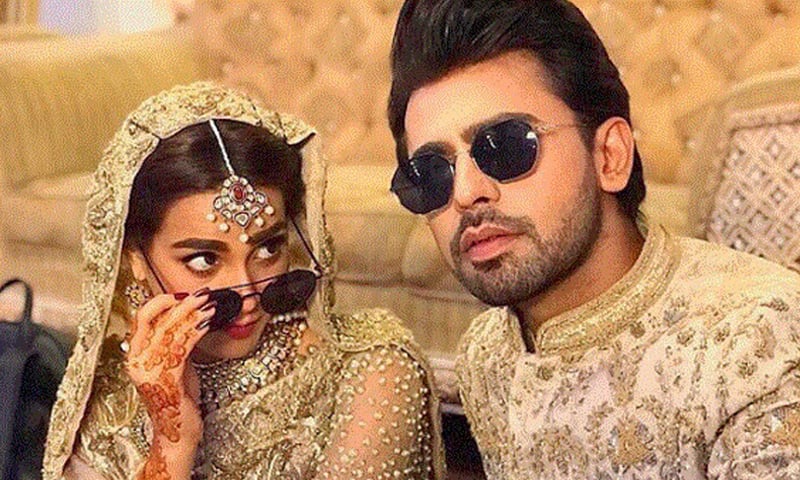
Take Suno Chanda for example, which aired in 2018 and instantly became a cultural phenomenon. Surprising, because its premise sounds like a classic recipe for desi misery, with two cousins Arsal and Jiya — played by Farhan Saeed and Iqra Aziz — being forced into marriage to satisfy a dying grandfather’s wish.
Can you imagine how this would pan out in a typical Pakistani drama? If it weren’t for Ramazan, this premise would spiral (uncontrollably) into emotional punishment. Yet, in the holy month, it becomes comedy.
Arsal and Jiya roll up their sleeves and go all out to sabotage each other. They form alliances with other family members and throw sarcastic barbs at each other. It is only in the last episodes that they fall in love, almost reluctantly and one could say by accident, while continuing to bicker and argue.
The antagonistic couple made Suno Chanda the classic that it became but, more importantly, it was the family ecosystem around Arsal and Jiya that turned this show into one of the most loved Ramazan dramas ever. The joint family and the house felt real and, most importantly, it felt safe. And that sense of emotional safety became the foundation of Suno Chanda and other memorable Ramazan dramas like it.
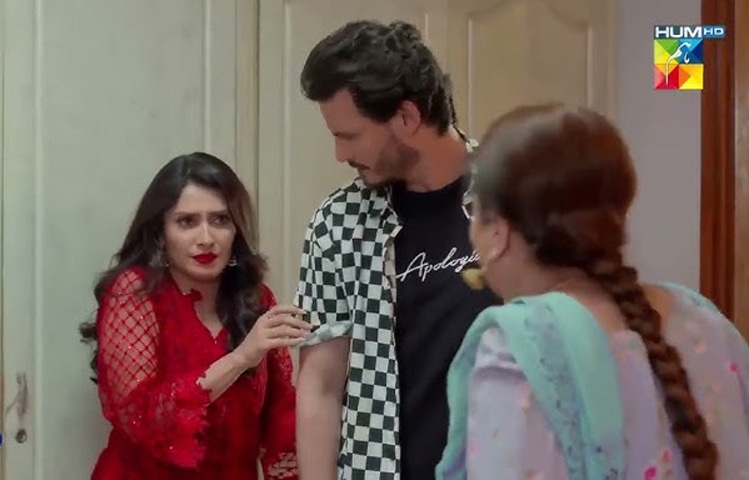
In Chupke Chupke for example, the marriage between the characters that were played by Osman Khalid Butt and Ayeza Khan thrived on elaborate practical jokes. Did anyone notice how their relationship and the other relationships in this drama weren’t threatened by betrayal or violence?
Similarly, Ishq Jalebi, starring Wahaj Ali and Madiha Imam, takes the economic insecurity of the lead actor and turns it into a romcom. In a post-Ramazan world, the poverty theme would be exploited for its tragedy. Wahaj’s Basim lies about his financial status in order to preserve his dignity. His pride creates awkward, funny situations rather than damage that cannot be undone.
And then there was Hum Tum, where the conflict between neighbours that are played by Ahad Raza Mir and Ramsha Khan unfolds through academic rivalry and teasing each other’s families, instead of through wounded egos and cruelty.
The large joint families, the acerbic grandmothers, the men who are unemployed but entitled and, interestingly enough, the empowered women who refuse to behave like sacrificial lambs are all part of this ecosystem. While the writing is humorous, it is also affectionate and, as a result, refreshing.
The writers and everyone involved in scripting Ramazan dramas understand that conflict does not have to destroy relationships and entire worlds in order to move the story forward. Instead, the central conflict can deepen the story and, if you look at it through a different lens, it can refresh tired and overdone plots.
ELEVEN MONTHS OF LOVE = VIOLENCE
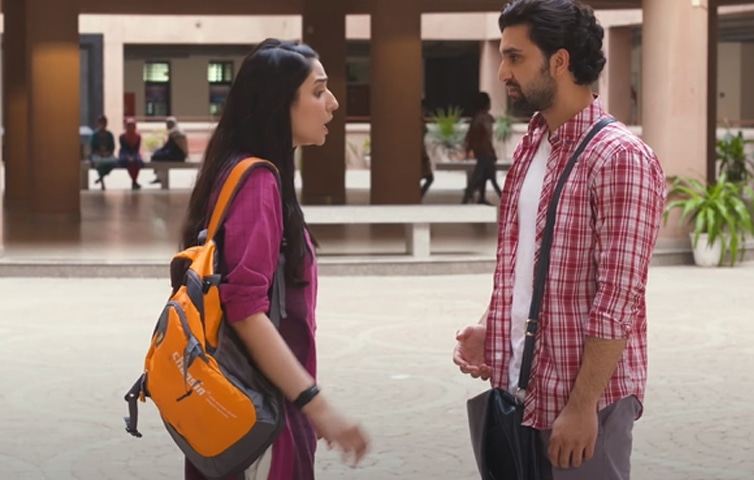
Now, think about what replaces these shows after Eid. Let’s take the drama serial Tere Bin, which became one of the biggest hits of recent years. Starring Wahaj Ali and Yumna Zaidi, the story revolves round a forced marriage between Murtasim, an arrogant feudal lord, and Meerab, a fiercely independent woman.
The same audiences who had spent Ramazan laughing at romantic misunderstandings were now being asked to digest the toxic love of a couple and a storyline that had ventured into deeply troubling territory.
Similarly, Kaisi Teri Khudgharzi, starring Danish Taimoor (Shamsher) and Durefishan Saleem (Mehak), begins with an obsession that turns into abduction. The hero kidnaps the heroine and forces her into marriage after she rejects him. And then, instead of escaping, Mehak’s feelings gradually shift towards her captor. Anyone heard of Stockholm Syndrome?
And then the writer veers the arc of Shamsher’s character, turning him from a criminal into a tragic lover (!!) asking us to invest in the ‘evolution’ of a relationship that was clearly forced, but later became consensual. This is what often passes for ‘love’ pre- and post-Ramazan.
Even socially conscious dramas have become all about emotional devastation. As vehicles to raise awareness, they are hard-hitting and important in a society with extremely low literacy levels. The currently on-air Aik Aur Pakeezah, for example, is exploring cyber crime and its impact on the central character. The onslaught of pain is relentless, with no relief in sight. The emotional intensity of such dramas has become the industry’s go-to formula.
WHAT RAMAZAN DRAMAS TELL US ABOUT THE INDUSTRY
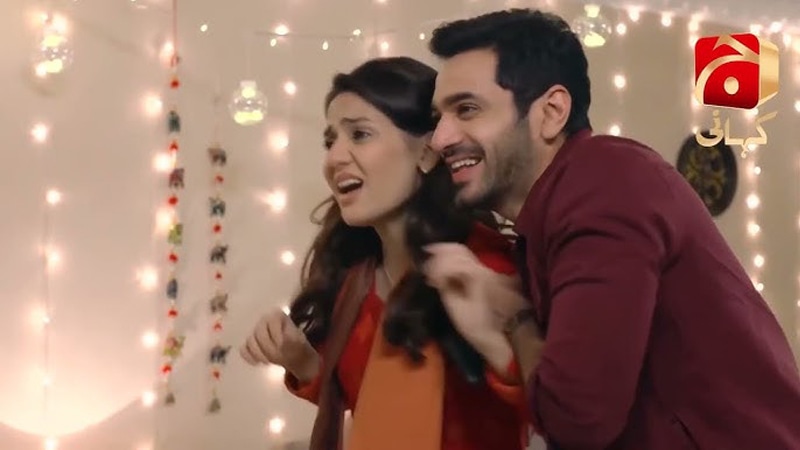
This is why the sudden mood change during Ramazan is so refreshing and indeed revealing. It tells us how artificial this divide really is.
One realises that Pakistani TV writers and the content teams clearly know how to show loving families that are having fun and frolicking. Unfortunately they are simply choosing not to go in that direction. Instead they opt to focus on unfettered egos, increasing the volume of pain, and the general business of suffering.
It is almost as if the entertainment industry defines ego, pain and suffering as seriousness. A drama about abusive relationships is considered meaningful. And a drama about happiness and fun is seen as lightweight.
However, this assumption does not take into account how difficult writing, directing and acting comedy actually is. Making people laugh, without being cruel, without humiliating them and without violence actually requires some level of empathy, not to mention creativity.
If there were any doubt about what viewers want to watch, you simply need to go to YouTube and check out the numbers. Ramazan dramas consistently dominate ratings. Their YouTube clips continue to gather millions of views. And a simple scroll down to check the comments will reveal how many people are rewatching those dramas for years afterwards. The characters are memorable and totally meme-worthy.
More recently, even outside Ramazan, softer dramas such as Kabhi Main Kabhi Tum (KMKT) and Meem Se Mohabbat (which kind of became the Ramazan drama by default in 2024-25 because it was partially aired then), found massive audiences by focusing on emotional intimacy rather than toxicity and trauma.
It is a myth that the audiences for Pakistani television only want pain and that suffering is necessary to attract and engage them. The Ramazan dramas disprove this myth almost every year. Increasingly the audiences are showing up to watch characters having fun and enjoying themselves. They like kindness (remember kindness?). And they care about characters whose lives are not being destroyed and ripped apart for ratings.
The success of our Ramazan dramas strongly suggests that audiences do not need to be traumatised to stay interested. What they seem to be craving are stories that genuinely move them and also make them laugh and connect. While there is room for all genres to thrive on Pakistani television, it is clear that the lighter genre, which brings joy, deserves to grow and more shows like these need to be made all year round.
The writer is a communications specialist.
X: @Shahrezad
Published in Dawn, ICON, March 1st, 2026