Iran Supreme Leader Ayatollah Khamenei assassinated in US-Israel strikes
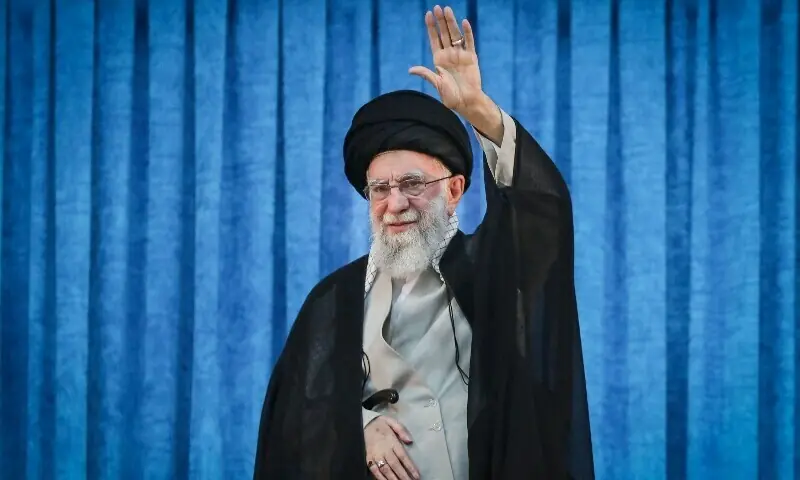


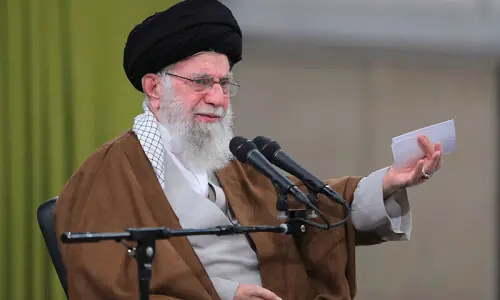
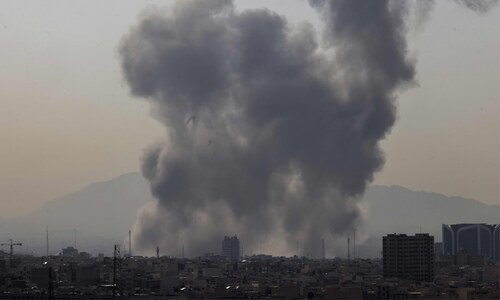
Iran’s Supreme Leader Ayatollah Ali Khamenei was assassinated on Saturday, state media confirmed, after the United States and Israel launched the most ambitious attack on Iranian targets in decades.
Iranian state media announced Khamenei’s death on Sunday morning.
A senior Israeli official told Reuters earlier that the Iranian leader’s body had been found after a strike, while US President Donald Trump said the United States worked closely with Israel to target the man who led Iran since 1989.
Iran has called the strikes unprovoked and illegal and responded with missiles fired at Israel and at least seven other countries, including Gulf states that host US bases.
On Sunday, Iranian state media reported that Khamenei “was carrying out his assigned duties and was present at his workplace (his office)”.
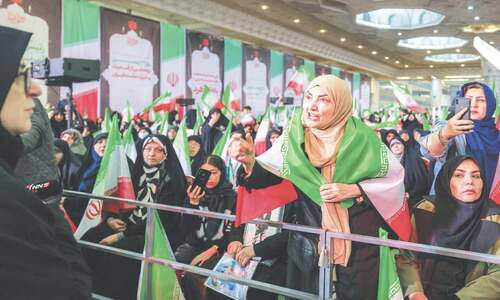
“This cowardly attack occurred in the early hours of Saturday morning,” it said, announcing 40 days of mourning and seven days of public holidays.
In a statement, Iran’s Revolutionary Guards said: “We have lost a great leader, and we are mourning him, a leader who was unique in terms of purity of spirit, strength of faith, resourcefulness in affairs, courage in the face of the arrogant, and jihad in the path of God.”
The Guards also vowed “severe punishment” for the “murderers” and warned that the “most intensive” offensive on Israel and US bases would begin in moments.
“The hand of revenge of the Iranian nation for a severe, decisive and regrettable punishment for the murderers of the Imam of the Ummah will not let go of them.”
Trump’s gamble
Trump, making the biggest foreign-policy gamble of his presidency after campaigning for reelection as a “peace president,” said the strikes were aimed at ending a decades-long threat from Iran and ensuring it could not develop a nuclear weapon.
Intelligence and tracking systems monitored Khamenei’s whereabouts, Trump wrote in a Truth Social post, adding that “there was not a thing he, or the other leaders that have been killed along with him, could do”.
Trump reiterated calls for Iranians to topple the government but warned: “The heavy and pinpoint bombing, however, will continue, uninterrupted throughout the week or, as long as necessary to achieve our objective of PEACE THROUGHOUT THE MIDDLE EAST AND, INDEED, THE WORLD!”
Israeli Prime Minister Benjamin Netanyahu said Khamenei’s compound had been destroyed.
Three sources familiar with the matter said Iranian Defence Minister Amir Nasirzadeh and Revolutionary Guards commander Mohammed Pakpour were among those killed in the attacks.
Earlier, Israel’s military said it had confirmed that five other senior military commanders were also dead, including Ali Shamkhani, an adviser to Iran’s supreme leader. Iranian media had said Khamenei’s daughter, grandchild, son-in-law and daughter-in-law were also killed.
The nuclear programme
Israeli military operations over the past two years had already killed some of Iran’s senior military officials and severely weakened several of Tehran’s once-feared proxy forces across the Middle East.
After Israel pounded Iran in a 12-day air war in June, joined by the United States, the US and Israel had warned they would strike again if Iran pressed ahead with its nuclear and ballistic missile programmes.
Negotiations between US and Iranian officials took place as recently as Thursday, but senior US officials said on Saturday that Iran had not been willing to give up its ability to enrich uranium, which the Iranians argued they wanted for nuclear energy, but US officials said would enable the country to build a nuclear bomb.
During a United Nations Security Council meeting on Saturday, envoys from Russia and China criticised the US and Israel for launching the strikes while Tehran was negotiating with Washington. Russia’s UN envoy Vasily Nebenzya said Iran had been “stabbed in the back” and disputed the US claim that preventing Iran from acquiring a nuclear weapon justified the attacks.
UN Secretary-General Antonio Guterres called for an immediate cessation of hostilities.
Trump also faced pushback at home from opposition Democrats and a few of his fellow Republicans, who said a prolonged campaign against Iran would be illegal without congressional approval and that lawmakers should vote within days.