US threatens to leave IEA on ‘net zero agenda’
PARIS: The United States stepped up pressure on the International Energy Agency on Thursday to drop net zero from its agenda, giving it a year to do so or risk Washington exiting the organisation.
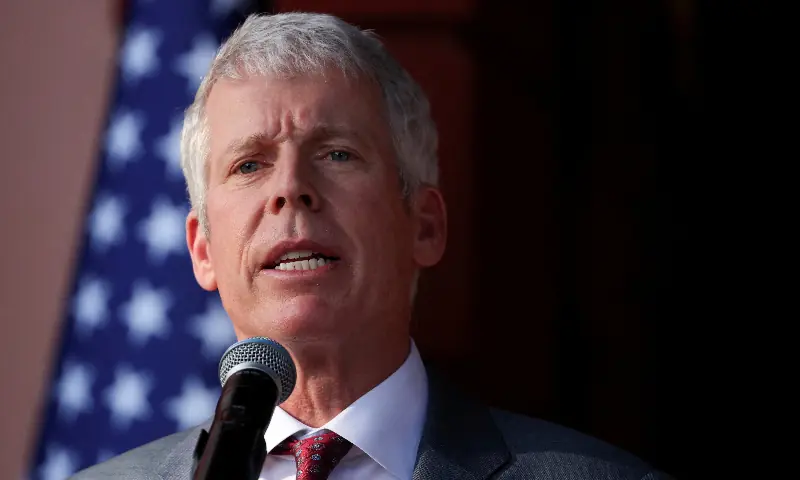
Speaking on the last day of an IEA ministerial meeting in Paris, US Energy Secretary Chris Wright said the 52-year-old agency should return to its founding mission of ensuring energy security.
The Paris-based IEA was created to coordinate responses to major disruptions of supplies after the 1973 oil crisis, but it has broadened its focus to include renewable energy and net zero goals under Executive Director Fatih Birol.
“The US will use all the pressure we have to get the IEA to eventually, in the next year or so, move away from this agenda,” Wright said in a news conference, calling net zero a “destructive illusion”.
“But if the IEA is not able to bring itself back to focusing on the mission of energy honesty, energy access and energy security, then sadly we would become an ex-member of the IEA,” he added. The net zero emissions target is crucial to meet the Paris climate agreement’s goal of limiting global warming to 1.5C from pre-industrial levels. But Wright, a former fracking executive, said there was a “0.0 percent chance” that net zero would be achieved.
Dutch Deputy Prime Minister Sophie Hermans, who chaired the two-day meeting, said that the IEA has the task to provide governments “with all scenarios” — including net zero — so they can make informed decisions. “I think we have to know what are the consequences of choices that you make or don’t make,” she said.
The gathering wrapped up without a final communique for the first time since 2017, releasing instead a “Chair’s Summary”.
Published in Dawn, February 20th, 2026