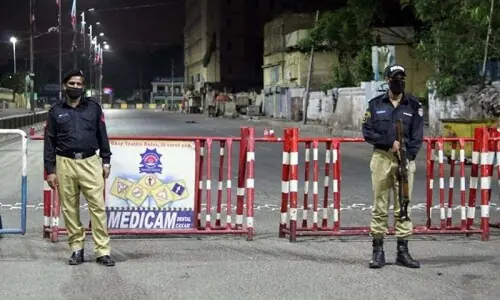
PESHAWAR: Three ‘aggrieved’ citizens including a female lawmaker on Monday moved Peshawar High Court, requesting it to declare as illegal and unconstitutional the ‘forced’ closure of major highways and motorways connecting Khyber Pakhtunkhwa to rest of the country by leaders and activists of Pakistan Tehreek-i-Insaf (PTI) for the last three days.
The petitioners have sought directives of court for KP government, its home secretary and inspector general of police to immediately remove all unlawful obstructions and ensure restoration of free and safe movement of people throughout the province.
They also sought directives of court for authorities concerned to strictly enforce relevant penal and public order laws against any person involved in unlawful obstruction of public infrastructure.
Moreover, they requested the court to restrain PTI, its office bearers, workers and supporters from blocking or obstructing public roads and highways in future.
MPA, others seek court orders for declaring the act unconstitutional
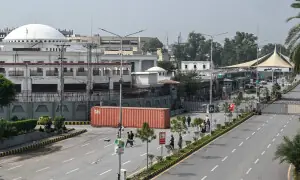
MPA Sobia Shahid of Pakistan Muslim League-Nawaz, prominent lawyer Tariq Afghan and a resident of Swabi Yousaf Ali have filed almost identical petitions, challenging blockade of major roads including Peshawar-Islamabad Motorway, GT Road near Khairabad, Swat Expressway, Hazara Motorway and Kohat-Rawalpindi Road etc by PTI leaders and works.
Barrister M Yaseen Raza Khan filed the petition on behalf of Sobia Shahid including as respondents the KP government through its chief secretary, home and tribal affairs secretary, IGP, PTI through its chairperson and Peshawar deputy commissioner.
The petitioner contended that the unlawful blockade and closure of public roads, highways and inter-district arteries across the province by workers and supporters of PTI resulted in widespread disruption of civic life, impediment of free movement, obstruction of trade and commerce and denial of equal protection of law to citizens.
The petitioner contended that the action was patently illegal, unconstitutional and contrary to the rule of law, in as much as public highways were held by the state in trust for the free and uninterrupted use of people, and no individual or political entity had any lawful authority to impede or suspend such use to the detriment of citizens’ fundamental rights.
The petitioner, Ms Shahid, termed the action of PTI workers as collective punishment to people by unlawfully paralysing civic life.
She said that state functionaries including chief secretary, home secretary and IGP failed to discharge their constitutional and statutory obligations to maintain public order, safeguard public highways and infrastructure and enforce law in a fair, impartial and effective manner, thereby permitting continued infringement of citizens’ fundamental rights.
She referred to several constitutional provisions including Article 15, stating that it unequivocally guaranteed to every citizen right to move freely throughout Pakistan and reside and settle in any part thereof, subject only to reasonable restrictions imposed by law.
Similarly, Barrister Huzaifa Ahmad filed the petition for Advocate Tariq Afghan including as respondents KP chief secretary and law secretary, IGP, National Highway and Motorway Police (NHMP) through its additional inspector general of police and PTI provincial president Junaid Akbar Khan.
The petitioner sought directives of court for government, IGP and NHMP to take legal action against the protestors as well as their facilitators and abettors; to proceed strictly in accordance with law and the Constitution, ensuring the petitioner’s fundamental rights under Articles 9 and 15; and, to ensure that the highway, motorways including motorway and GT Road were opened to all members of public without any hindrance.
The petitioner stated that he had filed the pro bono petition in the interest of general public, stating that district administration, local police and highway police stood like silent spectators without making any attempt to clear roads and arrest protesters, which was untenable in the eyes of law.
He said that federal and provincial administrations, despite having knowledge and notice of the illegality and unlawful protest taking place where roads and highways were blocked in the province, had turned a blind eye towards it.
He contended that superior courts had consistently held that blocking of roads and creating hurdles for members of public didn’t come within the ambit of peaceful protests rather the same was in violation to the Constitution of Pakistan.
Moreover, petitioner Yousaf Ali has also requested the court to order registration of cases against violators of law.
Published in Dawn, February 17th, 2026