1pc of GDP lost to climate damage: Musadik
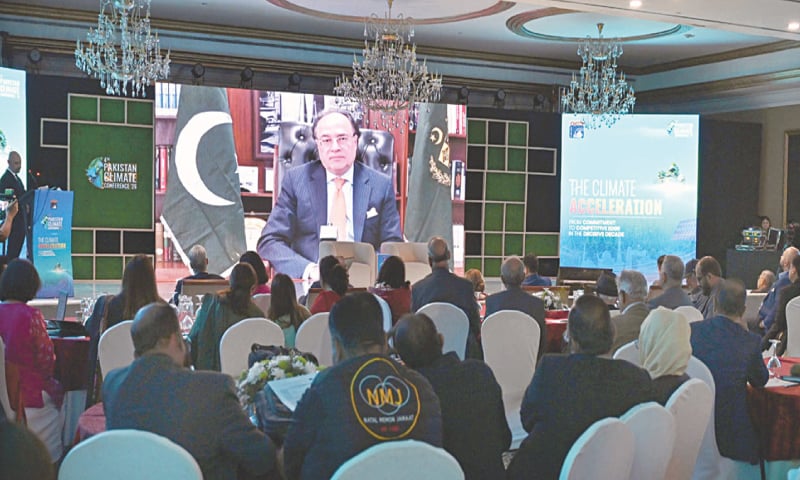
KARACHI: Pakistan is losing close to 1 per cent of its gross domestic product every year to climate-related damage from floods, heatwaves and infrastructure destruction, despite contributing less than 1 per cent to global emissions.
Speaking at the fourth Pakistan Climate Conference, organised by the Overseas Investors Chamber of Commerce and Industry (OICCI) on Monday, Climate Change Minister Musadik Malik stressed the need to fight climate challenges with the same intensity as the fight against terrorism.
The stress was underlined by stark statistics: the human toll has already surpassed that of past conflicts. Over the last four floods alone, 6,000 people have died, and 19,000 have been disabled or injured, while more than 40 million have been displaced.
Economically, Mr Malik added, Pakistan celebrates growth rates of 3-4pc, only for floods to wipe out nearly 10pc of GDP, erasing years of progress in a single season. From record 53°C heatwaves to floods that displaced millions last year and the accelerated melting of more than 13,000 glaciers, he said the crisis could no longer be treated as an environmental issue or a corporate social responsibility exercise, but as an existential economic challenge.
Pakistan’s updated climate commitments under Nationally Determined Contributions (NDC) 3.0, which target a 50pc emissions reduction by 2035, would require an estimated $565.7bn in investment, underscoring the scale of the transition ahead.
In a recorded message, Finance Minister Muhammad Aurangzeb reiterated that climate change now poses an existential threat to Pakistan. While key frameworks such as the National Adaptation Plan, Climate Prosperity Plan and green taxonomy are in place, he said the emphasis must shift decisively from policy design to execution. Although the devastating 2022 floods were largely confined to one river system and two provinces, last year’s floods affected all provinces and three river systems, which is clear evidence of rising intensity and frequency.
Rather than lamenting financing gaps, Mr Aurangzeb urged stakeholders to better utilise funding already on the table from multilateral donors. The problem, he noted, was not the absence of capital but the inability to operationalise compounded by large bureaucracies and prolonged accreditation delays, a frustration echoed by several speakers.
The finance minister called on companies to prioritise knowledge transfer from their global operations into Pakistan, arguing that climate excellence depends as much on institutional capacity, data and governance as it does on capital.
For OICCI president Yousaf Hussain, however, there were signs of momentum. He pointed to Pakistan’s push for adaptation finance through public-private partnerships at Davos, the finalisation of the World Bank’s $20 billion, 10-year Country Partnership Framework, and preparations for Pakistan’s first Green Panda Bond as signals of a more credible national commitment to climate resilience.
Projecting a shift from advocacy to execution, OICCI announced its second Climate Excellence and Climate Action Awards at the conference’s conclusion, with Nestle Pakistan winning the Climate Excellence Award and Dawlance bagging the Climate Action Award.
Published in Dawn, February 10th, 2026