UN human rights agency in ‘survival mode’: chief
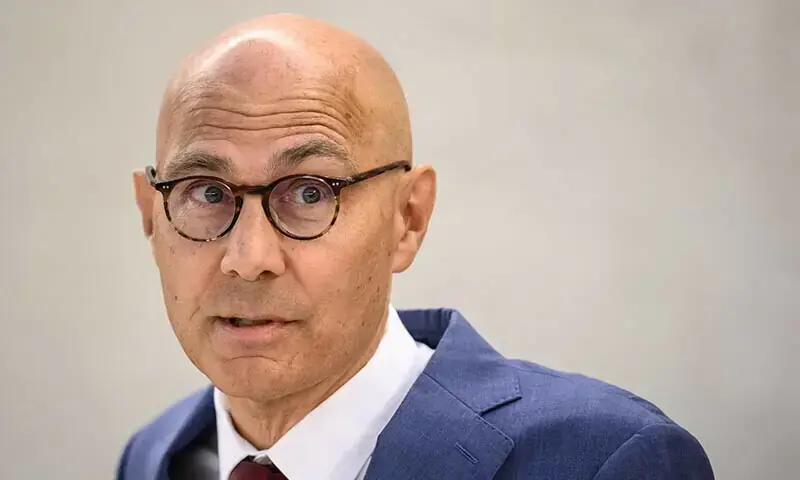
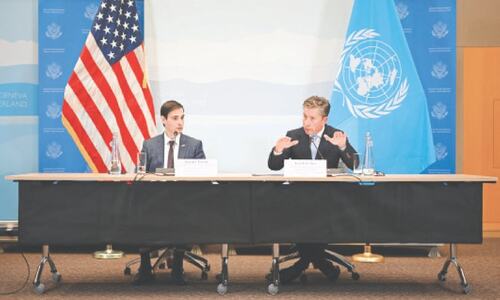
The United Nations human rights chief said on Thursday that his agency was “in survival mode” due to funding shortfalls, as he launched a $400 million appeal to tackle global rights crises in 2026.
Volker Turk warned countries that at a time when global human rights are under significant assault, his office was facing dire funding shortages hampering its increasingly important and life-saving work.
“Our reporting provides credible information on atrocities and human rights trends at a time when truth is being eroded by disinformation and censorship,” he told diplomats at the UN rights office headquarters in Geneva.
“We are a lifeline for the abused, a megaphone for the silenced, and a steadfast ally to those who risk everything to defend the rights of others.”
In 2025, the UN Human Rights Office’s regular budget — set by the UN General Assembly of member states — was $246m, but it ultimately received only $191.5m of that money.
It also sought $500m in voluntary contributions, of which $257.8m came in.
Funding for the UN’s human rights work has long been chronically underfunded, but Turk said, “We are currently in survival mode, delivering under strain.
“These cuts and reductions untie perpetrators’ hands everywhere, leaving them to do whatever they please. With crises mounting, we cannot afford a human rights system in crisis,” he added.
The UN human rights office lost around 300 out of 2,000 staff last year and had to end or scale back its work in 17 countries. Its programme in Myanmar, for example, was cut by 60 per cent.
High impact, low cost
This year, the UN General Assembly approved a regular budget of $224.3m for human rights. However, with the United Nations facing a liquidity crisis, uncertainty remains over how much Turk’s office will receive.
The Office of the High Commissioner for Human Rights is among a slew of international organisations hit by a global funding crisis.
The United States was the UN’ biggest contributor but has slashed its funding since President Donald Trump returned to power in January 2025 — while other countries have tightened their belts.
UN chief Antonio Guterres warned last Friday that the world body is on the brink of financial collapse and could run out of cash by July, as he urged countries to pay their dues.
Against this backdrop, Turk is seeking $400m in voluntary funding from countries and donors.
He said human rights accounted for a very small slice of overall UN spending but produced “high-impact” results that help to stabilise communities, build trust in institutions and underpin lasting peace.
“The cost of our work is low; the human cost of underinvestment is immeasurable,” he insisted.
In 2025, UN human rights staff working in 87 countries undertook more than 5,000 human rights monitoring missions — down from 11,000 in 2024.
“That means less evidence for both protection and prevention,” said Turk.
‘Countering secrecy’
Giving examples of his office’s work, Turk said it supported 67,000 survivors of torture and modern slavery, documented tens of thousands of human rights violations and exposed discrimination in more than 100 countries.
Its monitoring mission in Ukraine is the “only organisation” with a comprehensive record of verified civilian casualties “since the initial Russian invasion in 2014”, he said.
In Bangladesh, its fact-finding mission on the 2024 crackdown “helped establish a comprehensive record of systematic and serious human rights abuses”.
And the probe in the Democratic Republic of Congo “uncovered patterns of grave human rights violations that may amount to crimes against humanity”.
“All this work aims to bring the stories of victims to the world, countering secrecy — the oppressor’s strongest ally — and challenging injustice and impunity,” Turk said.