Elite capture blamed for country’s economic problems
LAHORE: Federal Minister for Climate Change and Environmental Coordination Musadik Malik has reprimanded the country’s elite for benefitting from subsidies instead of prioritising growth.
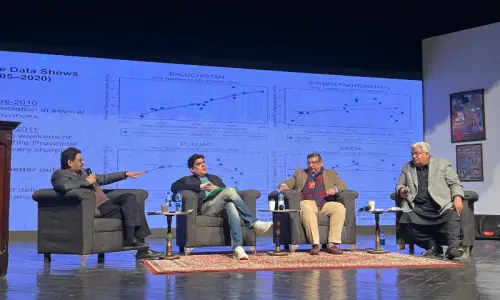
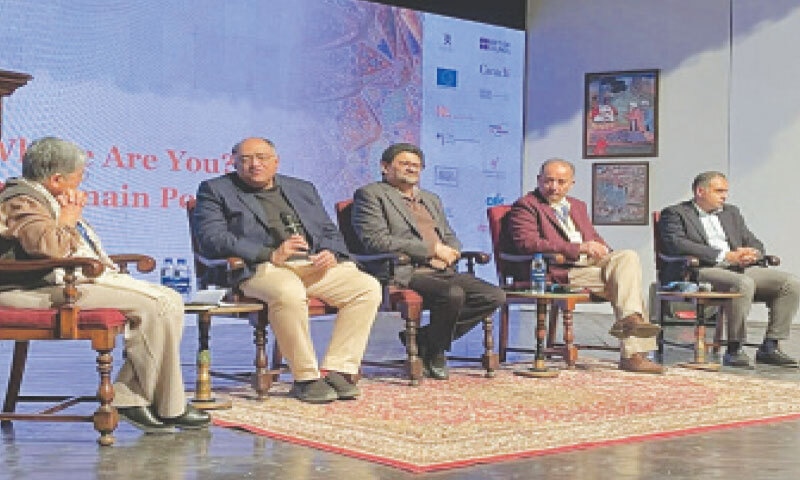
“First of all, we need to decide about which “growth” we are talking about. Are we talking about your (audience) growth or that of a few seths,” he said while speaking at a ThinkFest’s session titled “Growth, Growth where are you? Why does Pakistan remain poor”, moderated by Ms Rubina Athar, former Chairperson of the National Tariff Commission.
Lahore University of Management Sciences (LUMS) Vice Chancellor Ali Cheema, Federal Minister of State for Finance Bilal Azhar Kayani and former finance minister Miftah Ismail also spoke on the occasion.
“This is a problem of elite capture, as the growth seems to be for 100 seths only and not for the common person. So, the structural problem is the elite capture and I also come in it,” he said, adding that growth being talked about is not for your but for a few people. According to him, 4 billion dollars received under the IMF’s programmes benefitted 100 seths in the form of gas, tariff subsidy, export-led growth etc. He said various initiatives of the PML-N government for the common people had generated criticism from the elite.
Speaking on the occasion, Mr Cheema said the country had no growth policy or strategy, as the fiscal crisis was currently very deep.
“The country’s investment to GDP ratio is just 15pc — lowest in the region, whereas the lack of growth policy and structural issues have placed the country in a stagnant trajectory,” he said. He was of the view that the government would have to work for population control through family planning.
Mr Ismail said that if the government did not go to the IMF, the county would default and be bankrupt. “Our investment to GDP ratio is lowest in South Asia. Our Prime Minister recently talked to the IMF about getting a tax break of Rs1,500 billion that could have been avoided by the government by reducing its expenditures,” he lamented.
He said, “PPP wants more provinces in Punjab but not in Sindh, whereas the PML-N wants Hazara as a new province and not any in Punjab. So, it proves that it is not an issue of new provinces but that of monopoly. Moreover, the provinces didn’t devolve their functions to local governments under the Provincial Finance Commission (PFC) award.”
Published in Dawn, January 26th, 2026