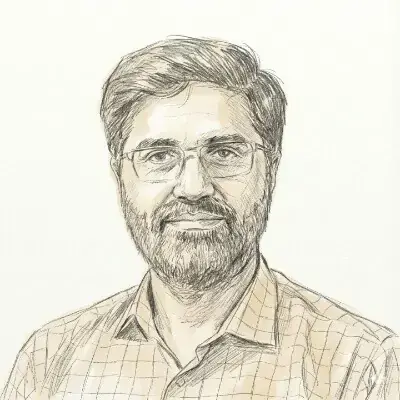
LAHORE: Absolute democracy in which human rights are protected does not exist in the world as states across the globe want economic, political and geopolitical stability even at the cost of freedoms, said columnist and writer Nadeem Farooq Paracha on Sunday.
Speaking at a ThinkFest session titled “We, The Mob: Three Populist Uprisings, a book by Mr Paracha”, he said: “We are living in a post-ideology era in which states throughout the world are craving for economic, political and geopolitical stability even if they have to detain their people to attain this goal.”
He maintained that: “I don’t support this development but those against it must have to come up with a worthwhile counter narrative as just sloganeering through social media does not serve any purpose.”
He said that democracy itself contained flaws that permitted people like Trump to come into power and they were elected to rule the country only to devour democracy itself. It was difficult to regulate social media but people misuse freedom of speech, he opined.
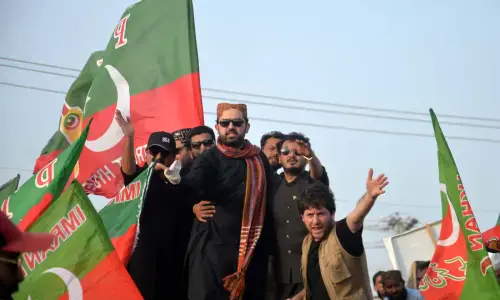
Explaining the motive behind his latest book, he said that the so-called revolutionaries in the cases of Trump, Lulu (Brazil) and Imran Khan wanted military intervention against their respective failures in elections. In Pakistan’s case, former ISI chief Faiz Hameed had told Imran Khan that the military was divided in his (PTI founder’s) favour and by escalating this division, the army chief (Gen Asim Munir) could also be removed.
Responding to a query by moderator Maryam Shahid Khan about division in the social fabric and its link with conspiracy theories, Mr Paracha said the main reason behind it was social media as even the US President was talking of conspiracy against him in the elections.
Some sort of fear was the basis of conspiracy theories, he said, adding that the middle class feared that they may be deprived of their privileges and were against the trickle-down effect of these privileges to the masses. “The middle class always desires that the masses remain in their influence,” he added.
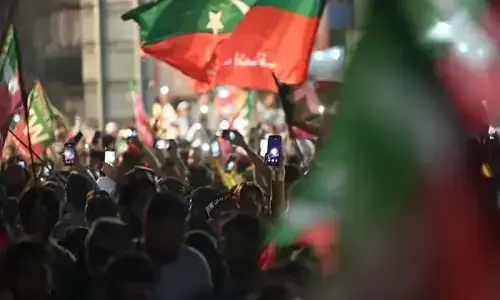
He said the fight between the PML-N and PTI in Punjab was in fact a duel between two factions of the middle class. Gen Musharraf’s constituency of the middle class was claimed by Imran Khan, who, devoid of any worthwhile public support at the time, suddenly staged a big rally in Lahore in 2011 joined by the middle class.
In response to a question by the moderator about the relation of the old and current middle classes with the military, he said that the incumbent military officers were not foreign qualified like in the past and most of them were local-educated and part of the middle class. “One part of this middle class was appeased through the Imran Khan project. When it failed, the other faction of the middle class was facilitated, through the PML-N government,” he explained.
He said the armed forces did divide between Imran Khan and Nawaz Sharif, but due to strict military discipline and resultantly failed to overthrow the army chief through the May 9 attacks.
About the role of religion in all three uprisings in his book, Mr Paracha recalled that Zulfikar Ali Bhutto too had raised the slogan of Islamic socialism but it was based on a complete theory. Whereas, the Islamic touch of Imran Khan was very problematic as even its proponents didn’t know its meanings, he added.
Published in Dawn, January 26th, 2026