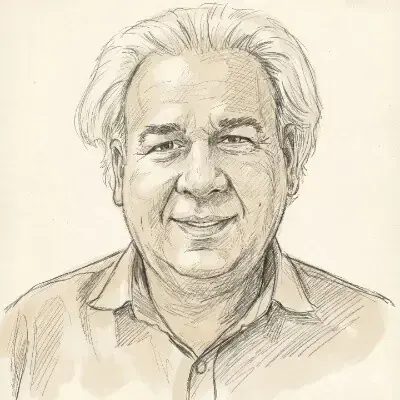
KARACHI: The Arts Council of Pakistan had journalist Absa Komal in conversation with poet and columnist Harris Khalique on Saturday evening in connection with the death anniversary (Jan 18) of Urdu short story writer Saadat Hasan Manto. The event was titled ‘Manto and today’s world’.
Ms Komal began the discussion with Manto’s set of letters ‘Chacha Sam Ke Naam’ (to Uncle Sam) which he wrote between 1951 and 1954. With reference to that, Mr Khalique said it needs to be understood that although Manto in his writings dissects politics, there’s no ‘finality’ or ‘closure’ in his works. It makes him a great artist because with him the continuity of human history and human experience never stops. This is what distinguishes him from progressive writers who believed in social realism.
Answering the question whether Manto received enough attention as a political commentator compared to his celebrity status as a short story writer, he said, “There was a clear division in his era. There were left-wing and right-wing writers. Manto oscillates somewhere in between. But I don’t think that’s the case. In my opinion, whoever talks about humanism (insaan dosti) is progressive… it’s not counted as progressive in an organised way (tanzeemi taur per). A way to look at art is to look at its relationship with power. Progressive writers resist power and authority. Manto doesn’t resist; he subverts it. He ridicules it. So to ridicule or resist against power, both are important.”
Going back to the topic of the late writer being a political commentator, Mr Khalique said, “The partition [of India] had pained him. He saw the loss of human lives as part of the imperial project. There are seven letters to Uncle Sam. He has unveiled and narrated the global imperial order through them. They contain self-criticism, the crisis of identity, they’re about Pakistan and India… He saw Pakistan and India through the same lens.”
Responding to the query about the contemporary global scenario, he said, “What’s taking place now was happening in the 1950s and ‘60s, too. Some changes have occurred, such as the changes brought about by technological development, but the basic human psychology and the interests of western imperial powers remain the same.”
He pointed out that when Manto mentions characters from his own society in the above-mentioned letters, he clarifies that all the state institutions of the state are British heritage. “Manto was born in 1912. At the age of 22, he had translated into Urdu works from Russian literature for a magazine. He was a creative genius. He was there when World War II took place. He witnessed the partition of India. He also saw the formation of the UN… he was well aware of all of that.”
Then the conversation went on to discuss Manto’s position in the literary world and the resetting of the global world order.
Published in Dawn, January 19th, 2026