Pakistan calls on other nations to press Afghanistan on removing terrorist groups
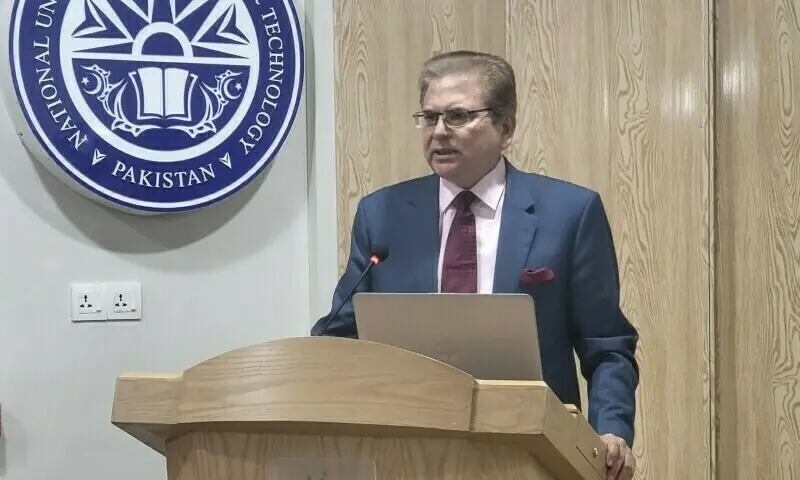


Pakistan’s Special Representative for Afghanistan Mohammad Sadiq on Sunday pressed the ruling Taliban in Afghanistan to clean their country of all terrorist groups.
He was speaking at the meeting of Special Representatives for Afghanistan in Iran’s capital of Tehran.
Iran had invited the Taliban government, but it did not attend, according to a Taliban spokesman.
Special representatives for Afghan affairs from Pakistan, Tajikistan, Uzbekistan, Turkmenistan, China, and Russia attended the meeting.
“In my remarks, I agreed with the assessment of all participating countries that the continued threat of terrorism emanating from Afghan soil is a big challenge for the region,” the Pakistani special envoy told the meeting.
Ambassador Sadiq wrote on X that he also stressed that the people of Afghanistan have already suffered enough and they deserved better.
“It is, therefore, imperative that the current de facto rulers take steps to ameliorate their suffering. And the foremost step in this regard would be to rid their soil indiscriminately of all types of terrorists,” he said.
Sadiq said he also made it clear that only an Afghanistan that does not harbour terrorists will inspire confidence in neighbouring and regional countries to meaningfully engage with Kabul, helping to realise the country’s immense economic and connectivity potential.
Pakistan’s former ambassador to Afghanistan Mansoor Khan said that Islamabad had initiated the process to engage the Taliban and the understanding was to take collective decisions, including the possible Taliban recognition.
“The grouping could not become an effective forum as the Taliban did not positively respond,” the former ambassador told Dawn late on Sunday.
He said Pakistan wanted Afghanistan’s immediate neighbours to adopt a joint approach about the issues of counter-terrorism, inclusivity, girls’ education and human and women’s rights in Afghanistan.
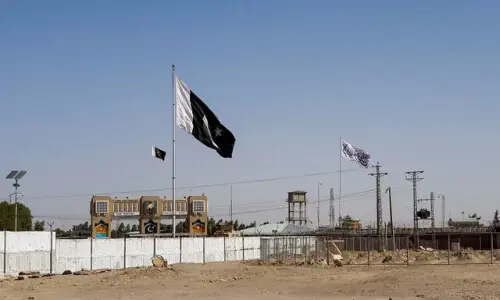
Pakistan’s bilateral relations with Afghanistan have come under strain in recent times as the banned Tehreek-i-Taliban Pakistan (TTP) remains the main point of contention between the two countries.
Pakistan has demanded that the rulers in Kabul take action to stop cross-border terrorism and stop providing sanctuary to the TTP, but the Afghan Taliban deny Islamabad’s allegations of terrorists being allowed to use Afghan soil to carry out attacks in Pakistan.
During a process of dialogue, which followed border clashes between the two countries in October, the two sides had met in an effort to work on mechanisms for lasting peace and stability between the two countries.
On October 25, the second round of talks between the two sides began in the Turkish capital. But Information Minister Attaullah Tarar then announced that the talks “failed to bring about any workable solution”.
However, mediators Turkiye and Qatar intervened and managed to salvage the dialogue process with an October 31 joint statement released by Turkiye stating that “further modalities of the implementation will be discussed and decided” during a principal-level meeting in Istanbul on November 6.
On November 7, however, after the third round of talks, Defence Minister Khawaja Asif said that talks addressing cross-border terrorism were “over” and “entered an indefinite phase” as negotiators failed to bridge deep differences between the two sides.
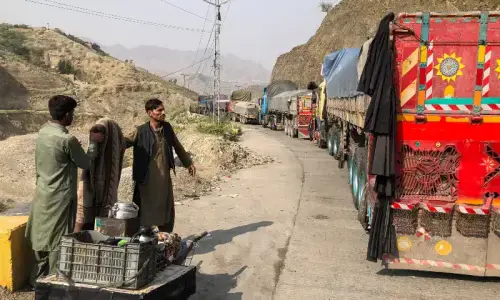
Following the failure of the talks, the Afghan Taliban suspended trade ties with Islamabad. Pakistan had already closed its border for trade soon after the October clashes.