Afghan clerics adopt resolution to ‘rein in militancy abroad’
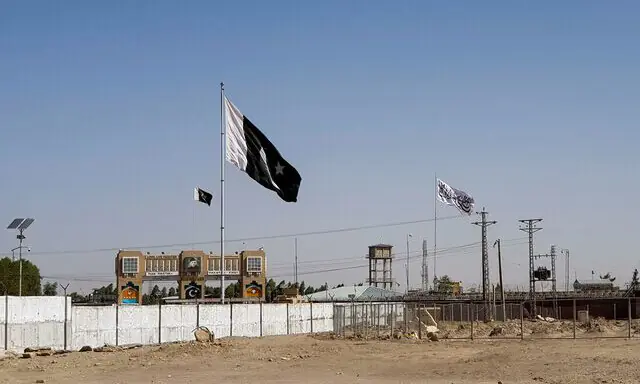

• Pakistan ‘hopeful but realistic’ as over 1,000 scholars seek ‘necessary measures’ to discourage cross-border movement of fighters
• FO says Afghan Taliban have failed to comply with past commitments, reiterates demand for written assurances
ISLAMABAD: Amid concerns by Pakistan regarding the use of Afghan soil by militants to launch attacks inside the country, over 1,000 Afghan clerics recently passed a resolution apparently aimed at discouraging the flow of militancy from its territory to neighbouring states.
The resolution, adopted by leading Afghan clerics, pledges that their country’s soil will not be used against other countries.
In case of violations, the “Islamic Emirate has the right to take necessary measures against them”, it said, noting that Taliban supreme leader Hibatullah Akhundzada had not permitted any Afghan national “to travel abroad for military activity, so if anyone violates this… The Islamic Emirate must take necessary measures to prevent such people”.
The resolution, though welcomed by Pakistan, elicited only cautious optimism, given the Taliban’s track record on militant groups. Terming it a “positive development”, the Foreign Office reiterated its demand for written assurances from the interim Afghan government that its soil would not be used against Pakistan.
The document, described as a significant development by experts in Pakistan and Afghanistan, comes from independent clerics, without any formal endorsement from the Taliban government, nor does it explicitly name Pakistan.
However, it does say that whoever would “conduct military operations beyond Afghanistan’s borders would be considered a rebel against the state”. This would also be considered “as a violation of the emir’s orders” and would be a punishable offence, the resolution said.
But it remains unclear who would enforce such a punishment, as the group of religious scholars who have issued it have no legally binding authority.
However, the timing of the declaration seems significant, coming at a time when Islamabad is asking Kabul to rein in militants, particularly the banned Tehreek-i-Taliban Pakistan (TTP), who it blames for perpetrating terror attacks in the country.
Pakistan has asked Kabul to issue a decree — in the name of supreme leader Hibatullah Akhundzada — to stop such incursions; a demand that was reiterated during a series of negotiations in Qatar, Turkey and Saudi Arabia over the past few months.
However, according to officials privy to the meetings, the Taliban had asked Pakistan to approach their own scholars for such an edict.
Afghan religious scholar Sheikh Faqirullah Faeq, who was present at the Kabul University gathering, termed the resolution “very significant” and appeared hopeful about its outcome.
He said all senior clerics of major religious schools participated in the day-long meeting of the clerics, adding that there were 34 major jihadi seminaries in Afghanistan and all participated in the event.
“Teachers have influence on those Taliban who go outside the country to fight. Some people say certain circles go to Pakistan or Gaza and other areas.
The supreme leader does not want a neighbour to have problems because of us, and I hope this resolution will work,” Sheikh Faeq told Dawn.
FO’s ‘cautious optimism’
In the absence of official backing, it is unclear how it will be enforced — a concern also echoed by the Foreign Office.
“If the leadership of the Afghan Taliban regime or certain segments of Afghan society realise the gravity of the matter that their soil is being used not just by the banned TTP/FAK/FAH but also by their own nationals to perpetrate terrorism in Pakistan, such realisation is positive,” FO Spokesperson Tahir Andrabi said during his weekly briefing.
“One important aspect is that commitments made in the past by the Afghan Taliban regime have not been fulfilled. This is exactly why, during the talks held with the mediation efforts of our brotherly countries, Pakistan insisted on written assurances from the Afghan side,” the spokesperson said.
Afghan Foreign Minister Amir Khan Muttaqi, however, told the clerics’ gathering in Kabul on Thursday that the interim government had the right to stop anyone using Afghan soil for militant activities in other countries. “If anyone violates this, ulema favour action against them,” he said while alluding to the resolution. He said it was obligatory for all Muslims in Afghanistan to obey the resolution.
‘Positive development’
Despite expressing concern about its impact, the resolution is being seen as a positive development by observers in both Pakistan and Afghanistan.
Pakistan’s former special representative for Afghanistan Asif Durrani, in a brief message sent to Dawn, said the timing of the resolution was important.
“One has to look at the timing of the resolution when everything seems to be frozen,” he said, adding that the document was “clearly intended” to convey a message to Pakistan regarding reconciliation.
“Hopefully, the TTP, which owes allegiance to the Taliban supreme leader…will now submit to the collective wisdom of the Afghan Taliban ulema and surrender arms,” he said, asking the government of Pakistan to welcome the resolution.
Analyst and journalist Sami Yousafzai said the move would be a positive one for Pakistan, which has repeatedly asked for an Afghan ‘fatwa’ or edict.
“Implementation would be a little difficult. But it would work if the Taliban leaders opt for punishment, arrest and jail those Afghans who join the Pakistani groups,” he told Dawn.
He said Afghans’ participation in attacks in Pakistan has increased, especially of the Afghans from Logar and Maidan Wardak provinces — both provinces are located near the capital Kabul.
“So, the Taliban are also worried over the growing number of Afghans participating. This is a good beginning and a positive message to Pakistan,” he said, adding that the Afghan Taliban’s intelligence can monitor the movement of their own people.
According to the FO spokesperson, Pakistan will adopt a ‘wait-and-see’ policy to evaluate this document, since the Taliban had failed to live up to their promises in the past.
Published in Dawn, December 12th, 2025