Trump’s role in Pak-India peace highlighted in new US security strategy
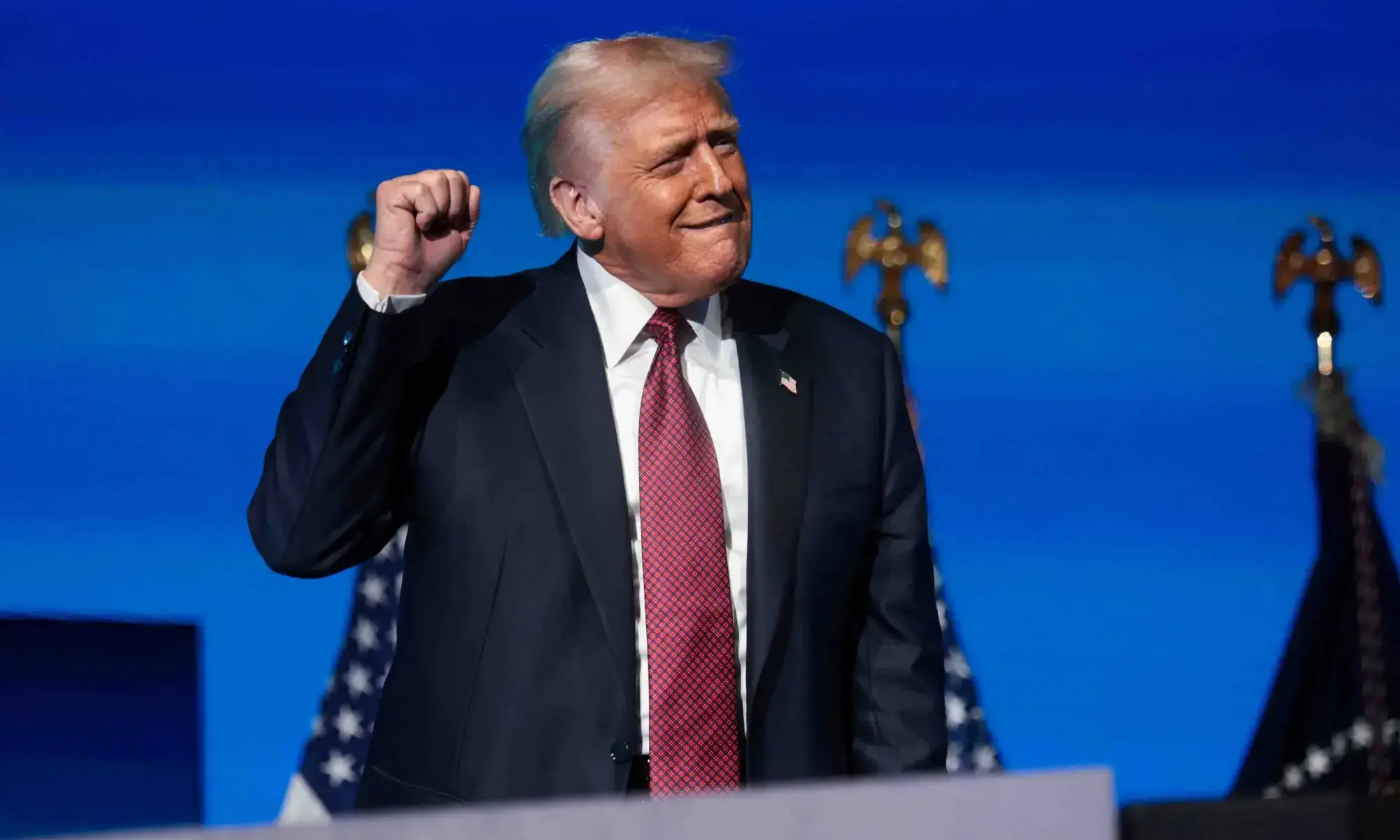

• National Security Strategy references his repeated claims about planes shot down during May war
• Presents him as ‘President of Peace’, claims he helped secure peace in eight global conflicts
• Identifies China as central challenge; calls for deeper US engagement with India
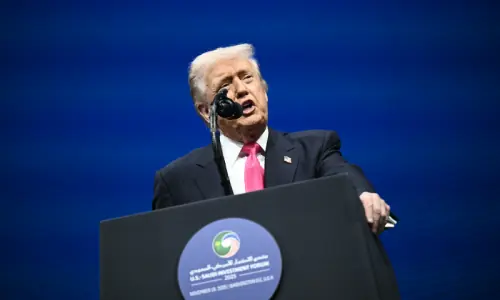
WASHINGTON: US President Donald Trump’s role in arranging a peace deal between India and Pakistan received a mention in the White House’s National Security Strategy (NSS) released on Friday, even as the document largely focuses on China.
The mention carries particular significance because the NSS is a formal statement of the administration’s policy priorities and global assessment. Highlighting Trump’s diplomacy in South Asia underscores Washington’s intention to boost its influence in the region and lends credibility to his intervention claims.
“President Trump has cemented his legacy as the President of Peace. In addition to the remarkable success achieved during his first term with the historic Abraham Accords, President Trump has leveraged his deal-making ability to secure unprecedented peace in eight conflicts throughout the world over the course of just eight months of his second term,” the strategy states.
“He negotiated peace between Cambodia and Thailand, Kosovo and Serbia, the DRC and Rwanda, Pakistan and India, Israel and Iran, Egypt and Ethiopia, Armenia and Azerbaijan, and ended the war in Gaza with all living hostages returned to their families.”
Trump has repeatedly cited claims that five to seven “brand new, beautiful” planes were shot down during the May conflict between Pakistan and India. In recent comments, he said that eight planes were “essentially” shot down.
While the actual number of losses remains disputed, his remarks have bolstered Pakistan’s version of events and strengthened its diplomatic position. India, however, rejects Trump’s claims, maintaining that it ended the brief air war independently and disputing reports of any Pakistani shoot-downs.
The document also pledges to end “the cynical manipulation of our immigration system to build up voting blocs loyal to foreign interests within our country” and highlights the administration’s recent steps to curb immigration, measures announced this week.
To counter China’s growing influence, the strategy stresses closer engagement with India and other allies. Washington is urged to strengthen commercial and security ties with New Delhi, including through quadrilateral cooperation with Australia and Japan. India is also included among the global partners with whom the US needs to coordinate on strategic priorities, including critical minerals in Africa.
On security, the NSS warns that control of the South China Sea by a hostile power could allow tolls or arbitrary closure of vital shipping lanes. Addressing this challenge will require greater cooperation with affected nations, including India and Japan.
The strategy acknowledged that “conflict continues to shape the Middle East,” but suggested the situation is “less severe than headlines suggest”. It noted that Iran has been weakened by Israeli actions and by President Trump’s June 2025 Operation Midnight Hammer, which curtailed Iran’s nuclear programme.
The document said the Israeli-Palestinian conflict “remains thorny”, but added that thanks to the ceasefire and release of prisoners President Trump negotiated, “progress toward a more permanent peace has been made”. It also recognised that “Syria remains a potential challenge, but with American, Arab, Israeli, and Turkish support, it may stabilise and reassume its rightful place as an integral and positive player in the region”.
Turning to Europe, the strategy expressed strong support for the “growing influence of patriotic European parties”, emphasising that a strong Europe is needed to work with the United States to prevent any adversary from dominating the continent. It linked unchecked migration to Europe’s economic challenges, warning of “the real and more stark prospect of civilisational erasure”.
The paper cautioned that within a few decades, some Nato members could become majority non-European and called for “cultivating resistance” to address this potential demographic shift.
The Trump administration also reaffirmed that there would be no expansion of Nato, the transatlantic alliance in which the United States plays a central role, a stance that undercuts Ukraine’s hopes as it continues to face the Russian invasion.
Published in Dawn, December 6th, 2025