Peshawar university shuts nine departments over low enrolment
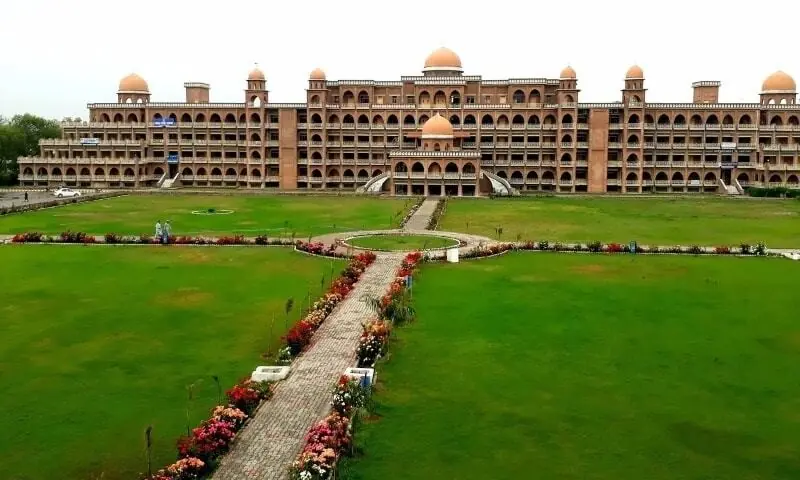

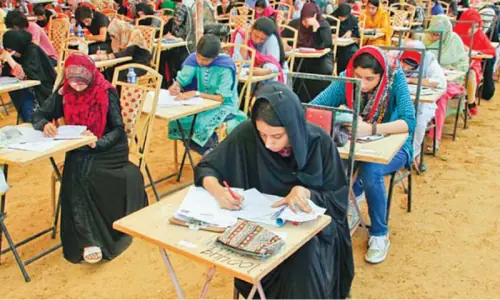
PESHAWAR: University of Peshawar has decided to close nine departments over low admission rate in the respective Bachelor of Studies (BS) programmes from the current semester, fall 2025.
The BS programmes to be closed include development studies, geography, geology, history, social anthropology, statistics, logistics and supply chain analytics, human development and family studies and home economics, according to official documents.
Only one student had applied for admission in BS human development and family studies, two each in BS development studies, BS logistics and supply chain analytics and BS home economics, three each in BS geography and BS history, five in BS social anthropology, seven in BS statistics and 14 in BS geology.
In this connection, the UoP administration has issued a notification. “As preapproved university regulations, if the number of students admitted in a programme is less than 15, the admission will be considered as cancelled. As per the undergraduate admission record available in the portal, the mentioned programmes, session fall 2025, are found below the approved number,” reads the notification.
Academician says management failed to modernise BS courses
In light of the stated regulations, the above-mentioned degree programmes shall not be continued. Therefore, it is requested that relevant students may be deputed to the office of the Director of Admissions to offer them an alternate academic programme in order to safeguard their academic future, says the notification.
Sources in UoP told Dawn that there were around 69 departments in the university, and each department enrolled 60 students in the four-year BS programme. They said that several major departments, including mathematics, chemistry, social work, Urdu, Pashto, journalism and mass communication, disaster management and urban area planning had also enrolled less number of students.
They said that the departments where sufficient students got admission included pharmacy, English, psychology, computer science, law, environmental sciences, physics, international relations, political science, peace and conflict studies, criminology and management sciences.
The spokesperson for UoP, when contacted, said that multiple reasons were associated with low enrolment of students in the respective disciplines. He said that students lacked guidance and counselling in choosing a discipline.
“Students take much interest in subjects like the recently introduced allied health sciences and computer science, as such disciplines have scopes in Pakistan and abroad. Subjects like languages are unattractive for students because of less scope in the market. Students opt for trending disciplines,” he said.
Yousaf Ali, an academician, said that there were a host of reasons for the declining enrolment in the BS programme in higher education institutions in general and the University of Peshawar in particular. The universities, as well as the administrative department for higher education, failed to establish a proper data hub where genuine and credible data was available for policy-making and planning, he added.
However, the data available with the higher education department shows that total enrolment in universities and affiliated colleges in 2022 was 160,000 in BS, MPhil, and PhD programmes, which went down to 155,000 in 2025. It verifies the fact that the overall enrolment in higher education is showing a downward trend.
Mr Ali said that the prime reason for the declining enrolment was the introduction of the BS programme without proper planning, simultaneously at the university and college levels.
“Now both universities and colleges offer the same courses, with charges at the former being much higher than the latter. The average fee at the University of Peshawar is Rs75,000 per semester, which is Rs150,000 per year. The same courses are offered at the college level at a rate of Rs7,000 per semester and Rs14,000 per year,” he said.
University of Peshawar, owing to its financial crisis, regularly increases fees, making it unaffordable for the majority of students.
“The rapid increase in the number of higher education institutions in the province has also contributed to low enrolment in universities. Currently, there are a total of 34 public and 10 private universities in the province. The number of colleges is nearly 1,000, both public and private, including commerce and management colleges,” said Mr Ali.
He said that the departments where low enrolment was reported had been losing relevance in the changing environment and market. They lost employability and marketability, he said. The university administration and management of departments badly failed to innovate in their courses according to the needs of modern times, he added.
“Also, the government would have to think over the fate of the BS programme as it is facing a host of serious issues both at college and university levels,” said Mr Ali.
Published in Dawn, October 27th, 2025