Hungarian writer Krasznahorkai wins 2025 Nobel Prize in Literature
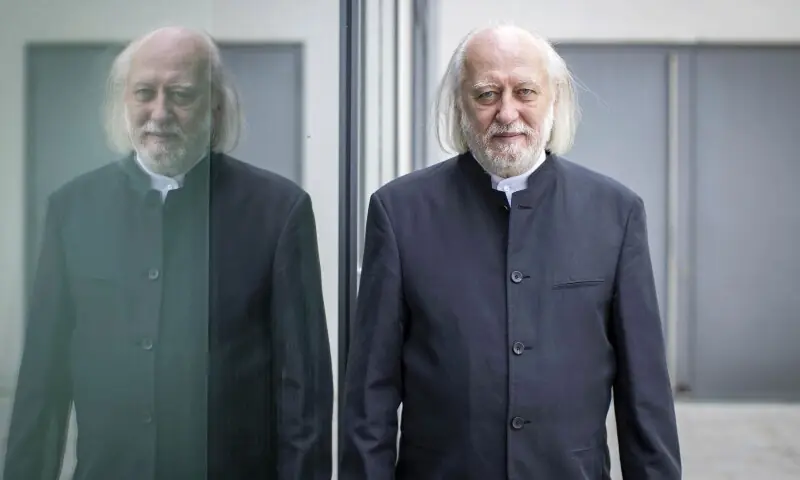

Hungarian writer Laszlo Krasznahorkai won the 2025 Nobel Prize in Literature, the award-giving body said on Thursday.
The prize is awarded by the Swedish Academy and is worth 11 million crowns ($1.2 million).
Established in the will of Swedish dynamite inventor and businessman Alfred Nobel, the prizes for achievements in literature, science and peace have been awarded since 1901.
“The Nobel Prize in Literature for 2025 is awarded to the Hungarian author László Krasznahorkai for his compelling and visionary oeuvre that, in the midst of apocalyptic terror, reaffirms the power of art,” said Mats Malm, Permanent Secretary at the Swedish Academy.
Past winners of the 11 million Swedish crown ($1.2 million) literature prize include French poet and essayist Sully Prudhomme, who bagged the first award, American novelist and short story writer William Faulkner in 1949, Britain’s World War Two Prime Minister Winston Churchill in 1953, Turkey’s Orhan Pamuk in 2006 and Norway’s Jon Fosse in 2023.
Last year’s prize was won by South Korean author Han Kang, who became the 18th woman, the first was Swedish author Selma Lagerlof in 1909, and the first South Korean to receive the award.
Over the years, the choices made by the Swedish Academy have drawn as much ire as applause.
In 2016, the award to American singer-songwriter Bob Dylan sparked criticism that his work was not proper literature, while Austrian Peter Handke’s prize also drew criticism in 2019.
Handke had attended the funeral in 2006 of former Yugoslav President Slobodan Milosevic, seen by many as responsible for the deaths of thousands of ethnic Albanians who were killed in Kosovo and the displacement of almost 1 million others during a brutal war waged by forces under his control in 1998-99.
Prizegivers have also in the past been accused of being snobbish, of having an anti-American bias and of ignoring some of the giants of literature, including Russia’s Lev Nikolayevich Tolstoy, France’s Emile Zola and Ireland’s James Joyce.