Pakistan is repositioning itself on the global stage, with new economic alignments and emerging opportunities, built on recently achieved economic stability and improving investor sentiment. Yet the true advantage of this shift will not be decided in international forums but in whether stability can be translated into an effective economic recovery and sustained growth.
At the heart of this challenge lies the country’s human resource base. Exports, investment, and competitiveness cannot rely solely on natural resources or borrowed capital; they depend on the capacity of Pakistan’s human resource base to transform and drive an export-led economy based on both a competitive industrial base and value-added services.
We must learn from the emerging economies. Global experience demonstrates that the path to prosperity lies in skills and efficiency. Vietnam embedded training centres inside its industrial parks, producing workers tailored to industry needs. Within two decades, it scaled garments and electronics before moving into higher technology exports.
Bangladesh harnessed women’s participation as a competitive advantage, training millions for garment and later IT services, lifting exports above $40 billion. Malaysia institutionalised consistency through its Economic Planning Unit, aligning skills, industry priorities, and foreign investment across political cycles.
By investing in its people, Pakistan’s exports can be boosted, imports replaced, investment attracted, and income per capita increased
Rwanda, with no resource base, has demonstrated how governance and inclusion could turn Information and Communication Technology, tourism, and Business Process Outsourcing (BPO) into national strengths. The lesson is clear: sustainable growth is not only about natural wealth but about human efficiency, technology adoption, and scale.
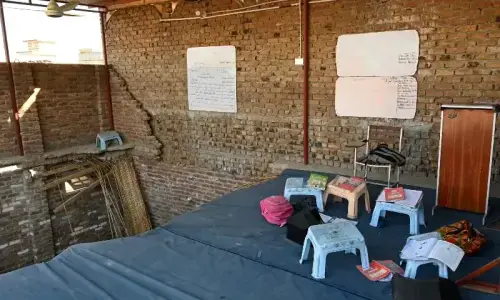
Pakistan has significant human capital gaps. Shortages exist across the spectrum of vocational training: electricians, welders, dairy specialists, logistics supervisors, nurses, and care workers.
Even basic skills like English communication, problem-solving, and compliance literacy are scarce. Women’s participation stands at just 22 per cent, one of the lowest globally, holding back both competitiveness and household incomes. Academia and industry remain disconnected, with outdated curricula failing to produce graduates who are market-ready and skilled.
To address these gaps, Pakistan should establish a Human Capital and Skills Development Board (HCSDB) under the Federal Government, with provinces and industry as equal partners.
Governance should be led by federal chairs, with representation from provincial governments, technocrats, academia, industry leaders, and chambers.
The mandate should align training with export demand or import substitution, ensure skills-transfer clauses in existing and potential foreign investments, and integrate human resource planning into the national economic recovery plan.
Multinationals already operating in Pakistan should be engaged, seeking their help to support training programmes, apprenticeships, and internships. Universities and technical institutes should collaborate to co-create curricula with industry, establish joint research labs, and align certifications with international standards.
Digital and IT should be one of the key areas of focus, with a talent ladder that spans from digital literacy and BPO to coding, analytics, cybersecurity, and artificial intelligence. Relocating BPO operations to second-tier cities would absorb youth and women while boosting IT and services exports.
Training in farm mechanisation, cold-chain logistics, and food certification can increase yields, reduce waste, and expand exports of fruit pulp, dairy products, halal protein, and processed foods. Skilled manpower in agro-processing will also strengthen food security.
Skilled engineers, technicians, and workers can raise quality, lower costs, and boost local employment. Every industrial cluster should be tied to nearby universities and technical institutes, creating live training pipelines linked to actual jobs.
Policy must reshape incentives around skills. Tax credits should be offered to firms that train and hire certified workers, with higher credits for women and new entrants. Exporters who expand certified employment should receive wage-support incentives tied directly to incremental export revenues. Training vouchers should only be redeemable upon verified job placement.
A National Job Exchange should connect certified candidates to employers in Pakistan and abroad, with streamlined visa and relocation processes. A Digital Skills ID should record credentials and job history, recognised globally.
Planning and delivery must be disciplined. The HCSDB should operate with concrete mandates and measurable outcomes. Subject-matter experts, drawn from both global corporates and Pakistani academia with strong industrial linkages, must guide execution with number-oriented deliverables.
In the short term, the aim should be to launch the skills authority, publish a live demand dashboard, and embed training in special economic zones.
In the medium term, the goal could be to certify 250,000 workers annually, place at least 150,000 into jobs, and add $2bn in IT and BPO exports. The country’s human resources development plan must be approved by parliament, ensuring continuity across political cycles.
By investing in its people, Pakistan can boost exports, replace high-cost imports, attract investment, increase per capita incomes, and lay the groundwork for a recovery that is not temporary but transformative. The country’s greatest natural resource is not buried underground. It is its people. Training them is the only road to lasting prosperity.
The writer is the President of OICCI and President & CEO of Faysal Bank
Published in Dawn, The Business and Finance Weekly, October 6th, 2025