Footprints: Schools become homes


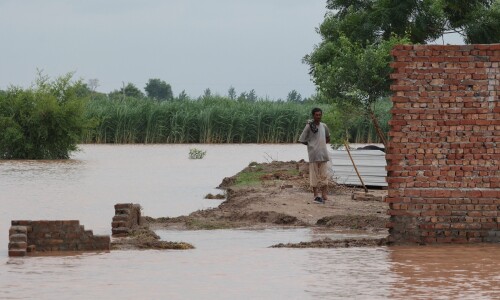
GOVERNMENT schools in localities around the Ravi River have, for the past few days, been turned into temporary shelters for families evacuated from flood-hit settlements. Inside the classrooms, blackboards and benches have been replaced by mattresses, bundles of clothes and kitchen utensils — the few belongings people managed to save before the river swallowed their houses and fields.
“We had no warnings. The water came into our village at night, and within hours our homes were gone,” recalls Shazia Bibi, a mother of four now staying in a relief camp at a government school in Shahdara. “My children cry for their toys and other belongings, but everything was swept away in the flood.”
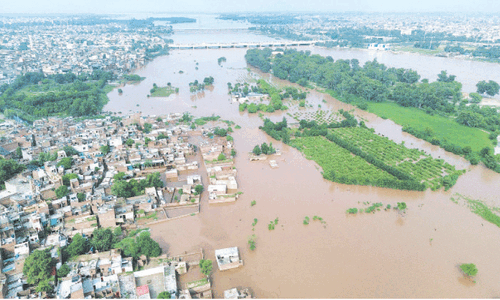
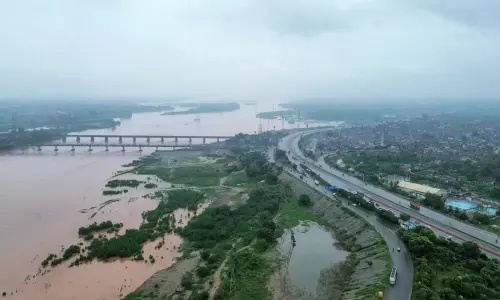
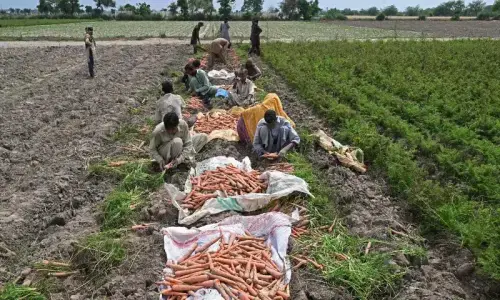
Heavy monsoon rains and massive water inflows from India have swelled the Ravi River, inundating hundreds of riverside settlements. Thousands of villagers, most of them daily-wage earners and small farmers, were forced to abandon their homes.
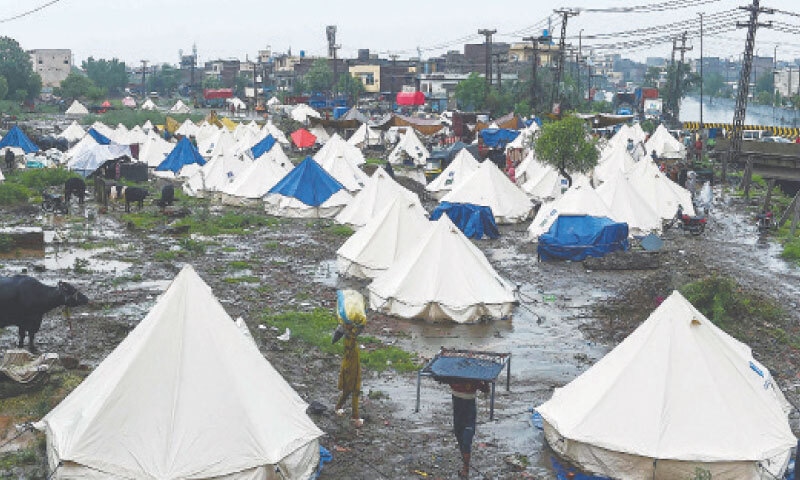
The government’s relief camps in schools were meant to be a refuge, but conditions are harsh. Families complain of overcrowding, a shortage of clean drinking water, poor sanitation, and insufficient supplies.
Flood survivors complain of shortage of clean drinking water, poor sanitation
Although authorities claim medical teams are present, parents say their children have developed skin rashes and fever due to the unhygienic conditions. Women in particular express frustration over broken or unclean washrooms.
Community volunteers and welfare organisations are stepping in with food and clothing, yet many displaced families feel the help falls short. Women at a “tent village” set up by an NGO in Shahdara echoed the same concerns — no toilets, no privacy, and rising skin infections among children.
“I had two buffaloes, both drowned,” says Ijaz Ahmed, now living in a government camp in Chung. “Those buffaloes were my livelihood. I have no idea how to feed my family after going back.”
Like Ijaz, many displaced families are anxious about returning home. Their greatest fear is not just rebuilding in the same flood-prone areas, but surviving the days after aid ends.
“Even if the water recedes, who will help us restore our homes?” asks Sughran Bibi. “The government is feeding us here, but who will feed us once we return home?”
Officials admit the challenge is overwhelming. “We have established more than a dozen relief camps in Lahore and are providing food and medical assistance. But the scale of displacement is large, and we are still assessing the damages,” says an official from the deputy commissioner’s office.
According to official data, 18 relief camps have been set up in schools across the city, sheltering at least 4,150 people. Currently, 900 people are housed at five camps in the areas including Sanda, Babu Sabu, Gulshan-i-Ravi and Sherakot; 2,350 at three camps in tehsil Raiwind including Manga Hathar and Mohlanwal; 800 at four camps in tehsil Ravi including Shahdara, Jia Musa and Harbo Jabbo; and 100 at five camps in Allama Iqbal Town tehsil including Chung, Shahpur, Niaz Beg and Mureedwal.
Interestingly, no displaced families have yet been shifted to a relief camp established in a Wahga tehsil school. Authorities say they have so far evacuated 26,065 people and 3,222 animals from flood-hit areas. Another 65 schools have been identified to serve as relief camps if needed.
Environmental experts stress that the crisis cannot be managed by short-term relief alone. They call for investment in flood protection along the riverbanks, effective early warning systems, and relocation programmes for vulnerable settlements.
Until then, classrooms will remain crowded with families who once called the Ravi’s banks their home, waiting not only for the waters to recede but also for a future less fragile.
Published in Dawn, August 31st, 2025