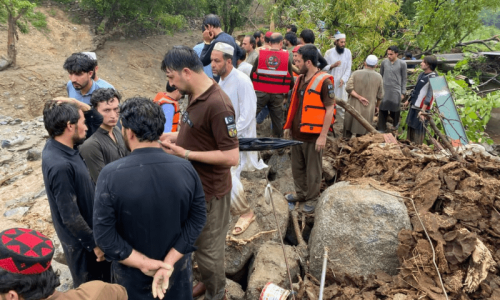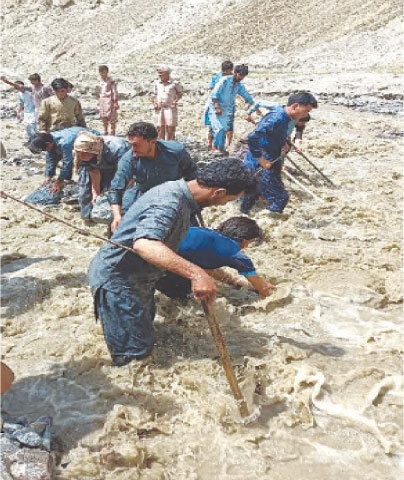
GILGIT: Thousands in Gilgit-Baltistan remained without potable water, electricity, and road access on Tuesday, as life returned to normalcy in the aftermath of flash floods that had ravaged the mountainous region since July this year.
On Tuesday, there were no floods in the GB rivers, and local volunteers had started to restore water channels and roads in several parts of the region. However, several roads remained blocked, including the Naltar Highway and the Ghizer-Shandur Road. The Baltistan Highway, which was blocked in the Roundu valley of Skardu, had finally been reopened on Tuesday, said officials.
Meanwhile, due to roadblocks, drinking water, irrigation, and road communication issues have compounded in the flood-affected areas, particularly in Ghizer, Skardu, Ghanche, and Gilgit. Similarly, residents complained of a severe water shortage in Danyor, Skardu and Ghanche.
A resident of Mazher Haldi village in Ghanche district in Baltistan said that their village had suffered four floods since mid-July. The repeated disasters have left the community in ruins, with houses swept away, agricultural lands destroyed, and families forced to abandon their homes, he added.
Residents complain of water shortage in several districts
The district administration has provided temporary tents, and the affected families have been relocated to Payo Thang Haldi. However, the villagers have urged the authorities to declare a flood emergency in Haldi. The displaced residents taking refuge in Payo Thang Haldi were living without clean drinking water, electricity, proper sanitation, and food supplies. The destruction of the water supply lines, electricity connections, and road networks had made their survival even more difficult.
Meanwhile, the Ghizer Rescue 1122 teams continued their rescue activities in the flood-affected areas of Daen village for the fifth consecutive day. Patients and other vulnerable groups had been safely transported from Daen to safe locations in rescue boats.
As the weather becomes normal, locals citing indigenous knowledge said the weather starts changing from August 15, and snow starts freezing on the mountains by mid-August. On Tuesday morning, there was a little snowfall on the mountains as well.
A day earlier, GB government spokesperson Faizullah Faraq said Ghizer was the most-affected district, as the mountainous region faced one of the worst floods that had killed 39 people, including tourists, since July. These disasters have caused damage to the tune of Rs30 billion, he had said.
“At least two dozen people have been injured so far; 35 small and large bridges have been washed away; a dozen mosques and ‘Jamaat Khanas’ have been damaged, and more than half a dozen buildings of educational institutions have been damaged,” he said. About 350 houses were completely destroyed and at least 600 houses had sustained partial damage, he had added.
Published in Dawn, August 20th, 2025