Israeli cabinet may order complete Gaza takeover: report
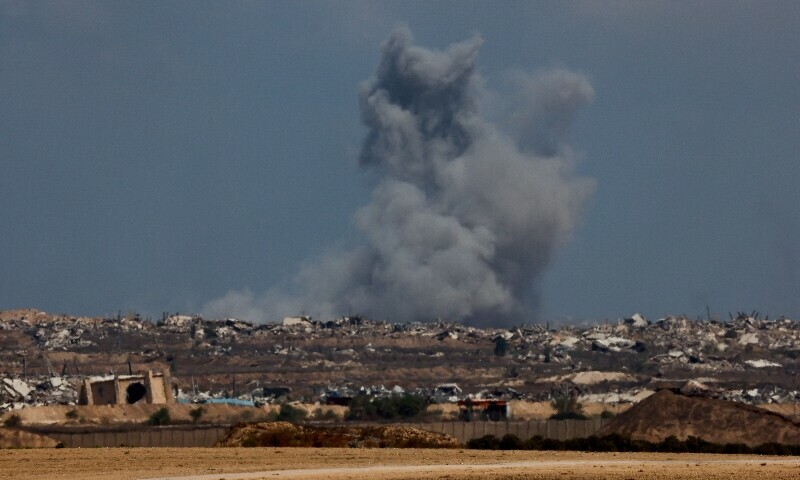

Israel’s cabinet could authorise on Tuesday a complete military takeover of Gaza for the first time in two decades, media reported, despite international pressure for a ceasefire to ease appalling conditions in the besieged Palestinian territory.
Israel has been facing growing international criticism over the humanitarian crisis in Gaza, with Amnesty International, Human Rights Watch and experts already declaring its actions in Gaza as a “genocide”, which Tel Aviv rejects.
Prime Minister Benjamin Netanyahu is leaning towards an expanded offensive and taking control of the entire enclave after 22 months of offensive against Hamas, Israeli Channel 12 reported.
A senior Israeli source told Reuters on Monday that more force was an option following the collapse of indirect ceasefire talks with Hamas.
Seizing the entire territory would reverse a 2005 decision by Israel to pull settlers and military out of Gaza while retaining control over its borders — a move right-wing parties blame for Hamas gaining power there.
It was unclear, however, whether a potential full takeover of Gaza would entail a prolonged occupation or a short-term operation aimed at dismantling Hamas and freeing hostages.
Israel’s coalition government is regarded as one of the most right-wing in its history, with the cabinet including parties that seek to annexe both Gaza and the West Bank and encourage Palestinians to leave their homeland.
The country’s military has throughout the conflict pushed back against the idea of Israel trying to fully occupy Gaza and establish military rule there, which would require it to take over long-term governance.
The military has also struggled with manpower issues as the offensive has dragged on, with reservists being repeatedly called up and putting a strain on capabilities.
Israel’s military campaign has devastated the tiny, crowded enclave, killing more than 60,000 people according to Palestinian health authorities. The conflict was triggered by a Hamas attack on October 7, 2023, when gunmen stormed the border from Gaza, killing more than 1,200 people and seizing around 250 hostages according to Israeli tallies.
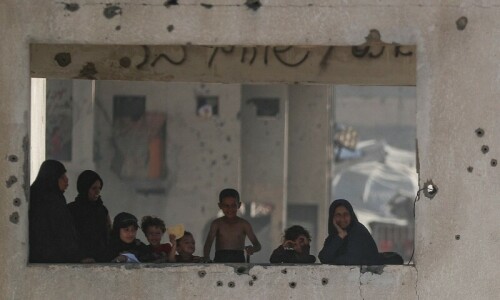
The conflict has forced nearly all of Gaza’s over 2 million people from their homes and caused what a global hunger monitor called last week an unfolding famine.
That has caused widespread international anger and prompted several European countries to say they would recognise a Palestinian state next month if there was no ceasefire.
Inside Gaza on Tuesday, Israeli gunfire and strikes killed at least 13 Palestinians, local health authorities said, including five people in a tent in Khan Younis and three aid seekers near Rafah in the south.
Tank push
Israeli tanks pushed into central Gaza earlier on Tuesday but it was not clear if the move was part of a larger ground offensive.
Palestinians living in the last fifth of the territory, where Israel has not yet taken military control via ground incursions or orders for civilians to leave, said any new move to occupy the area would be catastrophic.
“If the tanks pushed through, where would we go, into the sea? This will be like a death sentence to the entire population,” said Abu Jehad, a Gaza wood merchant, who asked not to be named in full.
A Palestinian official close to the talks and mediation said Israeli threats could be a way to pressure Hamas to make concessions at the negotiation table.
“It will only complicate the negotiation further, at the end, the resistance factions will not accept less than an end to the war, and a full withdrawal from Gaza,” he told Reuters, asking not to be named.
Israel said it would allow merchants to import goods. A source in Gaza told Reuters some trucks had already entered carrying chocolates and biscuits for a merchant.
It is hoped that essential items such as children’s milk, fresh meat and fruits, sugar, and rice could be allowed in, which would alleviate scarcity and drive down prices of what is available in the markets.
US Middle East envoy Steve Witkoff said last week he was working with the Israeli government on a plan that would effectively end the conflict in Gaza.
But Israeli officials have also floated ideas, including expanding the offensive and annexing parts of Gaza.
The failed ceasefire talks in Doha had aimed to clinch agreements on a US-backed proposal for a 60-day truce, during which aid would be flown into Gaza and half of the hostages Hamas is holding would be freed in exchange for Palestinian prisoners jailed in Israel.
The Israeli military was expected on Tuesday to present alternatives that include extending into areas of Gaza where it has not yet operated, according to two defence officials.