

THE strain had been there for a while when reports emerged that Pakistanis were being rounded up in the UAE and deported. The details, though, have not been verified and, yesterday, Pakistan’s interior ministry strongly denied accusations of “country- or sect-specific” expulsions of Pakistanis from the UAE or anywhere for that matter. It posted on X that it was aware of the “speculative reporting in sections of media especially social media about targeted deportations of Pakistani nationals from brotherly Islamic country of UAE”. Earlier, the Foreign Office spokesperson, too, when asked about the “unusually high number” of emergency exit documents issued by the Pakistani mission in the UAE, had stated these were on account of “administrative actions, including immigration status violation and other legal infractions”.
On his part, Prime Minister Shehbaz Sharif, too, expressed solidarity with the UAE by condemning the missile and drone attack, purportedly carried out by Iran, on its soil.
While it is difficult to verify the reports of deportations of Pakistanis, it was evident that relations between the two nations were on edge, especially when, in early April, the UAE asked Pakistan to immediately repay a $3.5 billion debt. Pakistan said it would repay the debt in its entirety and did so before the end of the month, something that would not have been possible without the assistance of Saudi Arabia.
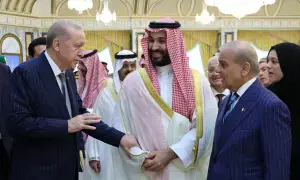
Discussions on the matter have revolved around the probability of the UAE’s annoyance at Pakistan’s close alignment with the Saudis and Islamabad’s role as mediator in the conflict between the US and Iran.
‘Dubai chalo’ may have become a dated slogan.
Alignments are changing in the Middle East, especially as high tensions between the US-Israel alliance and Iran show no signs of abating. The UAE, along with some other Arab-speaking nations, had signed the Abraham Accords with Israel, which basically normalised diplomatic relations with Tel Aviv. There have even been a few media reports of Israel deploying its defence system to protect the UAE airspace against Iranian attacks.
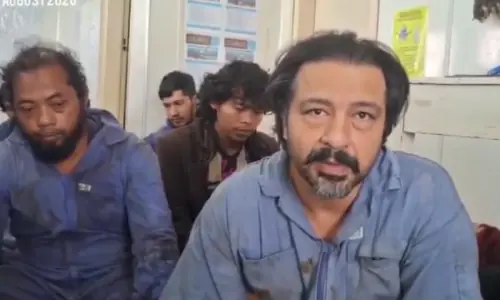
This situation may come under the geopolitical domain, but for ordinary Pakistani expatriates, it translates into dismal predicaments. According to a New Lines Magazine investigation, many people were picked up arbitrarily and taken to detention centres, unable to even contact friends and families.
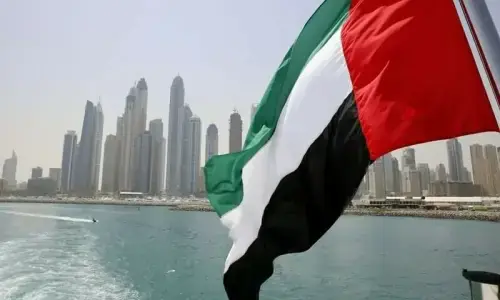
While one does not know how many are facing deportation or the level of its linkage with the war in the region, if this is the beginning of a geopolitical shift, it is possible that Pakistani workers may not be as welcome as they once were. If so, this would mark a transformational shift in the labour economics of South Asia and Pakistan. The familiar ‘Dubai chalo’ slogan was born of a Punjabi film released in the 1970s. Several generations of Pakistanis have since gone and settled in the UAE. According to estimates, there are 1.9 million Pakistanis there. Cumulatively, they send back millions of dollars in remittances that make up a large percentage of Pakistan’s foreign exchange reserves.
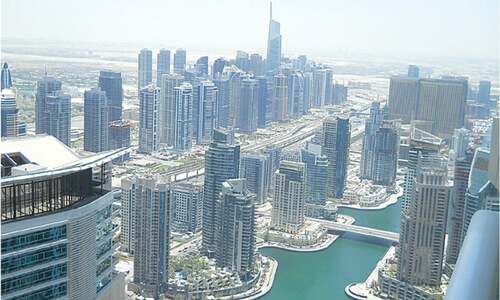
It is true that Pakistanis have played a big role in making Dubai the glittering metropolis it has become. As Dubai’s light fades for many South Asians, owing in no small part to the emirate’s ability to attract high-end Westerners, there may not be a need for the Pakistani labourer or even the tech worker. This is likely to impact many lives dependent on the Dubai line.
Pakistani elites are also going to be affected. If annoyed authorities in Dubai take a tough stance towards Pakistanis, residency permits and no-questions-asked bank accounts may not be as easily accessed. Rich begums addicted to shopping trips to Dubai will have to find new destinations to spend their often questionably acquired cash. The prospect of shopping in Riyadh and Jeddah is just not the same as hobnobbing with Westerners in Dubai.
It is always the poorest and the most hardworking that bear the brunt of geopolitics and changing dynamics between countries — the labour class constitutes some of the least powerful actors in global reorganisation. In this tricky moment, it is essential that Pakistan makes every effort possible to ensure that ordinary expatriate workers are not targeted by host countries or affected by global events beyond their control.
Many have spoken out about how careful they have been not to violate restrictions imposed by the authorities. Even if ‘Dubai chalo’ has become dated because of this war, perhaps it can at least be ‘Dubai mein raho’ (stay in Dubai) for those who have made it their home.
The writer is an attorney teaching constitutional law and political philosophy.
Published in Dawn, May 9th, 2026