Pakistan, Qatar reaffirm shared commitment to support 'constructive dialogue across region'
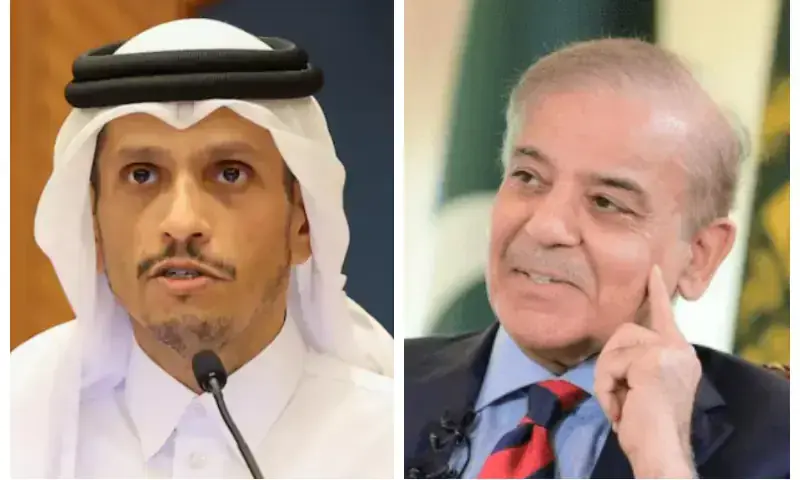


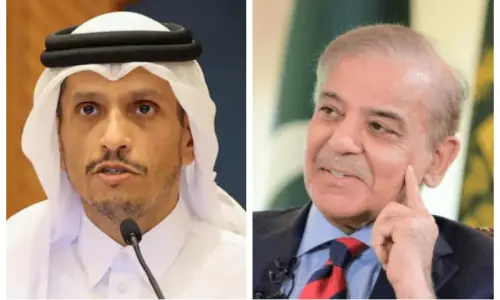
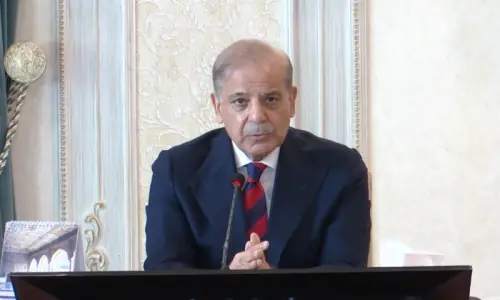
Prime Minister Shehbaz Sharif on Sunday said he and his Qatari counterpart Sheikh Mohammed bin Abdulrahman bin Jassim Al Thani reaffirmed their “shared commitment” to support “constructive dialogue” in the Middle East.
In a post on X, PM Shehbaz said he was “delighted to receive a telephone call from my brother […] earlier today”.
“We exchanged views on the evolving regional situation and reaffirmed our shared commitment to support all ongoing efforts aimed at promoting lasting peace, stability, and constructive dialogue across the region,” the premier added.
The prime minister said he conveyed his “sincere appreciation to my dear brother”, Qatar’s Emir Sheikh Tamim bin Hamad Al Thani, “for his wise leadership and for Qatar’s continued support for Pakistan’s sincere efforts to advance regional peace and stability through dialogue and diplomacy”.
PM Shehbaz further said he looked forward to the Qatari emir’s visit to “Pakistan very soon”.
In its statement on the phone call, the Prime Minister’s Office (PMO) said the two leaders “reviewed the progress of ongoing peace efforts in the region”.
Emphasising the “depth of the brotherly bonds between the two countries”, the PMO said both sides “underscored the importance of constructive engagement by all parties to ensure the success of ongoing peace efforts”.
It further noted that the Qatari emir’s visit “would help both sides to further strengthen and expand the enduring Pakistan-Qatar partnership”.
According to Qatar’s foreign ministry, Sheikh Mohammed affirmed Qatar’s “full support for the Pakistani mediation efforts aimed at ending the crisis through peaceful means”.
He stressed the “need for all parties to respond to these efforts in order to create the appropriate conditions for progress in the negotiations, leading to a comprehensive agreement that achieves sustainable peace in the region”.
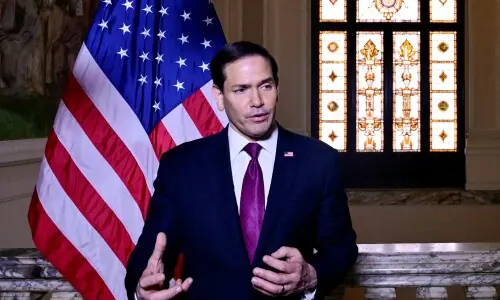
The conversation marks the second phone call this week between PM Shehbaz and Sheikh Mohammed. It also follows the Qatari PM’s meeting with US Secretary of State Marco Rubio and Special Envoy on the Middle East Steve Witkoff during his visit to the United States.
Rubio said he discussed “US support for Qatar’s defence”, while Qatar’s foreign ministry noted that “Pakistani mediation aimed at reducing escalation” also came under discussion.
Iran, while questioning the seriousness of American diplomacy, has kept the United States waiting for its response to Washington’s latest proposals to end more than two months of fighting and begin peace talks.
Pakistan initially positioned itself as a facilitator in the peace process between Tehran and Washington after the US and Israel launched attacks on Iran on February 28, setting off a conflict that gave rise to a global fuel crisis. Later, the White House and Iran acknowledged it as the “sole mediator” in the process.
The first round of historic direct US-Iran talks, held in Islamabad on April 11 and 12, ended without an agreement, but also without a breakdown, as a Pakistan-brokered ceasefire was then extended indefinitely by US President Donald Trump.
While Pakistan’s leadership is seeking to bring the US and Iran back to the negotiating table, an impasse remains.