Britain and India sign free trade pact during Modi visit
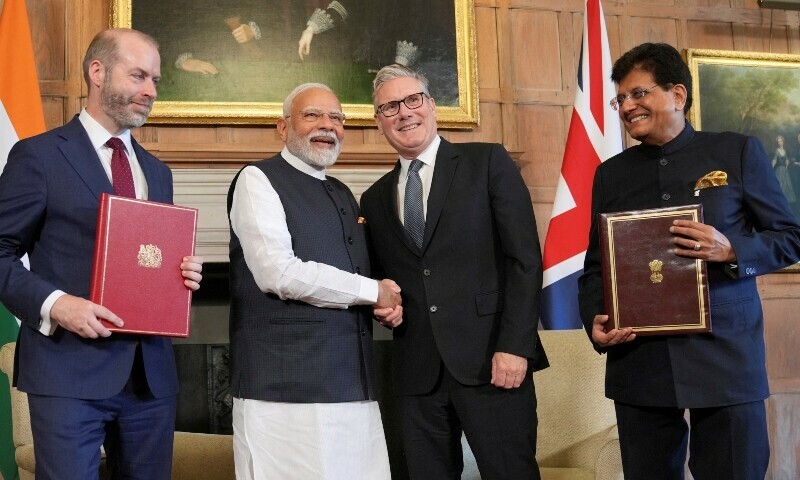
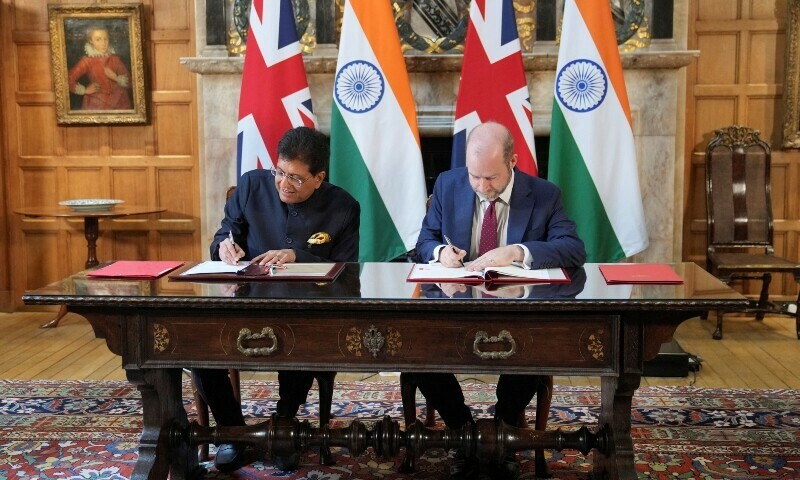


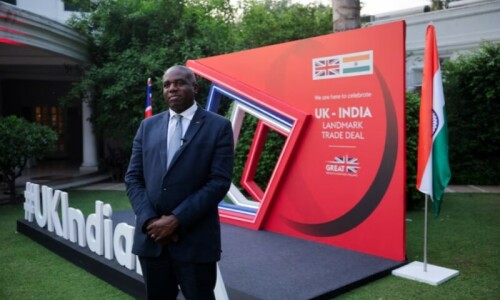
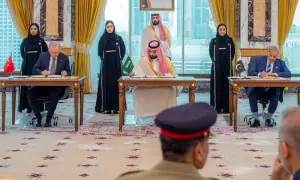
Britain and India signed a free trade agreement on Thursday during a visit by Indian Prime Minister Narendra Modi, sealing a deal to cut tariffs on goods from textiles to whisky and cars and allow more market access for businesses.
The two countries concluded talks on the trade pact in May after three years of stop-start negotiations, with both sides hastening efforts to clinch a deal in the shadow of tariff turmoil unleashed by United States President Donald Trump.
The agreement between the world’s fifth and sixth largest economies aims to increase bilateral trade by a further 25.5 billion pounds ($34bn) by 2040.
It is Britain’s biggest trade deal since it left the European Union in 2020, although its impact will be a fraction of the effect of leaving the orbit of its closest trading partner.
For India, it represents its biggest strategic partnership with an advanced economy, and one which could provide a template for a long-mooted deal with the EU as well as talks with other regions.
It will take effect after a ratification process, likely within a year.
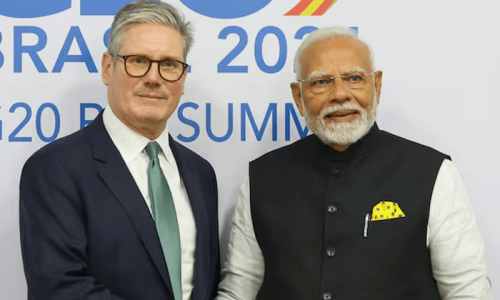
British Prime Minister Keir Starmer said the deal would bring “huge benefits” for both countries, making trade cheaper, quicker and easier.
“We’ve entered a new global era, and that is one that requires us to step up, not to stand aside … by building deeper partnerships and alliances,” Starmer said.
Modi said the visit would “go a long way in advancing the economic partnership between our nations”.
They also agreed a partnership covering areas such as defence and climate, and said they would strengthen co-operation on tackling crime.
Whisky, cars
Under the trade agreement, tariffs on Scotch whisky will drop to 75 per cent from 150pc immediately, and then slide to 40pc over the next decade, according to the British government. On cars, India will cut duties to 10pc from over 100pc under a quota system that will be gradually liberalised.
In return, Indian manufacturers will gain access to the UK market for electric and hybrid vehicles, also under a quota system.
The ministry has said 99pc of Indian exports to Britain would benefit from zero duties under the deal, including textiles, while Britain will see reductions on 90pc of its tariff lines, with the average tariff UK firms face dropping to 3pc from 15pc.
While it is Britain’s biggest deal since Brexit, the projected boost to British economic output, of 4.8bn pounds a year by 2040, is small compared to the country’s gross domestic product of 2.6 trillion pounds in 2024.
The Office for Budget Responsibility (OBR) has forecast that UK exports and imports will be about 15pc lower in the long run compared with if Britain had stayed in the EU.
In its first year in power, Britain’s Labour government has launched a reset of ties with the EU in order to smooth trade friction, while also clinching some tariff relief from the US and the India trade deal.
“In an era of rising protectionism, today’s announcement sends a powerful signal that the UK is open for business,” said Rain Newton-Smith, the chief executive of the Confederation of British Industry.
The India deal will also facilitate easier access for temporary business visitors, though visas are not covered. Britain and India also agreed to ensure workers no longer have to make social security contributions in both India and Britain during temporary postings in the other country.
Under the trade deal, British firms will be able to access India’s procurement market for projects in sectors such as clean energy, and it also covers services sectors such as insurance.
India didn’t succeed in its efforts to get an exemption from Britain’s Carbon Border Adjustment Mechanism (CBAM) — which could levy higher taxes on polluters from 2027 — as part of the deal. Meanwhile, talks over a separate bilateral investment treaty are continuing.