BERLIN: The German government said on Monday that two new envoys had been sent by Afghanistan’s Taliban administration to help coordinate deportations, days after 81 convicted Afghans were sent back to their homeland.
The flight on Friday was the second from Germany since expulsions to Afghanistan resumed last year. Germany does not recognise the Taliban leaders in Afghanistan but does have “technical contacts” on the deportations, which have been facilitated by Qatar.
Government spokesman Stefan Kornelius said that during the exchanges “it has been agreed that two representatives of the Afghan administration will be incorporated” into Afghanistan’s missions in Germany.
A foreign ministry source later confirmed that the two envoys had arrived in Germany over the weekend. “They are currently going through the normal registration process before they begin their work,” the source said.
According to the Frankfurter Allgemeine Zeitung (FAZ) daily, the two envoys will work at the Afghan embassy in Berlin and at the country’s consulate in the western city of Bonn.
The Taliban authorities demanded this step in return for making last Friday’s flight possible, the paper reported. The FAZ said that the envoys had already worked in consular services and were not considered extremists.
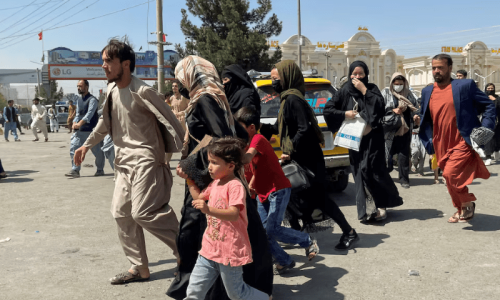
Germany stopped deportations to Afghanistan and closed its embassy in Kabul following the Taliban movement’s return to power in 2021. However last year the last German government resumed expulsions with a flight in August carrying 28 Afghans.
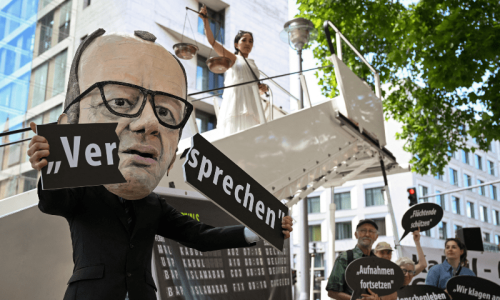
Current chancellor Friedrich Merz has vowed to continue deportations, having made a tougher line on immigration a key campaign theme in February’s general election.
Kornelius said that further flights were in the offing. “The government has committed to systematic expulsions of those convicted of crimes and this will not be accomplished with just one flight,” he said.
UN concern
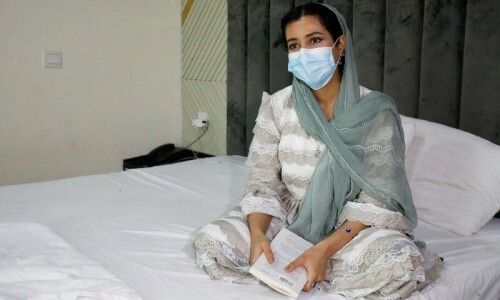
The United Nations expressed its “concern” on Monday over a series of arrests of Afghan women in the capital Kabul who were accused of breaching the Taliban government’s strict dress code, with officials denying such detentions.
Since their return to power in 2021, the Taliban authorities have imposed a severe interpretation of law and require all women to be covered from head to toe.
The UN Assistance Mission in Afghanistan (UNAMA) said it was “concerned by the arrest of numerous women & girls in Kabul between 16-19 July due to their alleged non-compliance with the de facto authorities’ hijab instructions”.
“These incidents serve to further isolate women and girls, contribute to a climate of fear, and erode public trust,” the agency wrote on X, adding that they had contacted the authorities about the matter.
A witness said last week that while driving in Kabul, he saw a unit of the Ministry for Promotion of Virtue and Prevention of Vice “telling two women to go with them in the car”.
The women were wearing flowing abaya robes and wearing make-up. They resisted getting into the vehicle but were forced to do so by a PVPV official who was holding a gun, the witness said.
Published in Dawn, July 22nd, 2025