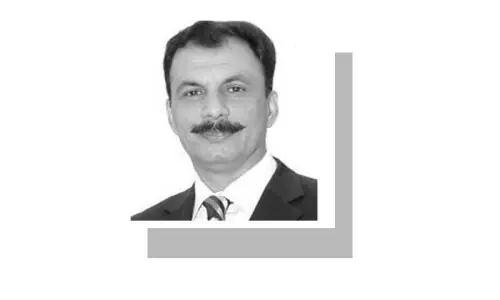
ISLAMABAD: Cautioning that South Asia is currently lingering below the threshold of stability, former chairman Joint Chiefs of Staff Committee (CJCS) retired General Zubair Mahmood Hayat has underscored that the region was trapped in a complex security quagmire, aggravated by the absence of crisis management mechanisms, regional security frameworks, and meaningful exchanges across multiple domains.
The former military official was the key speaker in the latest edition of the Thought Leaders Forum of the Institute of Strategic Studies Islamabad (ISSI), says a press release here on Friday.
The session focused on the theme “Peace and Stability in South Asia and Beyond.”
The former CJCS raised pertinent questions about the nature of peace and concluded that true peace cannot be imposed, bought, or externally driven, rather it must be earned through justice, trust, and sovereign equality.
He called attention to India’s grand strategic delusions, the shift from the ‘Doval’ to ‘Modi doctrine’, and the resulting “reverse deterrence” where Pakistan’s resolve has only strengthened.
General Hayat noted that while Kashmir had long been recognised as a nuclear flashpoint in South Asia, the 2025 crisis had now brought water also into the equation, underscoring that “South Asia stands at a critical juncture.”
He urged Pakistan to use this moment to revamp internally, seize emerging global opportunities, and navigate future threats with clarity and strength.
Earlier, Ambassador Sohail Mahmood, in his welcome remarks, highlighted the rapid transformation of the global order, marked by intensified great power competition, militarisation, erosion of multilateralism, and the rise of non-traditional security threats.
Focusing on the recent crisis in South Asia, Mr Mahmood drew attention of the participants to India’s baseless allegations against Pakistan following a terrorist incident in Indian Illegally Occupied Jammu & Kashmir (IIOJK), and the ensuing conflict dynamics that nearly escalated into full-scale war in May.
He noted that Pakistan effectively countered Indian aggression with a calibrated and resolute response, while maintaining diplomatic composure.
Emphasising the urgent need for crisis communication, ceasefire stabilisation, and eventual dispute resolution, he underscored the broader regional fragilities — including stalled Saarc (South Asian Association for Regional Cooperation), regional securitisation, and unresolved disputes like Kashmir.
Mr Mahmood further stressed that Pakistan must sustain robust defence preparedness and proactive diplomacy to navigate this complex strategic landscape and foster lasting peace in South Asia and beyond.
The address was followed by a thought-provoking and engaging question-answer session, during which the participants delved deeper into the complex regional dynamics and benefitted from Gen Hayat’s strategic insights.
In his introductory remarks, ISSI Director Dr Talat Shabbir highlighted the strategic significance of peace and stability in South Asia amidst a fragile regional security architecture marked by both traditional and non-traditional threats.
The event brought together scholars, diplomats, and policy experts to engage in an insightful discussion on evolving regional dynamics, strategic stability, and pathways toward enduring peace in the broader South Asian context.
Published in Dawn, July 12th, 2025