FINANCE Minister Muhammad Aurangzeb’s call to fellow parliamentarians, seeking support for new legislation that would give sweeping punitive powers to the FBR for tax enforcement and tax-related litigation, underlines the resistance he fears from his own party and coalition partners as well as the opposition.
His concerns are not unfounded. Speaking at the post-budget press conference yesterday, he recounted how he was stopped at the last minute from announcing a proposal to withdraw sales tax exemptions for the steel and edible oil industry in ex-Fata/Pata in the budget for the outgoing fiscal year. The proposal has now been included in the next year’s budget.
He twice told lawmakers that they have the option of either passing the legislation and empowering the tax machinery to recover Rs389bn through enforcement measures, or to prepare for additional taxation to achieve the budgeted target.
Even if his plan goes according to script, the overall FBR target of Rs14.1tr, up by nearly 19pc from this year’s collection of Rs11.9tr, appears too ambitious due to overly optimistic GDP growth expectations, moderate inflation targets, and the absence of steps to effectively tax the undertaxed and untaxed segments. Some analysts resultantly expect the tax target to be revised downward in the coming months.
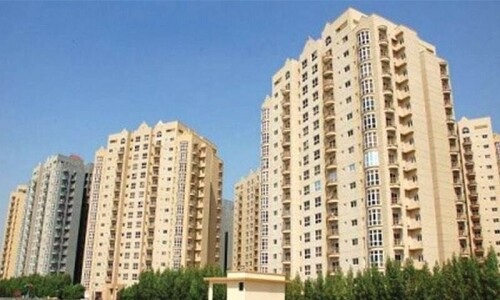
And it is not just the tax target: the government’s growth projection also faces the risk of downward revision. Islamabad says it plans to pursue an admittedly moderate growth rate of 4.2pc without breaching the IMF’s red lines or putting pressure on the precarious external sector. It appears to be betting on the rejuvenation of the real estate sector through the announced tax relief and expectations of a continued upward trend in remittances.
But this will prove to be a challenge, considering the fact that the new budget focuses on meeting the stabilisation goals of the IMF loan; public development spending continues to shrink as the government curtails expenditures to contain the large budget deficit; and big industry and major crops are contracting.
In short, few believe that a government desperate to grow the economy can actually pull it off, as the dynamism required is not visible. This is underlined by the downward revision of the IMF’s growth projection for FY26 from the previous 4pc to 3.6pc a few months earlier. At the presser, the minister dubbed his second budget an “East Asian moment” for Pakistan.
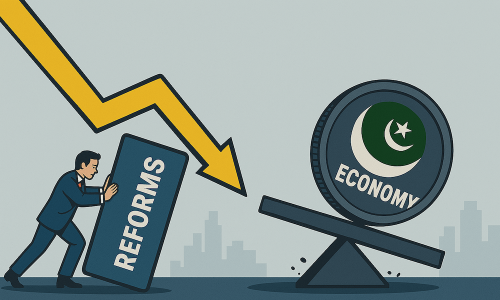
However, a budget devoid of bold reforms and a strategic direction, thanks to the ruling PML-N’s political concerns, can hardly be described in such terms. Even if we, for a moment, accept that the budget will meet its growth goals, it will remain unsustainable without a structural shift in the economy.
Published in Dawn, June 12th, 2025