THE US-Israel war on Iran may not be over, but it has already underscored major changes in the geopolitical order. Whereas, during earlier regime change operations, the US and other Western states were largely able to go in, heavily bomb foes and leave countries such as Afghanistan and Iraq in ruins, the Iranian ruling establishment has proven a tougher nut to crack.
Though the US and Israel have caused immense damage where human lives and property are concerned, and many top Iranian political leaders and generals have been killed, the Islamic Republic has not fallen. Despite internal fissures before the war, even many of those Iranians critical of their rulers have rallied around their flag in the face of foreign aggression.
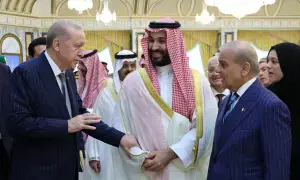
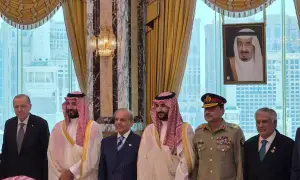
As pointed out by the Iranian ambassador to Pakistan at an event in Islamabad recently, more regional changes may be in store after the war winds up. He specifically mentioned the diminished role of the US and Israel in the region, while pointing out that states such as Iran, Pakistan, Saudi Arabia and Turkiye would deepen their partnerships.
Indeed, the war has illustrated the limits of American power, and points to an empire in decline. America’s rulers should consider the fact that their militaristic adventurism has brought them few benefits, as they struggle to exit a quagmire of their own making against a materially much weaker foe. Many of the Arab states must also be reflecting on a harsh reality: the multibillion-dollar American security umbrella could not protect them from the barrage of Iranian missiles.
The fact is that the US has only one true security commitment in the Middle East — Israel. All other alliances are clearly transactional and expendable. Yet despite these bitter truths, some Gulf states have decided to double down and deepen ties with the US and Israel. They are most likely betting on the wrong horse.
Arguably, the age of the foreign imperial protector is over. Sovereign states must make their own decisions and construct a mutually beneficial security architecture. In this regard, Iran, the Gulf states, Turkiye and the wider Arab and Muslim fraternity of nations, including Pakistan, must come together to manage their own affairs and resolve internal disputes amongst themselves in an amicable manner.
Pakistan has played an admirable role in trying to bring the US and Iran to the peace table, while the Saudis and Iranians have also maintained channels of communication throughout the war. These processes must be taken forward. Depending on outsiders for security is a bad idea. Moreover, giving Israel a foothold in the region is a surefire recipe for disaster. The Zionist state thrives on the dictum of divide and rule and hopes to devour even more Muslim and Arab land. It must not be allowed to create more regional chaos.
Published in Dawn, May 11th, 2026