ISLAMABAD: The Planning Commission has conceded that policy decisions and government measures at both the federal and provincial levels have caused a substantial contraction of 13.5 per cent in major crops this fiscal year, which may lead to increased food imports next year at the expense of precious foreign exchange.
In a working paper for the federal budget 2025-26, the Planning Commission also attributed the lower-than-targeted GDP growth to a poor performance of the agriculture sector. “GDP growth for FY25 is recorded at 2.7pc against the target of 3.6pc, primarily due to a massive contraction in key commodity-producing sectors, including important crops, which witnessed a 13.5pc contraction due to adverse weather conditions, reduced rainfall, input challenges, and policy shift”, the Planning Commission candidly placed on record.
Last year, the government announced a lucrative minimum support price (MSP) for wheat, but the Punjab government subsequently withdrew its support for farmers, leaving them at the mercy of middlemen and market forces. The federal government, as part of the IMF negotiations, later announced its intention to end commodity market interventions and refrain from implementing minimum support prices.
The subsequent policy changes, including extended fertiliser subsidies, added salt to the farmers’ pain, causing input challenges as pointed out by the Planning Commission.
Planning Commission foresees higher food imports next year
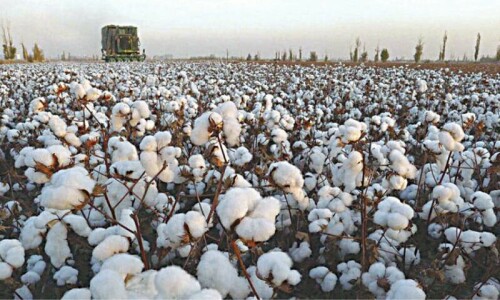
“During FY25, the crop sector showed mixed trends as production of important crops declined by 13.5pc, whereas other crops showed growth of 4.8pc. Production of cotton declined by 30.7pc, maize by 15.4pc, sugarcane by 3.9pc, rice by 1.4pc, and wheat by 8.9pc”, the commission noted.
The outcome could not have been expected to be different. “Yields of sugarcane and rice declined despite a slight increase in cultivated area. This could be attributed to erratic weather patterns or input issues during the growing season”, the commission said, warning that the overall data highlighted falling yields and the need for better policy support and climate-resilient practices.
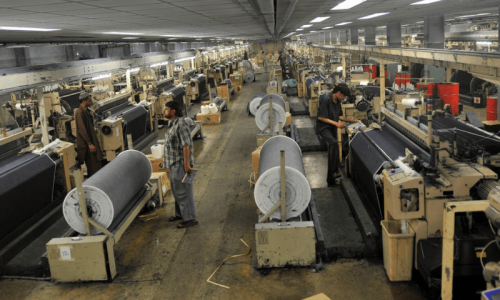
On top of that, cotton ginning contracted by 19pc in FY25 compared to a growth of 47.2pc last year. “This was mainly due to decline in cotton production and closure of ginning factories in the country”, the working paper reads.
This helped the federal government contain the expansion of net domestic assets to a marginal Rs145.6bn in 2024-25 compared to Rs1.588 trillion last year. “This was largely due to the government’s net retirement of SBP borrowings, reduced demand for budgetary support from scheduled banks owing to lower fiscal deficit and a net retirement of financing for commodity operations, mostly driven by repayment of loans availed for wheat procurement”, the commission said.
“It mainly reflects the impact of reforms in commodity operations to stem the accumulation of commodity debt. These measures included rationalisation of wheat procurement, gradual abolition of MSP” besides the timely payment of subsidies, and transitioning to targeted subsidies, mostly in the energy sector.
Conversely, the planning commission appreciated the livestock performance and gave its credit to the government. “Livestock maintained its growth streak to 4.7pc during current year compared to 4.4pc last year. This was mainly due to key initiatives like vaccination programmes for livestock, both by the federal and provincial governments” in the improvement in surveillance programmes and disease control mechanisms in the country.
This also had a cascading impact on manufacturing sector that underperformed, slowing from 3pc growth in the previous year to 1.3pc in FY2024-25 against a target of 4.4pc. The Large-Scale Manufacturing (LSM) sector was a key contributor to this slowdown, which reversed its modest 0.9pc growth from last year and contracted by 1.5pc in FY2024-25, underscoring persistent weaknesses in industrial output and subdued demand.
LSM groups like food production, chemicals, non-metallic mineral products, iron and steel, electrical equipment, machinery, and furniture recorded a decline, which offset the growth in the output of tobacco, textiles, wearing apparel, coke and petroleum products, automobiles, and other transport equipment, indicating resilience in consumer-oriented and energy-related industries.
Published in Dawn, June 4th, 2025