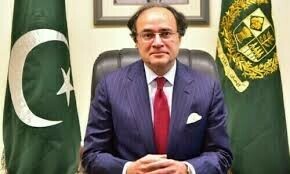
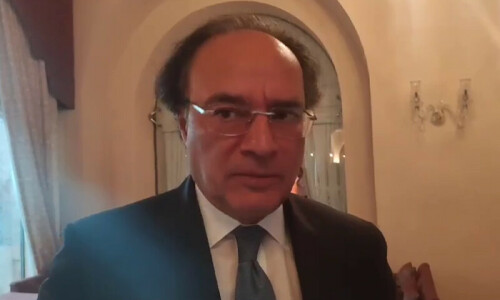
Federal Minister for Finance and Revenue Muhammad Aurangzeb said on Monday that the country had reached “a pivotal moment of economic recovery” as he outlined the government’s key achievements during a conference at Harvard University in the US, the [Associated Press of Pakistan (APP) [reported].
The World Bank had predicted Pakistan’s economy to grow by 2.8 per cent during the current fiscal year in its Pakistan Development Update (PDU), released in October last year. However, the Bank last week slightly lowered its growth forecast for the country to 2.7pc for the current fiscal year, citing continued economic stabilisation but persistent constraints from tight monetary and fiscal policies.
“After inheriting an economy facing significant challenges —from contracting GDP (gross domestic product) to depleting reserves—we have stabilised the fundamentals, restored confidence, and reignited growth,” the report quoted the finance minister as saying.
Speaking at length about the country’s economic growth, the finance minister outlined a few key achievements, including “a historic reduction in inflation to 0.7pc, the lowest in 60 years; doubling of foreign exchange reserves; a 3pc currency appreciation; and a current account surplus exceeding $1 billion in March 2025”, the report added.
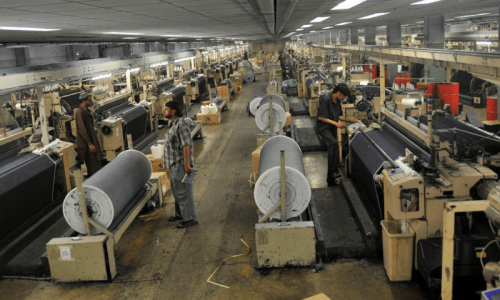
He further said that in the current fiscal year, Pakistan saw a 44pc increase in foreign direct investment (FDI) along with a 24pc rise in IT exports. He also highlighted record-high remittances — currently projected at $38bn.
Aurangzeb noted that, following Fitch’s upgrade of Pakistan’s sovereign credit rating to B-, the country achieved its highest fiscal surplus in 24 years
He also highlighted Pakistan’s success in reducing its public debt-to-GDP ratio from 75pc to 67.2pc, adding that Pakistan planned to bring it below 60pc over the medium term via “prudent fiscal management, enhanced domestic financing, and tax reforms.”
With a focus on transparency, competitive processes, and investor confidence, he explained that rightsizing government expenditures and privatising loss-making state-owned enterprises will save up to 2pc of GDP annually.
As per the report, “He also laid out plans to build a deeper and more resilient system by expanding digital banking, capital markets and green finance.”
Emphasising that “stability is not an end but a means to an end, “ the finance minister outlined the government’s strategy, including maintaining fiscal discipline, controlling inflation, and pushing ahead with deep structural reforms in energy, taxation, governance, and the management of state-owned enterprises, the report added.
Stressing the need for strengthening human development, he identified opportunities in sectors such as the IT sector and green energy initiatives, maintaining that human development was “critical to sustaining high, inclusive growth”.
In his concluding remarks, the finance minister said, “Pakistan’s future will be shaped by bold, necessary choices. By investing in our people, modernising our economy, and staying committed to reform, Pakistan will emerge stronger, greener, and more competitive.”
The 2025 conference about Pakistan, titled “Bridging Divides, Building Tomorrow: Pakistan’s Path to Inclusive Growth and Governance,” is an annual Harvard event — the largest student-led conference on Pakistan in the United States — aimed at discussing the political, economical and social trajectory of Pakistan. The forum brings together policymakers, business leaders, academics and students.
“The conference serves as a vital forum to advance collaborative solutions, promote global engagement, and showcase the creativity and resilience of the Pakistani people,” as per the report.