‘US interests will dictate engagement with Islamabad’



WASHINGTON: As Pakistani-American groups step up attempts to engage with the new Congress, it is becoming increasingly clear that Washington’s policy towards Islamabad will be dictated by US security and foreign policy interests, rather than anything else.
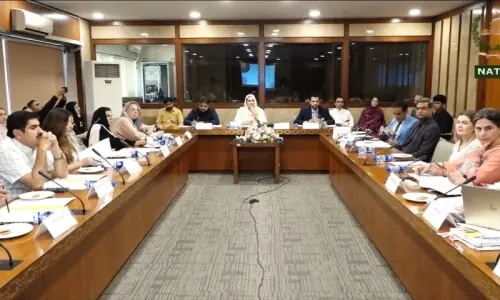
The Pakistani American Political Action Committee (PAKPAC) organised meetings on Capitol Hill throughout the week, pressing lawmakers to take a stronger stance on democracy and human rights in Pakistan.
Throughout the week, activists met with US senators and representatives, urging them to address concerns over electoral fairness, freedom of expression, and political repression in Pakistan.
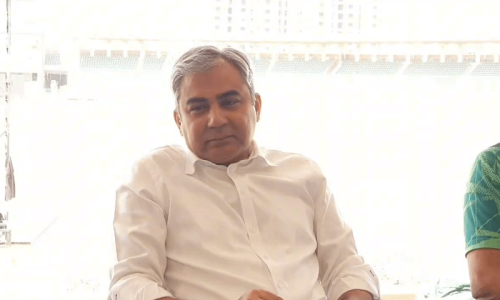
Former president Arif Alvi played a key role in the campaign, holding discussions with nearly a dozen lawmakers and briefing them on the political situation back home.

Pakistani-American pressure group intensifies engagement with Congress; Arif Alvi meets lawmakers on the Hill
Although PAKPAC maintains that its advocacy is not aligned with any political party, they do seem to have a soft spot for Imran Khan and his party.
Several US lawmakers, who engaged with the campaign during the course of the week, expressed concern over Pakistan’s democratic trajectory.
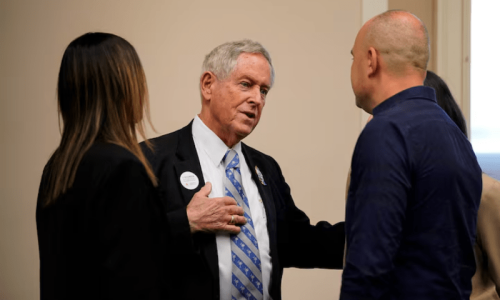
Congressman Joe Wilson, after meeting with Secretary of State Marco Rubio, tweeted: “Grateful to meet … Marco Rubio. He understands the importance of freedom and democracy around the world. I look forward to working with him to restore democracy in Pakistan.”
Congressman Jack Bergman also voiced support for the movement, even tweeting about his meeting with Dr Alvi and former Imran Khan aide Dr Shahbaz Gill.

But while Pakistani Americans found some sympathetic ears in Congress, the overall stance from Washington remained focused on US strategic interests.
Congressman Brian Mast, chairman of the House Foreign Affairs Committee, made it clear that while Washington acknowledged concerns about democracy in Pakistan, US foreign policy would remain centred on national security and economic priorities.
At PAKPAC’s 5th Annual Bipartisan Congressional Open House, Mast reinforced this position, stating, “We will ensure that every dollar spent is aligned with America’s national security and interests.”
South Asia expert Michael Kugelman echoed this sentiment, noting that in President Trump’s second term, Pakistan would need to offer concrete benefits to secure US support.
“‘What’s in it for us?’ would be the defining question for American policymakers,” he said.
PAKPAC also used the campaign to highlight broader issues affecting Pakistan’s governance and economy, distributing distributed policy papers on key challenges, including the country’s energy crisis; repression of institutions such as the judiciary and media; the effectiveness of US aid programmes, etc.
Although Pakistani American activists have demonstrated a growing momentum in Washington, their influence remains constrained by broader US foreign policy priorities.
While such efforts have drawn attention to democratic issues in Pakistan, experts like Shuja Nawaz of the Atlantic Council caution that appeals based on Pakistan’s strategic location or population size will no longer be enough. Instead, Pakistan must build financial and political self-sufficiency to strengthen its standing in Washington, he said.
The lobbying campaign underscored Pakistani Americans’ increasing engagement with lawmakers, signalling an intent to remain active in shaping US policy toward Pakistan. However, their success will ultimately depend on how well they align their concerns with America’s evolving geopolitical priorities.
Published in Dawn, February 17th, 2025